
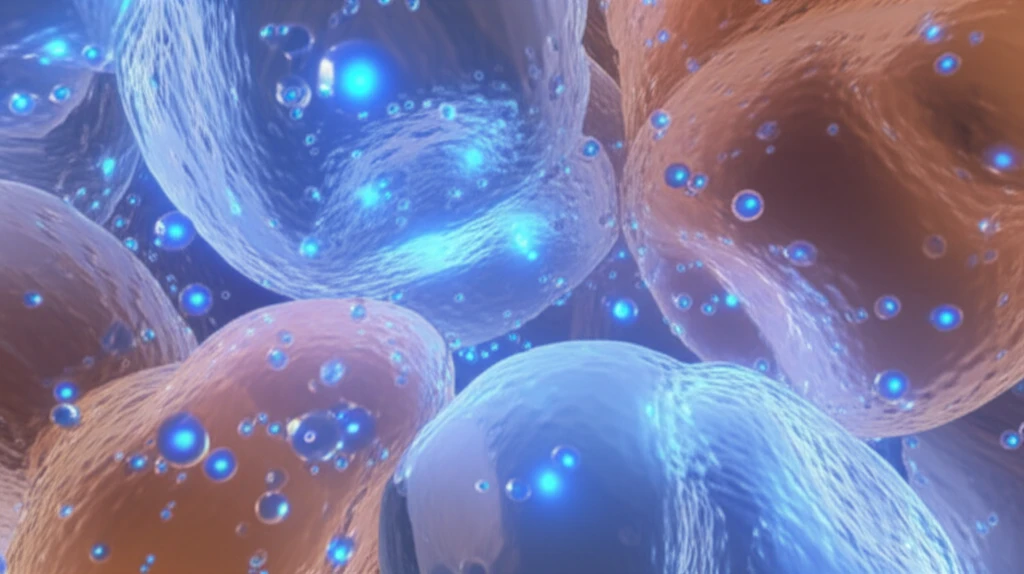
Illustration of sodium ions in human tissue.

Unveiling the Sodium Secret: How Tissue Sodium Levels Could Revolutionize Your Health

"New research suggests that monitoring sodium in your tissues could be a game-changer for detecting hidden health issues like swelling and early signs of heart problems."


Have you ever wondered why your body sometimes retains water, leading to puffiness or swelling? It's a common experience, but what if these seemingly minor inconveniences could be linked to something more significant happening inside your body? Recent research is pointing to a fascinating connection between the sodium levels in your tissues and your overall health, suggesting that monitoring these levels could be a crucial step in detecting early signs of various health conditions.

For years, scientists have focused on the balance of sodium and water in the body, but new studies are challenging this traditional view. They propose that an excess buildup of sodium in your tissues might be a more sensitive indicator of underlying health issues than previously thought. This new perspective offers a fresh way to look at conditions like heart failure, kidney disease, and even localized swelling, potentially changing how we diagnose and treat these illnesses.

This article delves into the groundbreaking research that's reshaping our understanding of sodium's role in the body. We'll explore how sodium accumulation in tissues, often overlooked, could become a vital tool for early detection and personalized healthcare. Prepare to uncover the hidden connections between your body's sodium levels and your overall well-being.

Sodium's Hidden Role: Understanding Tissue Sodium and Its Implications

Illustration of sodium ions in human tissue.

The human body is a complex network, constantly striving to maintain balance. One of the most critical elements in this equilibrium is sodium, an essential mineral found in the body fluids. For a long time, the focus has been on maintaining a steady state of sodium and water, but new research is turning this understanding on its head. Scientists are finding that an excess accumulation of sodium in the tissues could be a sensitive marker for various health issues.

This groundbreaking research involves studying how sodium behaves within different tissues and what this means for your health. One important point is that sodium accumulation may not always be linked with increased water retention. This means that traditional methods, like measuring body weight or even blood pressure, might not always reveal the underlying problem. Specialized imaging techniques, such as 23Na magnetic resonance imaging (MRI), are beginning to show how the levels of sodium in various tissues can be measured, offering a new window into your health.

  • Early Detection: High sodium levels in tissues could indicate the beginning of health problems before any symptoms appear.
  • Heart Health: This research may revolutionize how we identify and treat heart failure and other cardiovascular diseases.
  • Beyond Swelling: Excess sodium could be linked to various conditions, even those not immediately visible, offering a broader understanding of its role in the body.
This paradigm shift has enormous potential for early detection, and the implementation of new diagnostic approaches to enhance current methods. By understanding this connection, doctors can potentially intervene earlier and provide more effective treatment options. This proactive approach could lead to better health outcomes and a higher quality of life.

The Future of Sodium Research and Your Health

The journey into the world of tissue sodium is only beginning. Researchers are continuing to refine their methods, investigate the specific mechanisms at play, and explore new ways to leverage this knowledge for better health outcomes. This research holds the potential to dramatically change how we approach both the diagnosis and treatment of many health conditions. By focusing on the relationship between tissue sodium levels and health, we may be able to unlock a deeper understanding of our bodies and take significant steps toward a healthier future.

About this Article -

This article was crafted using a human-AI hybrid and collaborative approach. AI assisted our team with initial drafting, research insights, identifying key questions, and image generation. Our human editors guided topic selection, defined the angle, structured the content, ensured factual accuracy and relevance, refined the tone, and conducted thorough editing to deliver helpful, high-quality information.See our About page for more information.

Everything You Need To Know

1

Why is monitoring sodium levels in tissues considered a potential game-changer for health?

Monitoring sodium levels in tissues is considered a potential game-changer because it may help in early detection of hidden health issues such as swelling and early signs of heart problems. Unlike traditional methods that focus on sodium and water balance, monitoring tissue sodium levels, especially through techniques like 23Na magnetic resonance imaging (MRI), could reveal subtle changes indicative of underlying conditions before symptoms become apparent. This proactive approach allows for earlier intervention and potentially more effective treatment options, leading to better health outcomes.

2

How does the new understanding of tissue sodium challenge traditional views on sodium's role in the body?

The new understanding of tissue sodium challenges the traditional view that primarily focused on the balance of sodium and water in the body. Research suggests that an excess buildup of sodium in tissues might be a more sensitive indicator of underlying health issues. This accumulation may occur independently of increased water retention, meaning traditional measurements like body weight or blood pressure might not always reveal the problem. The focus on tissue sodium offers a fresh perspective on conditions such as heart failure, kidney disease, and localized swelling, potentially changing how these illnesses are diagnosed and treated.

3

What are some potential benefits of detecting high sodium levels in tissues before symptoms appear?

Detecting high sodium levels in tissues before symptoms appear offers several potential benefits. Early detection can lead to earlier intervention, allowing doctors to provide more effective treatment options before the condition progresses. This proactive approach may revolutionize how we identify and treat conditions like heart failure and other cardiovascular diseases. Furthermore, it provides a broader understanding of sodium's role in the body, linking it to various conditions, even those not immediately visible.

4

Can you explain how 23Na magnetic resonance imaging (MRI) helps in understanding tissue sodium levels, and why is this significant?

23Na magnetic resonance imaging (MRI) is a specialized imaging technique that allows scientists to measure the levels of sodium in various tissues. This is significant because it provides a non-invasive way to visualize and quantify sodium accumulation in specific areas of the body. This method is crucial for identifying sodium buildup that may not be evident through traditional measurements. By using 23Na MRI, doctors can gain a new window into a patient's health, potentially detecting early signs of heart issues, kidney problems, or other conditions linked to abnormal tissue sodium levels. The ability to directly assess tissue sodium offers a more precise and targeted approach to diagnosis and treatment.

5

What implications does focusing on tissue sodium levels have for the future of personalized healthcare and the treatment of conditions like heart failure?

Focusing on tissue sodium levels holds significant implications for personalized healthcare, particularly in the treatment of conditions like heart failure. By understanding the specific mechanisms through which sodium accumulates in tissues, healthcare professionals can tailor diagnostic and treatment strategies to individual patients. For example, 23Na magnetic resonance imaging (MRI) can help identify patients at risk of developing heart failure or those who may benefit from targeted interventions to reduce tissue sodium levels. This approach could lead to more effective and proactive management of heart failure, potentially improving patient outcomes and quality of life. The ability to personalize treatment based on tissue sodium levels represents a significant step towards a more precise and individualized approach to healthcare.

Newsletter Subscribe

Subscribe to get the latest articles and insights directly in your inbox.