
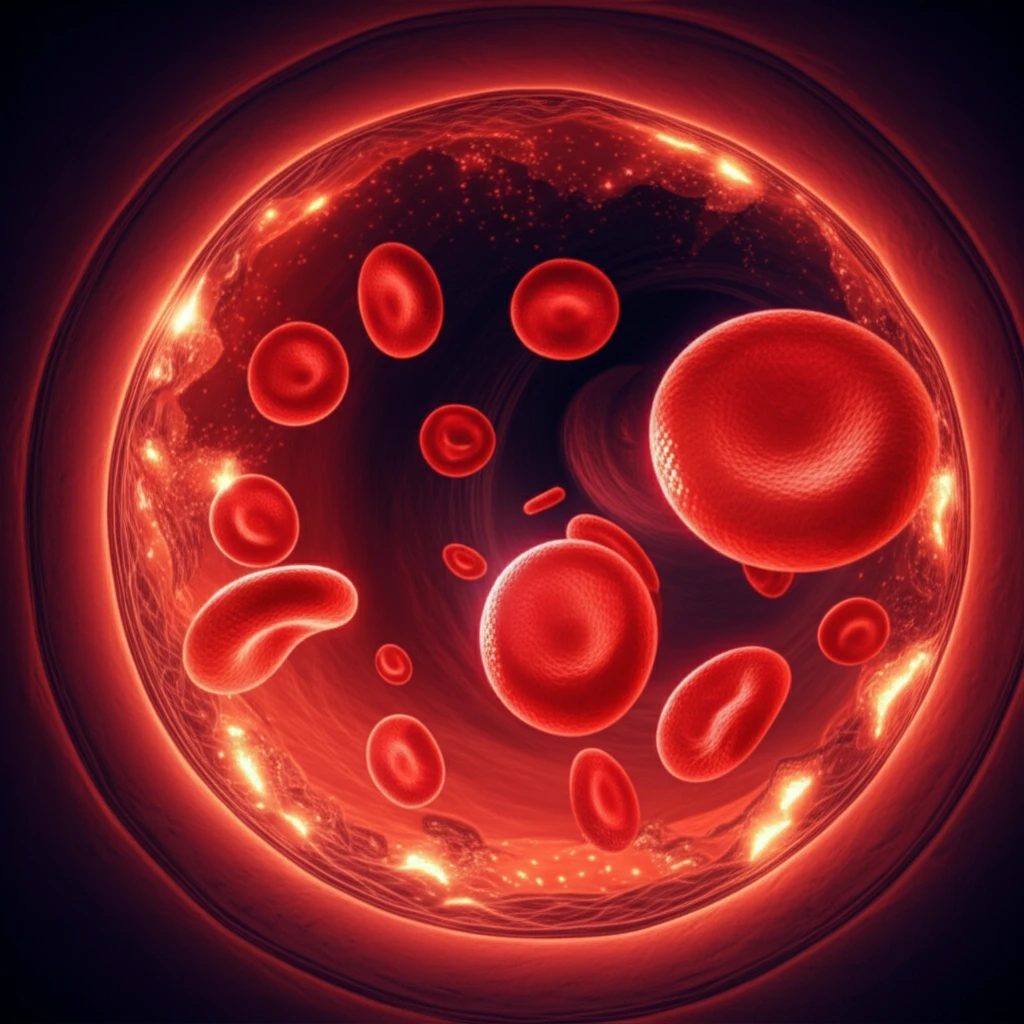
Illustration of a healthy artery with blood flowing smoothly through it, emphasizing the importance of healthy blood flow and reduced stress.

Unveiling the Silent Threat: How Stress on Your Arteries Could Be Affecting Your Health

"New research reveals a surprising link between the physical stress on blood vessels and the health of your body, offering insights into potential risks and preventative measures."


We often hear about the dangers of high blood pressure and cholesterol, but what about the physical forces at play within our arteries? New research is shedding light on the impact of 'oscillatory shear stress' (OSS) – the ebb and flow of blood against artery walls – and its surprising effects on our health. This study, published in Thrombosis Research, delves into how this often-overlooked aspect of cardiovascular health can have significant implications for the body.

Think of your arteries as a network of highways, and blood as the traffic flowing through them. Just like a congested highway can lead to problems, the way blood flows through your arteries can have a big impact. The study reveals that certain patterns of blood flow, particularly those that create more stress on the artery walls, can trigger processes that affect blood clotting, inflammation, and even the structure of the arteries themselves.

This groundbreaking work highlights that understanding the impact of stress on your arteries is crucial for maintaining your health. This article aims to break down the science in a clear and accessible way, discussing the key findings, potential risks, and how you can take proactive steps to protect your cardiovascular system.

The Hidden Effects of Arterial Stress: What the Research Reveals

Illustration of a healthy artery with blood flowing smoothly through it, emphasizing the importance of healthy blood flow and reduced stress.

The study, conducted on healthy individuals, focused on how an increase in oscillatory shear stress (OSS) affects the body. Researchers found that when the arteries experienced greater stress, there were several key changes. These changes involve a disruption of hemostasis (the body's natural process of stopping bleeding) and vascular remodeling (the way the blood vessels change over time). The study’s results highlight the importance of maintaining healthy blood flow patterns for overall cardiovascular health.

The research uncovered several key findings. It showed that increased OSS led to an increase in platelet microparticles (tiny particles released by platelets, which are involved in blood clotting). It also led to changes in the coagulation-fibrinolysis system (the balance between blood clotting and breaking down clots), and increased activity of matrix metalloproteinase-9 (MMP-9), an enzyme involved in remodeling the extracellular matrix of blood vessels.

  • Platelet Microparticles: The release of platelet microparticles increased. These microparticles play a role in blood clotting and may contribute to inflammation.
  • Coagulation-Fibrinolysis: The study observed changes in factors related to blood clotting and the breakdown of clots, potentially indicating an imbalance.
  • MMP-9 Activity: The activity of MMP-9, which is involved in the remodeling of the vessel walls, increased.
These findings suggest that increased stress on arteries can trigger a cascade of events that could potentially lead to a range of health issues. Understanding these mechanisms is a crucial step in taking care of your health.

Taking Action: Protecting Your Arteries and Your Health

While the research highlights potential risks, it also empowers you to take control of your cardiovascular health. By focusing on factors that promote healthy blood flow and reduce stress on your arteries, you can lower your risks. This includes regular exercise, a balanced diet, stress management techniques, and avoiding smoking. These steps may help to maintain the health of your arteries for the long term.

About this Article -

This article was crafted using a human-AI hybrid and collaborative approach. AI assisted our team with initial drafting, research insights, identifying key questions, and image generation. Our human editors guided topic selection, defined the angle, structured the content, ensured factual accuracy and relevance, refined the tone, and conducted thorough editing to deliver helpful, high-quality information.See our About page for more information.

This article is based on research published under:

DOI-LINK: 10.1016/j.thromres.2018.08.019, Alternate LINK

Title: Oscillatory Shear Stress Induces Hemostatic Imbalance In Healthy Men

Subject: Hematology

Journal: Thrombosis Research

Publisher: Elsevier BV

Authors: Amanda Sampaio Storch, Helena Naly Miguens Rocha, Vinicius Pacheco Garcia, Gabriel Matheus Da Silva Batista, João Dario Mattos, Monique Opuszcka Campos, André Lopes Fuly, Antonio Claudio Lucas Da Nóbrega, Igor Alexandre Fernandes, Natália Galito Rocha

Published: 2018-10-01

Everything You Need To Know

1

What is 'oscillatory shear stress' (OSS) and why is it important for understanding cardiovascular health?

'Oscillatory shear stress' (OSS) refers to the ebb and flow of blood against the artery walls. It's important because research indicates that the patterns of blood flow and the stress they create on artery walls can trigger processes affecting blood clotting, inflammation, and the structure of the arteries. Understanding OSS helps in assessing how these factors influence overall cardiovascular health. While the Thrombosis Research publication specifically examined OSS, further research into other arterial stress patterns might reveal even more insights into vascular well-being.

2

How does increased 'oscillatory shear stress' (OSS) affect the body's natural processes, according to the study?

According to the study, increased 'oscillatory shear stress' (OSS) disrupts hemostasis (the body's natural process of stopping bleeding) and vascular remodeling (the way blood vessels change over time). Specifically, it leads to an increase in platelet microparticles, changes in the coagulation-fibrinolysis system, and increased activity of matrix metalloproteinase-9 (MMP-9). These changes suggest that high OSS can trigger a cascade of events that can potentially lead to health issues. Further research could explore the long-term impacts and possible interventions to mitigate these effects.

3

What are platelet microparticles, and what role do they play in the context of arterial stress?

Platelet microparticles are tiny particles released by platelets, which are involved in blood clotting. In the context of arterial stress, the release of platelet microparticles increases due to elevated 'oscillatory shear stress' (OSS). These microparticles play a role in blood clotting and may contribute to inflammation, potentially leading to further cardiovascular issues. The study pinpoints their increase due to OSS but doesn't fully explore their specific mechanisms in arterial damage, an area ripe for future investigation.

4

How does 'oscillatory shear stress' (OSS) impact the coagulation-fibrinolysis system, and why is this significant?

'Oscillatory shear stress' (OSS) leads to changes in factors related to blood clotting and the breakdown of clots, potentially indicating an imbalance in the coagulation-fibrinolysis system. This imbalance is significant because it can affect the body's ability to properly manage blood clots, potentially leading to either excessive bleeding or an increased risk of thrombosis. The research identifies this change, yet doesn't delve into the specific molecular pathways altered, suggesting a need for deeper analysis into how OSS modulates these processes.

5

Besides managing 'oscillatory shear stress' (OSS) directly, what general lifestyle changes can one make to promote healthy blood flow and protect artery health?

While directly targeting 'oscillatory shear stress' (OSS) might require specific medical interventions, general lifestyle changes can significantly promote healthy blood flow and protect artery health. These include regular exercise to improve circulation, adopting a balanced diet to maintain healthy blood composition, practicing stress management techniques to reduce physiological strain, and avoiding smoking to prevent arterial damage. These actions support the health of arteries by reducing factors that contribute to unhealthy blood flow patterns and arterial stress. Further personalized approaches, considering individual risk factors and genetic predispositions, could enhance the effectiveness of these lifestyle adjustments.

Newsletter Subscribe

Subscribe to get the latest articles and insights directly in your inbox.