
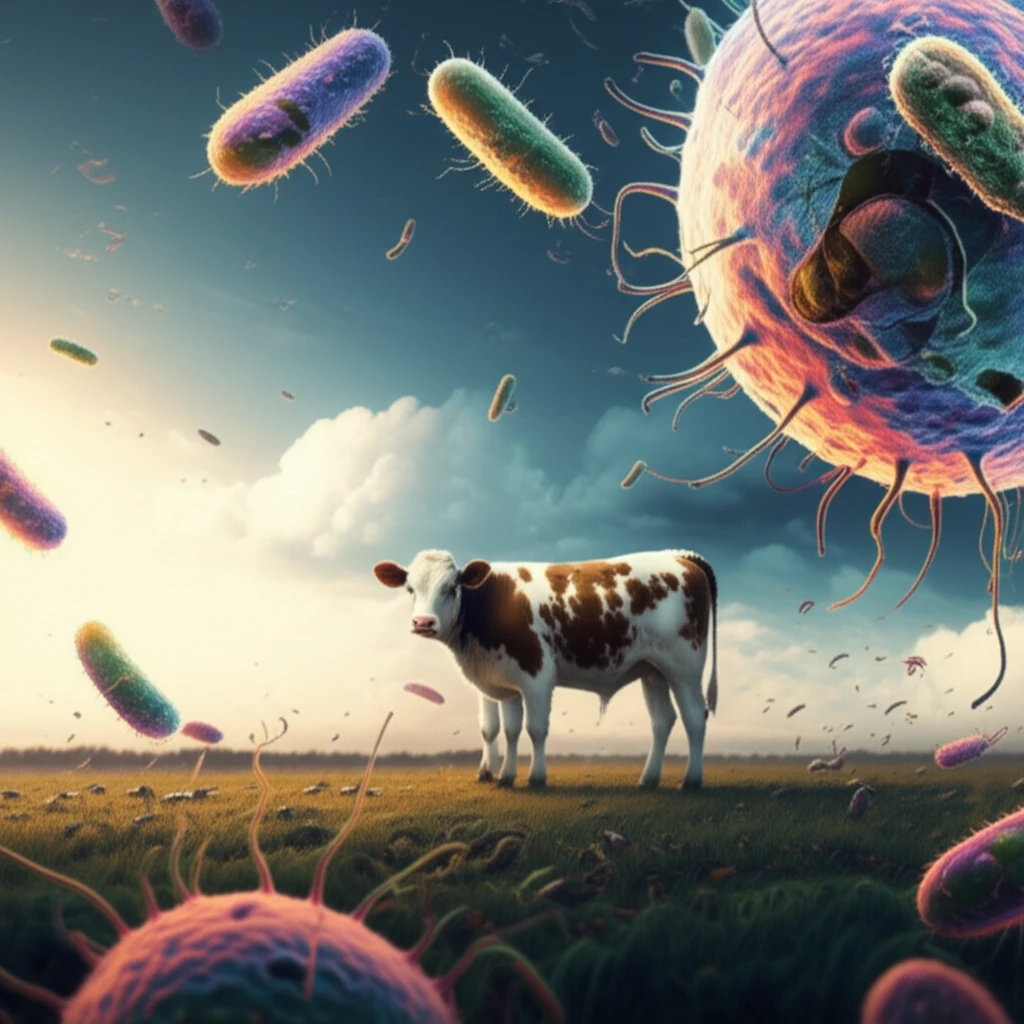
Illustration of a calf with microscopic view of bacteria.

Unveiling the Silent Threat: Antibiotic Resistance in Young Calves and What It Means for You

"A deep dive into the hidden world of antibiotic resistance, its impact on calf health, and the potential consequences for our future."


In an era where health is paramount, both for ourselves and the animals that sustain us, a silent threat is emerging: antibiotic resistance. This critical issue, often overlooked, is rapidly changing the landscape of veterinary medicine and public health. A recent study, focusing on young calves in France, has shed light on the alarming rise of antibiotic resistance, a concern with implications far beyond the farm.

This isn't just a farm-to-table issue; it's a complex web of interconnected elements. The overuse of antibiotics in animal agriculture contributes to the problem, potentially threatening the effectiveness of these drugs for both animals and humans. But what exactly is happening? How does it affect the health of young calves? And, perhaps most importantly, what can we do about it?

Join us as we dissect this timely research, presented in a way that's easy to understand, to unravel the mysteries of antibiotic resistance. This article is for anyone concerned about the future of animal health, food safety, and the responsible use of vital medications. Knowledge is power, and understanding this issue is the first step toward making a difference.

The Colibacillosis Conundrum: Unpacking the Study's Key Findings

Illustration of a calf with microscopic view of bacteria.

The study, conducted in the Allier region of France, focused on colibacillosis, a disease that can cause significant economic losses in cattle farming. Researchers examined young calves, specifically those under eight days old, to understand the prevalence of this disease and the extent of antibiotic resistance. They collected samples from both healthy and sick calves, looking for common pathogens like Escherichia coli (E. coli), rotavirus, coronavirus, and Cryptosporidium.

The results painted a complex picture. While E. coli was found in almost all calves, the study revealed that sick calves were more likely to have a higher prevalence of pathogens. This wasn't just a matter of which pathogens were present; other factors played a role, emphasizing the multifaceted nature of this health challenge. The study highlighted an important aspect of how antibiotic resistance is associated with antibiotic usage.

  • High Prevalence of Pathogens: Sick calves exhibited a higher presence of pathogens like E. coli, rotavirus, coronavirus, and Cryptosporidium.
  • Antibiotic Resistance Concerns: The levels of antibiotic resistance observed were significant, raising serious concerns about the effectiveness of treatments.
  • Association with Antibiotic Use: There was a correlation between the use of certain antibiotics and increased resistance in E. coli, a key finding with major implications.
The study didn't just uncover the presence of antibiotic resistance; it also identified which antibiotics were losing their effectiveness. The implications of these findings are substantial, potentially leading to treatment failures and increased disease spread. This means that if the same antibiotics continue to be used, they become less effective over time. The researchers found that resistance levels were high against common antibiotics like tetracycline and streptomycin. This information is critical for vets, farmers, and anyone involved in the health and well-being of these animals.

Taking Action: What You Can Do to Support Change

The findings from this research underscore the urgency of addressing antibiotic resistance in animal health. It's a multifaceted problem, but not one without solutions. By staying informed and supporting responsible practices, you can help protect both animal and human health. This is not just a veterinary issue. It’s a societal one, and we all have a role to play. This knowledge enables us to make informed choices, and the time to act is now.

About this Article -

This article was crafted using a human-AI hybrid and collaborative approach. AI assisted our team with initial drafting, research insights, identifying key questions, and image generation. Our human editors guided topic selection, defined the angle, structured the content, ensured factual accuracy and relevance, refined the tone, and conducted thorough editing to deliver helpful, high-quality information.See our About page for more information.

This article is based on research published under:

DOI-LINK: 10.4267/2042/60850, Alternate LINK

Title: Place De La Colibacillose Chez Le Jeune Veau Et Antibiorésistance Dans L’Allier (2011-2013)

Subject: General Veterinary

Journal: Bulletin de l'Académie Vétérinaire de France

Publisher: PERSEE Program

Authors: Hélène Lacroute

Published: 2016-01-01

Everything You Need To Know

1

What is antibiotic resistance, and why is it a concern for young calves?

Antibiotic resistance occurs when bacteria, like *E. coli*, evolve to withstand the effects of antibiotics, rendering these medications less effective or entirely ineffective. This is a major concern in young calves because diseases like colibacillosis, often caused by *E. coli*, can become difficult or impossible to treat, leading to increased illness, economic losses in cattle farming, and potentially higher mortality rates. The study in France specifically highlighted the significant levels of antibiotic resistance observed in young calves, particularly against common antibiotics like tetracycline and streptomycin.

2

How does the overuse of antibiotics in animal agriculture contribute to the rise of antibiotic resistance?

The overuse of antibiotics in animal agriculture creates an environment where bacteria are constantly exposed to these drugs. This exposure exerts selective pressure, favoring the survival and proliferation of bacteria that have developed resistance mechanisms. As resistant bacteria multiply, they can spread within the animal population and potentially to humans through various pathways, such as direct contact or the food chain. The study in France established a correlation between the use of certain antibiotics and increased resistance in *E. coli*, underscoring the direct link between antibiotic usage and the development of resistance.

3

What is colibacillosis, and why was it the focus of the study on young calves in France?

Colibacillosis is a disease primarily caused by *Escherichia coli* (*E. coli*) that affects young calves, often leading to severe diarrhea, dehydration, and even death. It can cause significant economic losses in cattle farming. The study in France focused on colibacillosis because it is a common ailment in young calves, making them a relevant population for assessing the prevalence and patterns of antibiotic resistance in *E. coli*. By studying calves with colibacillosis, researchers aimed to understand the extent to which antibiotic resistance is impacting the treatment of this disease.

4

Besides *E. coli*, what other pathogens were found in the calves studied, and what role do they play in the calves' health?

In addition to *E. coli*, the study identified rotavirus, coronavirus, and *Cryptosporidium* in the calves. These pathogens are also known to cause gastrointestinal infections in young calves, contributing to conditions like diarrhea and dehydration. The presence of multiple pathogens, as highlighted in the study, suggests that calf health is influenced by a complex interplay of factors. Sick calves were more likely to have a higher presence of these pathogens. While the study focused primarily on *E. coli* and antibiotic resistance, these other pathogens contribute to the overall disease burden in young calves.

5

What specific antibiotics showed high levels of resistance in the study, and what are the potential implications of this resistance?

The study revealed high levels of resistance against common antibiotics like tetracycline and streptomycin. The implications of this resistance are significant. If infections caused by *E. coli* or other bacteria become resistant to these antibiotics, treatment options become limited. This can lead to prolonged illness, increased mortality rates in calves, and higher economic losses for farmers. Furthermore, the spread of antibiotic-resistant bacteria can potentially impact human health, as resistance genes can transfer between bacteria, making infections in humans more difficult to treat. Without effective antibiotics, common infections can become life-threatening.

Newsletter Subscribe

Subscribe to get the latest articles and insights directly in your inbox.