
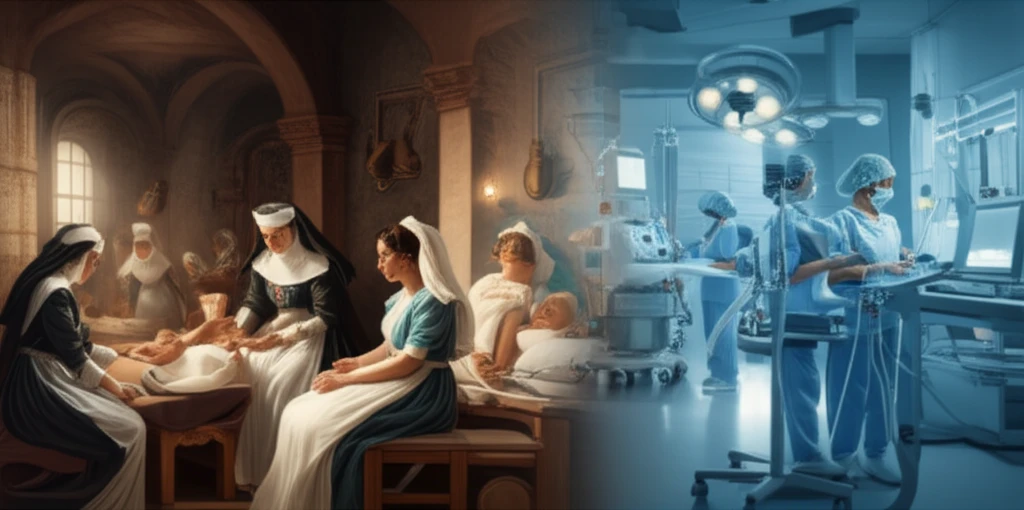
Unveiling the History of Nursing in Spain: From Ancient Roots to Modern Practice

"Explore the evolution of nursing in Spain, its influences, and the dedicated individuals who shaped its development."
The history of healthcare in Spain has undergone significant evolution, particularly in the 19th and 20th centuries. This progress stems from two primary forces: the cultural influences of its European neighbors, fostering advancements in scientific knowledge and practice, and the increasing social demands for improved public health, which spurred political action and governmental reforms after 1833.
These factors converged to drive the professionalization of healthcare, with universities playing a crucial role in training medical professionals and conducting research. However, the study of historical development in health and science wasn't always a priority. Consequently, incorporating the history of medicine, and even more so, the history of nursing into university curricula was a gradual process.
This article explores the historical context in which nursing in Spain emerged and developed, highlighting the key influences and transformations that shaped its trajectory. It examines the evolution of nursing from its early roots to its current standing as a vital and respected profession within the Spanish healthcare system.
How Did Cultural and Societal Shifts Shape Early Nursing Practices?
Despite the slow integration of formal historical study, Spain has a rich tradition of medical and health-related writings. However, focus on the history of nursing specifically has been more recent, often overshadowed by the broader history of medicine. Developed in recent years, the story of nursing risks becoming a footnote to medical history. This is seen in the Spanish Nursing History Congresses, launched in Valencia in 1994, which mirrored the traditional structure of medical history conferences.
- European Influence: Spain's proximity to and interaction with other European countries, particularly France, the UK, and Germany, facilitated the exchange of medical knowledge and practices.
- Social Demands: Growing awareness of public health issues and the need for accessible healthcare services pushed for government intervention and the development of healthcare infrastructure.
- University Development: The establishment of medical faculties within universities provided a platform for formal training and research, gradually leading to the inclusion of nursing studies.
The Enduring Legacy of Nursing in Spain
This exploration reveals a compelling narrative of nursing's development in Spain, highlighting the interplay of cultural influences, societal demands, and dedicated individuals who shaped its trajectory. While early influences stemmed from religious orders and charitable acts, the profession gradually evolved towards formal training, university recognition, and specialized practices.
The journey of nursing in Spain reflects broader historical trends, including periods of scientific advancement, societal challenges, and renewed focus on social welfare. By understanding this history, we gain valuable insights into the current state of nursing and its vital role in the Spanish healthcare system.
As nursing continues to evolve in the 21st century, embracing new technologies and addressing emerging healthcare needs, its historical roots provide a foundation for continued growth and innovation. The dedication and commitment of Spanish nurses, past and present, remain central to providing quality care and promoting the well-being of the nation.