
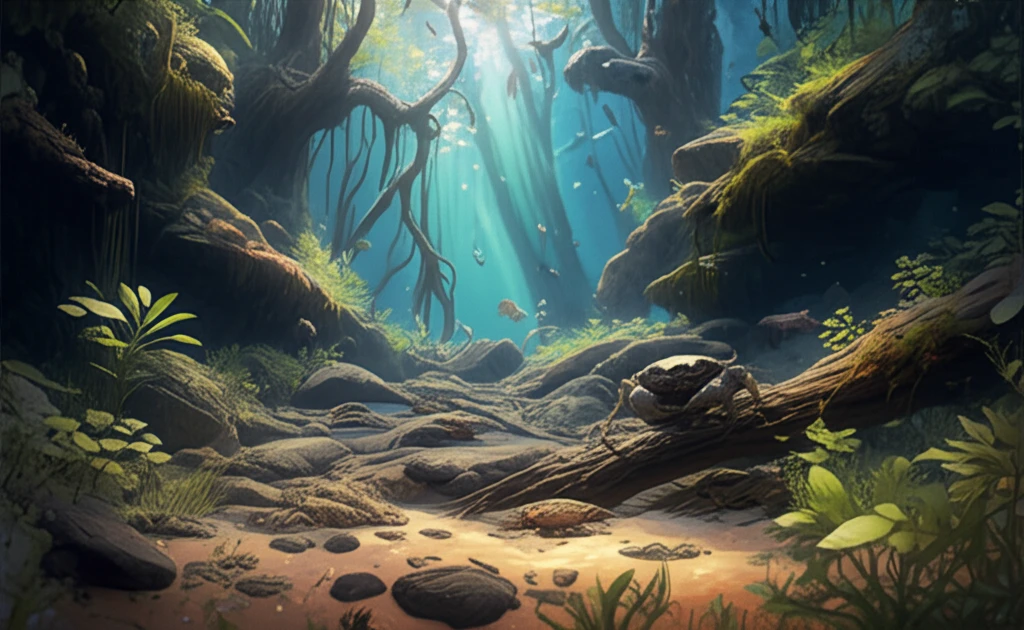
Unveiling the Hidden World of Freshwater Crabs: A Journey Through Maranhão's Ecosystems

"Discover how new research is expanding our understanding of freshwater crab distribution in Northeastern Brazil and why it matters for conservation."
Freshwater crabs, often overlooked in the grand tapestry of aquatic life, play a crucial role in maintaining the health and balance of river ecosystems. These small crustaceans contribute to nutrient cycling, control populations of other invertebrates, and serve as a food source for larger animals. However, despite their importance, our knowledge of their distribution and diversity remains incomplete, especially in regions like Northeastern Brazil.
A recent study published in 'Nauplius, The Journal of the Brazilian Crustacean Society,' sheds light on the freshwater crab populations of Maranhão, a state in Northeastern Brazil. This research not only expands the known range of several crab species but also highlights the need for increased conservation efforts in this biodiverse region. Understanding the distribution of these creatures is the first step toward protecting them and their habitats.
Maranhão, a transitional zone between the Amazon, Caatinga, and Savanna biomes, boasts a complex network of rivers and streams. This unique geography supports a rich variety of aquatic life, including freshwater crabs belonging to the family Trichodactylidae. The study focuses on this family, which includes approximately 50 species ranging from southern Mexico to Argentina.
Global Diversity and Ecological Importance
Freshwater crabs are a diverse group of crustaceans belonging to the infraorder Brachyura, primarily inhabiting freshwater environments and exhibiting key adaptations for life in these ecosystems. In regions such as Sri Lanka, the freshwater crab fauna holds exceptional ecological importance due to high rates of endemism found nowhere else on Earth. In Africa, freshwater crabs represent important components of freshwater systems, with studies measuring both their numerical abundance and biomass per unit area across multiple sites. Their significance spans ecological, biogeographic, and conservation dimensions across tropical and subtropical regions worldwide.
True Freshwater vs. Brackish Species Confusion
A fundamental challenge in freshwater crab study and husbandry is that true freshwater crabs are considerably rarer than the aquarium industry and popular literature suggest. Most species marketed or described as freshwater are actually brackish, semi-terrestrial, or both, requiring specific salinity conditions rather than purely freshwater environments. Species sourced from brackish waters may need slight increases in salinity to thrive, while fully aquatic species prefer planted, freshwater habitats. This widespread misclassification complicates both conservation assessments and ecological research, as the physiological requirements and habitat associations of many species remain inadequately characterized.
Evolutionary Origins and Independent Colonization Events
The evolutionary history of freshwater crabs reveals that they were derived early in the evolution of Eubrachyura, the group of true crabs. Phylogenetic analyses indicate that freshwater crabs have at least two independent evolutionary origins, suggesting multiple separate colonizations of inland aquatic habitats from marine ancestors. Research on marine sister groups points to xanthoid-like progenitors as possible ancestral forms from which both trichodactylid and non-trichodactylid freshwater crab lineages diverged. Freshwater crabs are found primarily in tropical and subtropical areas of the world, with most species being omnivores whose eggs develop through a larvae stage that releases juvenile crabs.
Expanding the Known Range
The research team, led by Kele Sousa Pires Andrade, Marina de Sá Leitão Câmara de Araújo, and Jorge Luiz Silva Nunes, conducted surveys across eight streams in Maranhão's Savanna region. Using a combination of dip nets, sieves, gill nets, and drag nets, they collected and identified crab species, documenting their locations and physical characteristics. This meticulous approach revealed the presence of four distinct species:
- Dilocarcinus septemdentatus: Previously known distributions are expanded in new river basins.
- Goyazana castelnaui: New locations identified contribute to a better understanding of its habitat preferences.
- Sylviocarcinus pictus: Findings add valuable data to the species' distribution map.
- Valdivia serrata: First-time recording in specific river basins marks a significant discovery.
Expanding Interest in Freshwater Crab Diversity
Freshwater aquarium crabs represent an option that many aquarists and researchers overlook when considering the diversity of available crustacean species. Recent reviews highlight a range of freshwater crab species valued both in aquarium settings and for their ecological roles, drawing renewed attention to underappreciated taxa. As interest grows, documenting species diversity and husbandry requirements becomes increasingly important for both conservation and hobbyist communities. This expanding awareness underscores the need for continued scientific surveys, particularly in understudied tropical regions such as northeastern Brazil.
The Biodiversity Crisis Facing Freshwater Crabs
Freshwater ecosystems in the tropics host a highly diverse and endemic fauna that includes numerous freshwater crab species, yet this biodiversity is under severe and accelerating threat. The rapid loss and deterioration of freshwater habitats means that many crab species are now in imminent danger of extinction. Despite their ecological importance, freshwater crabs remain among the least studied and most overlooked invertebrate groups in conservation planning. The convergence of habitat destruction, pollution, and climate change creates a compounding crisis that current protection frameworks are often inadequate to address.
Comparative Perspectives on Freshwater Crab Ecology
Comparative ecological studies of freshwater crabs across different biogeographic regions remain limited, making broad generalizations difficult. The ecological roles and community dynamics of freshwater crabs likely vary considerably between tropical South American systems, African river basins, and Asian freshwater habitats, reflecting differences in species composition and evolutionary history. Without systematic cross-regional data, researchers must exercise caution when extrapolating findings from well-studied areas to less explored regions such as Maranhão. Future comparative frameworks will be essential for understanding how local ecosystem processes fit within the global freshwater crab panorama.
Why This Matters
The study emphasizes the urgent need for a comprehensive catalog of freshwater crab species in all hydrographic basins of Maranhão. Understanding the diversity and distribution of these crabs is essential for effective conservation strategies, especially in the face of environmental modifications such as pollution and habitat degradation. By gaining a deeper understanding of these ecosystems, we can work towards preserving the delicate balance of life within them.
Phylogenetic Revision and New Species Descriptions
Recent taxonomic revisions of freshwater crab genera continue to reshape our understanding of Neotropical diversity. Phylogenetic analyses of the genus Tehuana have placed newly described species such as T. villarosalensis as a sister group to all previously reported freshwater crabs within that lineage. The species is classified within the subsection Heterotremata, contributing to a more refined picture of evolutionary relationships among freshwater crab groups. These revisions demonstrate that significant undescribed diversity persists, particularly in underexplored regions of Latin America.
Climate Change and Habitat Reshuffling
Climate change and shifting agricultural practices are actively reshuffling the geographic distribution of freshwater crab habitats, particularly in densely populated and rapidly urbanizing regions. In China, this outcome carries serious implications for freshwater conservation policy, especially in coastal and riverine zones that support much of the country's economic activity. Rising concerns over freshwater crab consumption also highlight the need for clearer food safety guidelines, as the biggest risks involve parasites and contaminants accumulated in freshwater environments. The intersection of habitat disruption, food security, and conservation planning represents a critical frontier for freshwater crab research.
Dietary Roles and Ecosystem Function
Freshwater crabs occupy varied dietary niches that depend on species identity and local resource availability. While most rely primarily on algae, detritus, and small invertebrates, certain species will graze on aquatic vegetation when it is abundant, indicating flexible feeding strategies. This dietary variability means that the broader ecosystem impacts of freshwater crabs—such as nutrient cycling and algal regulation—differ across communities and habitats. Understanding these functional roles is essential for appreciating how freshwater crabs contribute to the systemic health of aquatic ecosystems in Maranhão and beyond.
Nutrient Cycling in Neotropical Streams
Freshwater crabs play an important role in the breakdown of nutrients from natural materials, such as leaf litter, that fall into tropical and subtropical streams. Despite this recognized importance, few studies have investigated exactly how their relationships with other detritivores and with the leaf litter itself impact overall ecosystem functioning. Research in neotropical streams is beginning to fill this knowledge gap, revealing that crab-mediated decomposition processes may be more significant than previously assumed. These findings have direct implications for understanding the ecological health of freshwater systems in Maranhão and similar biomes across South America.