
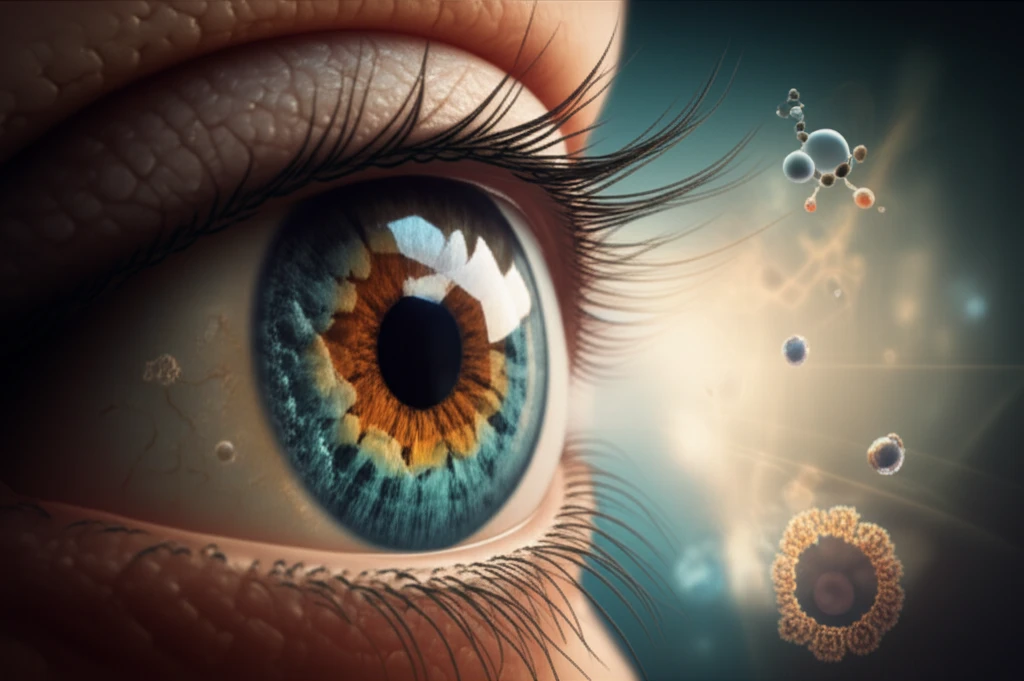
Unveiling the Eye's Secrets: How Aging Affects Your Vision and What You Can Do

"New research reveals the link between cellular aging and the development of cataracts, offering hope for future treatments and preventative measures."
Our eyes, the windows to the world, are constantly working, allowing us to perceive the beauty and intricacies of life. But as we age, our vision naturally changes, and conditions like cataracts can cloud our view. Cataracts, characterized by a clouding of the natural lens of the eye, are a leading cause of vision loss globally. Now, groundbreaking research is shedding light on the underlying causes of cataracts, specifically how cellular aging plays a pivotal role in their development.
This new study delves into the intricate mechanisms within the eye, focusing on the role of senescence-associated beta-galactosidase (SA-β-gal) and senescence marker protein-30 (SMP-30). These elements act as cellular aging indicators, revealing their connection to the decline of lens epithelial cells (LECs), the critical cells that maintain the clarity of our vision. The study explores how the balance of these elements influences the health of our eyes, providing new insights into the development of cataracts.
This article will break down the study's key findings, explore the implications for eye health, and discuss the potential for future interventions. Whether you're simply curious about eye health or are seeking to protect your vision, this information can help you better understand the aging process and the steps you can take to maintain clear eyesight.
What is a Cataract? Understanding the Clouding of the Eye's Lens
A cataract is a clouding of the eye's natural lens, which is normally clear. Think of the lens as the camera's lens, focusing light onto the retina, which sends images to the brain. With a cataract, the lens becomes cloudy, much like a foggy window, making it difficult to see clearly. This clouding can cause blurred vision, faded colors, and increased sensitivity to glare.
- Age: The most significant risk factor.
- Genetics: Family history can increase your risk.
- Medical Conditions: Diabetes and other health issues.
- Lifestyle: Smoking and excessive sun exposure.
- Medications: Long-term use of certain drugs.
Looking Ahead: The Future of Eye Health and Cataract Treatment
The insights from this research open exciting avenues for future eye health. By understanding the interplay of cellular aging and lens health, scientists can focus on developing new treatments and preventative strategies. This may include medicines that protect the lens cells from aging and reduce the chances of cataracts, or perhaps therapies that could repair damage. Furthermore, early detection and proactive lifestyle adjustments, such as safeguarding your eyes from harmful UV rays and maintaining a healthy diet, can make a substantial difference. This research marks a step in better understanding the aging process and, therefore, the steps we can all take to preserve our precious vision, ensuring a brighter future for our eyes.