
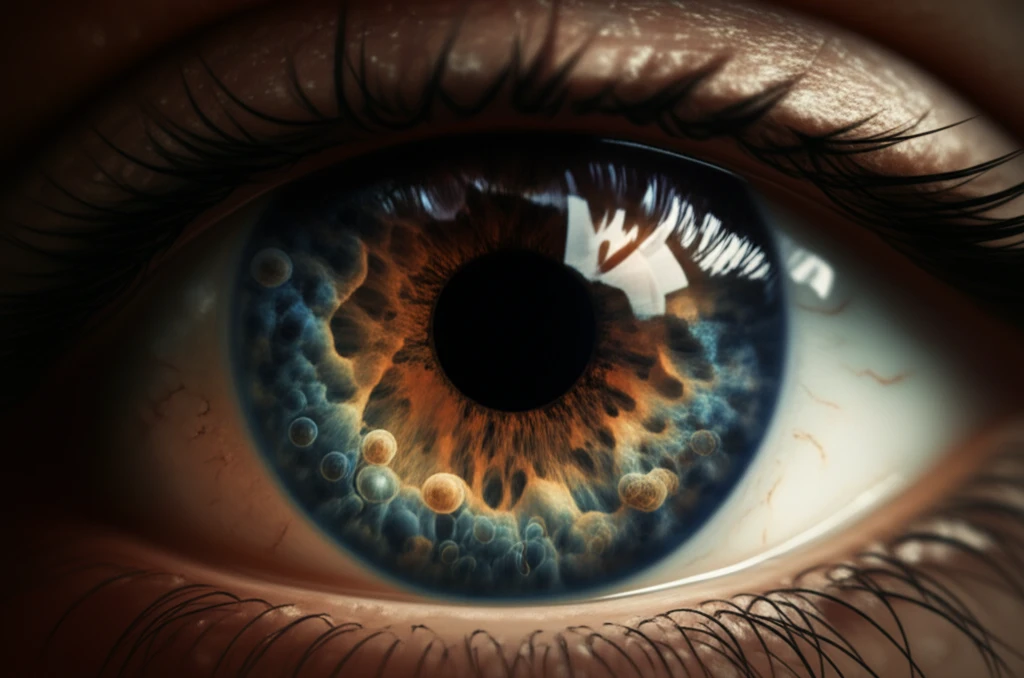
Illustration depicting a human eye lens with healthy and aging cells, symbolizing the impact of cellular aging on vision.

Unveiling the Eye's Secrets: How Aging Affects Vision and What You Can Do

"New Research Reveals the Link Between Cellular Aging and Cataracts – And It's More Important Than You Think"


Have you ever wondered why your vision seems to change as you get older? It's not just about needing reading glasses. The aging process affects every part of your body, including your eyes. And while we often focus on wrinkles and gray hairs, the changes happening inside our bodies, at the cellular level, play a huge role in our overall health and well-being.

One of the most common age-related vision problems is cataracts, a clouding of the eye's natural lens. Millions of people worldwide experience cataracts, and it's a leading cause of vision loss. But what if the very processes that lead to cataracts are linked to cellular aging? New research is shedding light on this fascinating connection, offering hope for better prevention and treatment strategies.

This article will explore the cutting-edge findings of a study that examines the role of cellular senescence (aging) in the development of cataracts. We'll break down the science, explain what it means for your eye health, and provide practical tips to help you keep your vision clear and bright.

The Science Behind Clear Vision: Understanding Cellular Aging

Illustration depicting a human eye lens with healthy and aging cells, symbolizing the impact of cellular aging on vision.

To understand how aging affects our eyes, we need to zoom in on the microscopic level. Our bodies are made up of cells, and like us, these cells age. Cellular senescence is the process where cells stop dividing and growing. They become 'zombie cells' that no longer function correctly and can even release harmful substances that damage surrounding tissues.

Within the eye, the lens is responsible for focusing light onto the retina, allowing us to see clearly. The lens is made up of specialized cells, and as we age, these cells can undergo senescence, leading to the development of cataracts. The study we're focusing on looked at two key markers of cellular aging: senescence marker protein-30 (SMP-30) and senescence-associated beta-galactosidase (SA-ß-gal).

  • SMP-30: This protein is known to decrease with age, and the study found that lower levels were associated with more significant cataract formation.
  • SA-ß-gal: This enzyme is a marker of senescent cells. Researchers found higher levels of SA-ß-gal in the lenses of patients with cataracts, indicating increased cellular aging.
The study's findings suggest that cellular aging is a significant factor in the development of cataracts. The accumulation of senescent cells within the lens disrupts its normal function, leading to clouding and vision loss. These insights open up new avenues for research into preventing and treating cataracts.

Protecting Your Vision: Actionable Steps for Healthy Aging

The link between cellular aging and cataracts is a reminder that taking care of our overall health is essential for maintaining good vision. While further research is needed, the findings of this study offer actionable steps you can take to protect your eyes and slow down the aging process. Prioritize regular eye exams, eat a healthy diet rich in antioxidants, protect your eyes from UV rays, and manage underlying health conditions, such as diabetes. Remember, taking proactive steps today can lead to clearer vision tomorrow.

About this Article -

This article was crafted using a human-AI hybrid and collaborative approach. AI assisted our team with initial drafting, research insights, identifying key questions, and image generation. Our human editors guided topic selection, defined the angle, structured the content, ensured factual accuracy and relevance, refined the tone, and conducted thorough editing to deliver helpful, high-quality information.See our About page for more information.

Everything You Need To Know

1

What are cataracts, and how are they related to aging?

Cataracts are a common age-related vision problem characterized by the clouding of the eye's natural lens, leading to vision loss. New research suggests a link between cellular aging processes, specifically cellular senescence, and the development of cataracts. As cells within the lens age and undergo senescence, they disrupt the lens's normal function, causing it to cloud. This connection highlights how the aging process at a cellular level contributes to vision problems like cataracts. Further studies are needed to fully understand the mechanisms involved and develop targeted interventions.

2

What is cellular senescence, and how does it impact the eyes?

Cellular senescence is a process where cells stop dividing and growing, becoming what are sometimes referred to as 'zombie cells'. These cells no longer function correctly and can release harmful substances that damage surrounding tissues. In the context of the eyes, specifically the lens, cellular senescence can lead to the development of cataracts. The accumulation of senescent cells disrupts the normal function of the lens, causing clouding and vision loss. Research focuses on markers like senescence marker protein-30 (SMP-30) and senescence-associated beta-galactosidase (SA-ß-gal) to understand this process better.

3

What role do SMP-30 and SA-ß-gal play in the development of cataracts?

Senescence marker protein-30 (SMP-30) and senescence-associated beta-galactosidase (SA-ß-gal) are key markers of cellular aging studied in relation to cataract development. SMP-30 is a protein known to decrease with age; lower levels are associated with more significant cataract formation. SA-ß-gal, on the other hand, is an enzyme and a marker of senescent cells; higher levels of SA-ß-gal in the lenses of patients with cataracts indicate increased cellular aging. These findings suggest that both the decrease in protective proteins like SMP-30 and the increase in markers of senescent cells like SA-ß-gal contribute to the development of cataracts.

4

What actionable steps can I take to protect my vision and slow down the aging process in my eyes?

To protect your vision and slow down the aging process in your eyes, several actionable steps can be taken. Regular eye exams are crucial for early detection and management of any vision problems. A healthy diet rich in antioxidants can support overall eye health. Protecting your eyes from UV rays by wearing sunglasses is essential. Managing underlying health conditions like diabetes is also important, as these conditions can affect eye health. By prioritizing these steps, you can proactively care for your eyes and potentially reduce the risk of age-related vision problems like cataracts.

5

Given the link between cellular aging and cataracts, what are the potential implications for future research and treatment strategies?

The discovered link between cellular aging and cataracts has significant implications for future research and treatment strategies. By understanding the role of cellular senescence and markers like SMP-30 and SA-ß-gal in cataract development, researchers can explore targeted interventions to prevent or slow down the process. This could involve developing therapies that promote the removal of senescent cells or enhance the function of protective proteins in the lens. Such research could lead to innovative approaches for preventing and treating cataracts, ultimately preserving vision and improving the quality of life for millions of people.

Newsletter Subscribe

Subscribe to get the latest articles and insights directly in your inbox.