
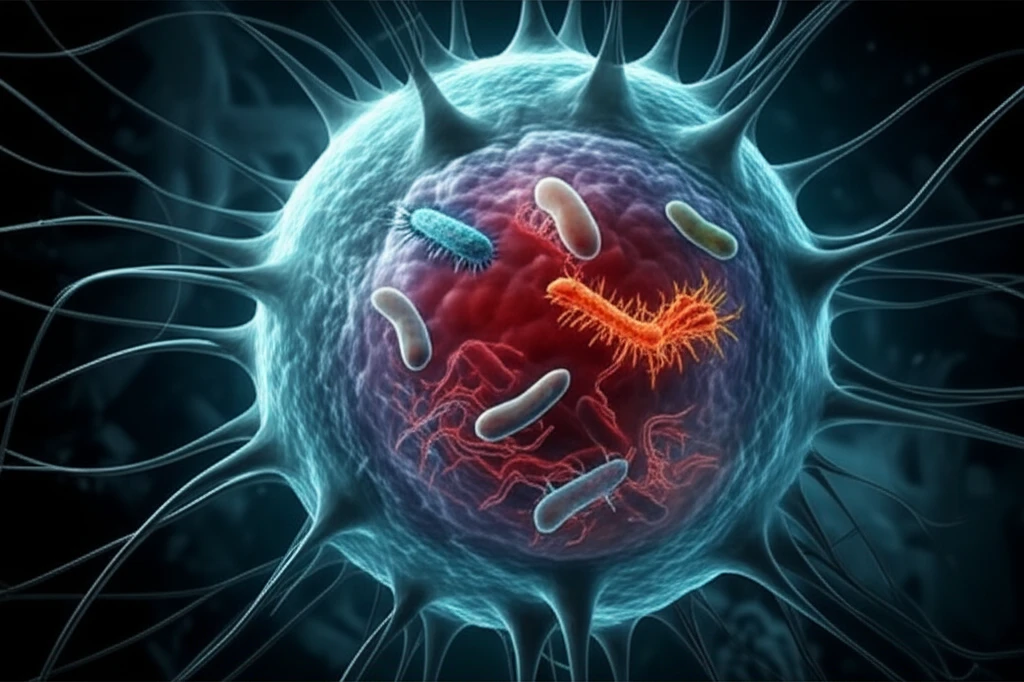
Unseen Threat: How Brain-Eating Amoebas Turn Deadly Bacteria into Super-Survivors

"A new study uncovers the hidden alliance between Acanthamoeba and common pathogens, revealing a potential game-changer in how we understand and combat bacterial infections."
For years, we've understood that bacteria like Streptococcus pneumoniae and Streptococcus pyogenes are major culprits behind common illnesses such as pharyngitis, pneumonia, and meningitis. These bacteria, while often treatable, have shown a knack for survival, sometimes outsmarting our best antibacterial efforts. But what if they're not acting alone?
A recent study has thrown a fascinating twist into this narrative, highlighting the role of Acanthamoeba, a free-living amoeba, often ominously referred to as the "brain-eating amoeba." While Acanthamoeba itself can cause severe infections, researchers are now discovering its potential as a safe harbor and training ground for bacteria, turning them into formidable foes.
This article explores the surprising relationship between Acanthamoeba and bacteria, drawing from a compelling study that uncovers how these interactions could be changing the game in bacterial survival and virulence. Understanding this dynamic could pave the way for innovative strategies to combat persistent infections and protect vulnerable populations.
The Unholy Alliance: Acanthamoeba and Bacterial Pathogens
The study, led by researchers Ruqaiyyah Siddiqui, Timothy Yu Yee Ong, Suk Yul Jung, and Naveed Ahmed Khan, investigated how Acanthamoeba castellanii interacts with Streptococcus pneumoniae and Streptococcus pyogenes. Their findings reveal that these bacteria don't just coexist with Acanthamoeba; they exploit it for survival and possibly enhanced virulence.
- Association and Invasion: Both S. pneumoniae and S. pyogenes can attach to and enter Acanthamoeba cells.
- Survival Inside Cysts: The bacteria can survive the encystation process, multiplying within the protective cyst form of Acanthamoeba.
- Enhanced Recovery: Bacteria recovered from Acanthamoeba cysts exhibit higher survival rates compared to those in the trophozoite stage.
- Protective Vector: Acanthamoeba acts as a vector, sheltering bacteria and potentially facilitating their growth and genetic exchange.
Implications and Future Directions
The discovery of Acanthamoeba serving as a reservoir and enhancer for bacterial pathogens opens new avenues for research and public health strategies. Understanding the molecular mechanisms behind this interaction could lead to novel therapeutic approaches that target both the bacteria and their amoebic host. Further research is needed to fully elucidate how Acanthamoeba affects bacterial virulence and transmission, but this study marks a significant step forward in our battle against infectious diseases.