
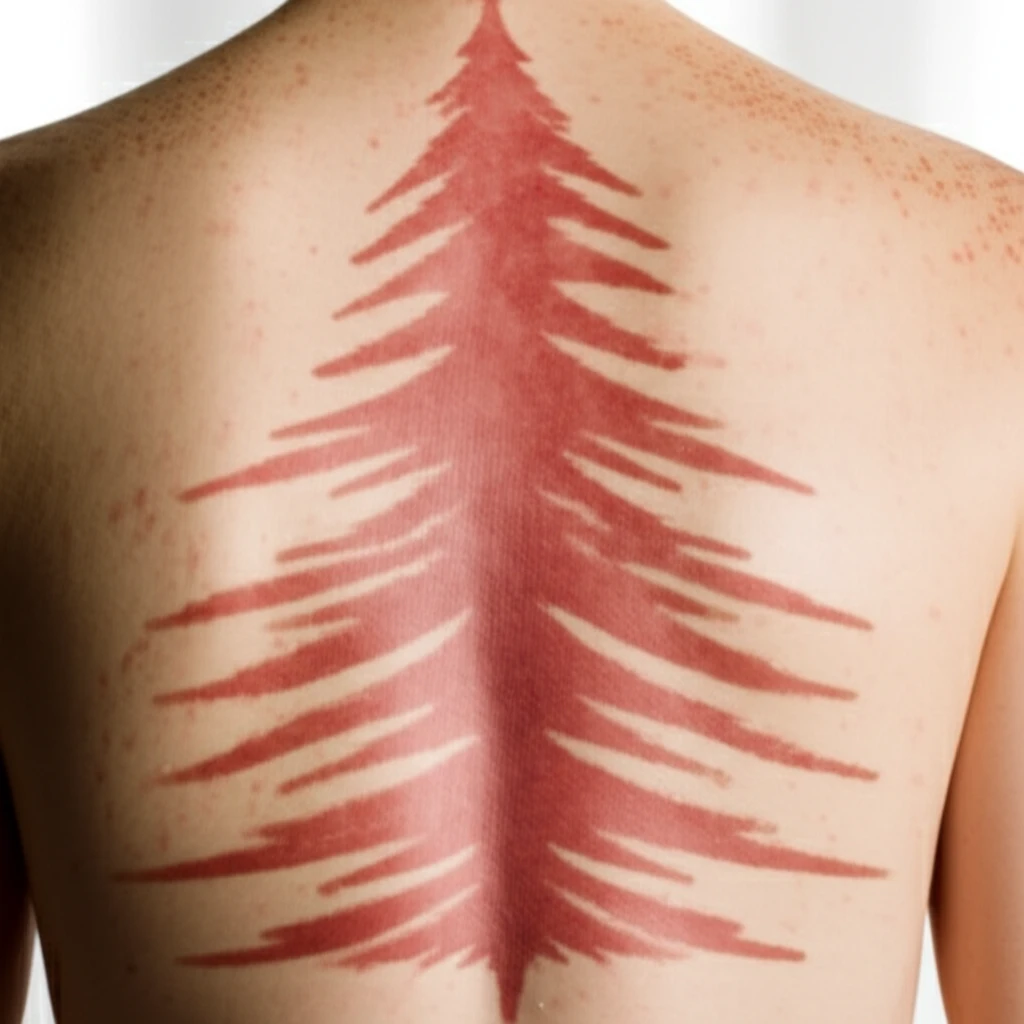
Illustration of a skin rash, displaying the characteristic 'Christmas tree' pattern associated with pityriasis rosea. The image is designed to be informative and reassuring.

Unraveling the Mystery of Pityriasis Rosea: What You Need to Know About This Skin Condition

"From Red Rashes to Recurrences: Understanding the Symptoms, Causes, and Treatments of Pityriasis Rosea"


Have you noticed a mysterious rash that just won't go away? Perhaps it started as a single, larger patch, followed by a widespread eruption of red, scaly spots. You might be dealing with pityriasis rosea, a skin condition that can be both puzzling and uncomfortable. It often presents with a unique pattern, but the exact cause remains somewhat elusive. This article delves into the world of pityriasis rosea, offering a comprehensive overview of its characteristics, potential triggers, and how to manage it.

Pityriasis rosea is characterized by a distinctive rash. Typically, it begins with a single, large, scaly patch, often on the chest, back, or abdomen, known as the 'herald patch.' This is followed by smaller, similar patches that erupt over the body in a 'Christmas tree' pattern. While usually not serious, the rash can cause mild itching and can last for several weeks to months, causing concern and discomfort for those affected.

Navigating the world of skin conditions can be daunting, but understanding the specifics of pityriasis rosea can help you approach it with clarity and confidence. This article aims to provide an in-depth understanding of pityriasis rosea, covering its clinical presentation, potential causes, diagnostic methods, and available treatment options. We'll also address the possibility of recurrence and provide guidance on how to manage the condition effectively.

Decoding Pityriasis Rosea: Symptoms, Causes, and Effective Management

Illustration of a skin rash, displaying the characteristic 'Christmas tree' pattern associated with pityriasis rosea. The image is designed to be informative and reassuring.

The primary symptom of pityriasis rosea is the characteristic rash. The herald patch, the initial sign, is often mistaken for ringworm due to its circular shape and raised borders. This patch can be anywhere from 2 to 10 centimeters in diameter. Weeks after the herald patch appears, smaller, oval-shaped lesions emerge, often following skin cleavage lines, hence the 'Christmas tree' pattern on the back. The rash is typically accompanied by mild itching, although in some cases, the itching can be more intense.

The exact cause of pityriasis rosea is not entirely known, but it's widely believed to be associated with viral infections. Human herpesviruses 6 and 7 (HHV-6 and HHV-7) have been strongly implicated. These viruses are also known to cause other common conditions, such as roseola in children. The condition is generally not contagious, and it's more common in people aged 10 to 35, but it can affect people of all ages. The immune system's response to the virus is what triggers the skin rash.

  • Symptoms: The key symptom is a skin rash, often starting with a single, larger patch (herald patch) followed by smaller, widespread lesions. The rash can be itchy.
  • Causes: While the exact cause is unclear, it's strongly linked to viral infections, particularly human herpesviruses 6 and 7 (HHV-6 and HHV-7).
  • Risk Factors: Anyone can get pityriasis rosea, but it's most common in people aged 10 to 35. It is generally not contagious.
  • Diagnosis: Diagnosis is usually based on a visual examination of the rash. A skin biopsy might be necessary in some cases to rule out other conditions.
  • Treatment: In many cases, the rash resolves on its own. Treatments focus on managing symptoms, such as itchiness.
When it comes to managing pityriasis rosea, patience is often key. Since it is usually a self-limiting condition, meaning it resolves on its own, treatment primarily focuses on symptom relief. Over-the-counter antihistamines can help alleviate itching. Calamine lotion or moisturizers can soothe irritated skin. In more severe cases, a doctor may prescribe topical corticosteroids to reduce inflammation. In rare instances, when the rash is widespread or severely symptomatic, oral antiviral medications, such as acyclovir, may be considered. Exposure to sunlight, under the supervision of a healthcare provider, may also help to speed up the healing process. The duration of the rash varies, but most cases resolve within 6 to 12 weeks. While pityriasis rosea typically resolves without long-term complications, it's essential to consult with a dermatologist to confirm the diagnosis and rule out other potential causes of the rash. The doctor can also provide specific guidance tailored to your symptoms and medical history. While pityriasis rosea may be concerning, knowing its characteristics and management strategies can make the experience more manageable.

Living with Pityriasis Rosea: A Path to Recovery and Well-being

Dealing with pityriasis rosea can be a challenging experience, but it is important to remember that it is usually temporary. By understanding the nature of the condition, its possible causes, and how to manage the symptoms, you can navigate the experience with greater confidence. If you suspect you have pityriasis rosea, consult a dermatologist for an accurate diagnosis and personalized care plan. With appropriate management, the rash will eventually fade, and your skin will return to its healthy state. Embrace this time to prioritize self-care, support your body's natural healing processes, and focus on overall well-being. You are not alone, and with the right knowledge and care, you can move towards recovery and a brighter future. Remember, with the right steps, you can overcome pityriasis rosea and regain your skin's health and vitality.

About this Article -

This article was crafted using a human-AI hybrid and collaborative approach. AI assisted our team with initial drafting, research insights, identifying key questions, and image generation. Our human editors guided topic selection, defined the angle, structured the content, ensured factual accuracy and relevance, refined the tone, and conducted thorough editing to deliver helpful, high-quality information.See our About page for more information.

This article is based on research published under:

DOI-LINK: 10.11622/smedj.2013190, Alternate LINK

Title: Recurrent And Persistent Pityriasis Rosea: An Atypical Case Presentation

Subject: General Medicine

Journal: Singapore Medical Journal

Publisher: Singapore Medical Journal

Authors: Sy Chuah, Hy Chia, Hh Tan

Published: 2014-01-01

Everything You Need To Know

1

What are the initial signs and symptoms of Pityriasis Rosea?

Pityriasis Rosea typically begins with a single, larger, scaly patch known as the 'herald patch,' which often appears on the chest, back, or abdomen. This herald patch can sometimes be mistaken for ringworm. Weeks after the herald patch appears, smaller, oval-shaped lesions emerge, often following skin cleavage lines, creating a 'Christmas tree' pattern, particularly on the back. Mild itching usually accompanies the rash, though the intensity can vary.

2

What is believed to cause Pityriasis Rosea, and is it contagious?

The exact cause of Pityriasis Rosea is not entirely known, but it's widely believed to be associated with viral infections, specifically Human Herpesviruses 6 and 7 (HHV-6 and HHV-7). These viruses have been implicated, but the condition is generally not considered contagious. The immune system's response to these viruses is thought to trigger the characteristic skin rash. It is most common in the ages of 10 to 35.

3

How is Pityriasis Rosea typically diagnosed, and when should I see a doctor?

Diagnosis of Pityriasis Rosea is usually based on a visual examination of the rash by a healthcare professional. In some cases, a skin biopsy might be necessary to rule out other conditions with similar appearances. It's essential to consult with a dermatologist or healthcare provider if you suspect you have Pityriasis Rosea to confirm the diagnosis and rule out other potential causes of the rash, ensuring appropriate management.

4

What treatment options are available for Pityriasis Rosea, and how long does it typically last?

Since Pityriasis Rosea is usually a self-limiting condition, treatment primarily focuses on symptom relief. Over-the-counter antihistamines can help alleviate itching, while calamine lotion or moisturizers can soothe irritated skin. In more severe cases, a doctor may prescribe topical corticosteroids to reduce inflammation, or even oral antiviral medications like acyclovir. Exposure to sunlight, under medical supervision, may also aid healing. The rash typically resolves within 6 to 12 weeks.

5

Are there any long-term complications associated with Pityriasis Rosea, and what can I do to manage the discomfort while I have it?

Pityriasis Rosea typically resolves without long-term complications. To manage discomfort, focus on relieving the itching and soothing the skin. Over-the-counter antihistamines and calamine lotion are helpful. It's important to avoid harsh soaps or irritating skincare products. In some cases, a dermatologist may prescribe topical corticosteroids to reduce inflammation and itching. While Pityriasis Rosea is active, prioritize self-care and overall well-being to support your body's natural healing processes.

Newsletter Subscribe

Subscribe to get the latest articles and insights directly in your inbox.