
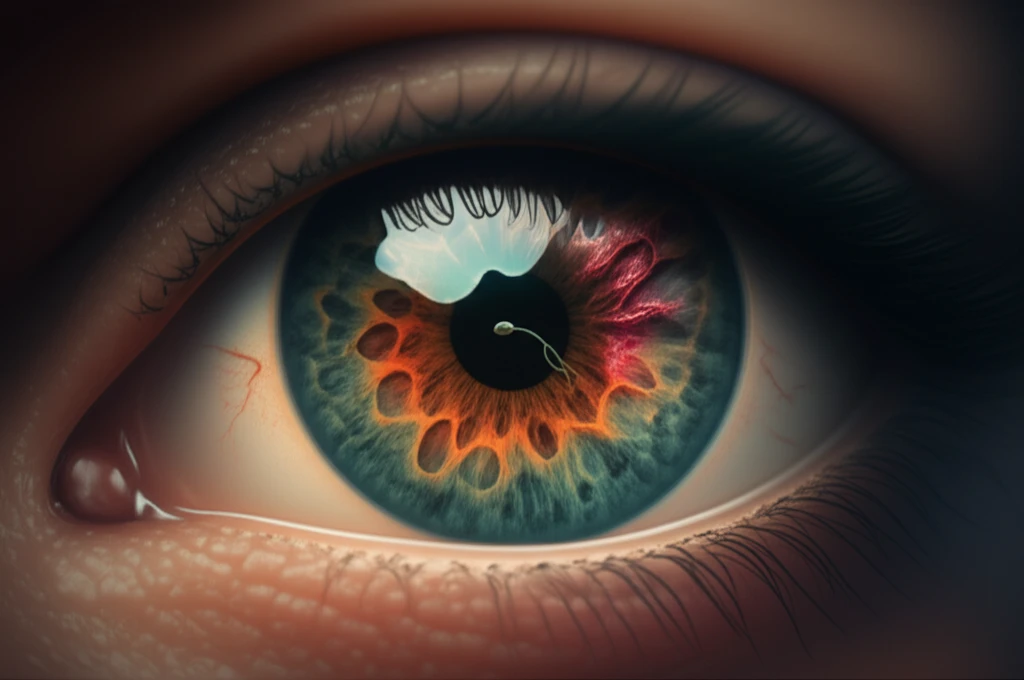
Illustration showing a healthy eye and an eye with retinochoroidal scars, visualizing the impact of ocular toxoplasmosis. A tiny parasite attacks the eye, symbolizing the infection. Wide-angle view, with a slight fantastical touch.

Unraveling the Mystery: How Infections in the Eye Can Shape Vision, and What You Can Do

"Scientists are uncovering the hidden links between common infections, like those caused by the parasite Toxoplasma gondii, and the long-term health of our eyes. Here's how these microscopic battles could be affecting your sight, and what you can do to protect it."


Our eyes are windows to the world, offering us a vivid view of life's beauty and complexity. But what if those windows were vulnerable to microscopic invaders? Ocular toxoplasmosis, an infection caused by the parasite Toxoplasma gondii, is a prime example of how even seemingly minor infections can lead to significant, long-term consequences for our vision. New research is illuminating the intricate relationship between these infections, our immune systems, and the health of our eyes.

This isn't just about blurry vision; it's about understanding how our bodies respond to threats at the cellular level and the lasting impact of these battles. Imagine your retina, the light-sensitive tissue at the back of your eye, as a battleground. When an infection like toxoplasmosis takes hold, the consequences can range from minor annoyances to severe vision impairment. Scientists are working to decipher the complex interactions that determine the severity of these outcomes.

This article will explore the latest findings on how specific genetic variations can influence the impact of these infections, why some people are more vulnerable than others, and what steps you can take to protect your vision. We'll delve into the science, break down the complexities, and offer practical advice to keep your eyes healthy and your vision sharp.

The Tiny Culprit: Unmasking Toxoplasma Gondii and Its Impact on the Retina

Illustration showing a healthy eye and an eye with retinochoroidal scars, visualizing the impact of ocular toxoplasmosis. A tiny parasite attacks the eye, symbolizing the infection. Wide-angle view, with a slight fantastical touch.

Ocular toxoplasmosis is a sneaky infection. It's caused by the single-celled parasite Toxoplasma gondii, which can be found worldwide. People often contract it by consuming undercooked meat or through contact with cat feces. Once inside the body, the parasite can travel to various tissues, including the eyes. The eye, with its delicate structure, is particularly susceptible to damage from this parasite, leading to inflammation and scarring.

When the parasite reaches the retina, it triggers an immune response. This response, while meant to protect us, can sometimes cause more harm than good. The immune system attempts to contain the infection, but the inflammation can damage retinal cells. This damage manifests as retinochoroidal scars—permanent marks on the retina that can distort or block vision. The severity of these scars, and the resulting vision loss, depends on a variety of factors, including the location of the infection, the strength of the immune response, and the specific genetic makeup of the individual.

  • The Infection Route: Typically through undercooked meat or cat feces.
  • The Target: The retina, the light-sensitive tissue at the back of the eye.
  • The Reaction: Immune response and inflammation that cause permanent scars.
  • The Outcome: Vision distortion or loss, depending on scar severity.
Researchers have identified different types of retinal lesions based on their severity. Type A lesions are the most severe, often resulting in significant vision impairment, while Type C lesions are milder. Understanding these different types of lesions and how they relate to the host's immune response is crucial in developing effective treatments and preventative strategies.

Protecting Your Vision: Steps to Take

The journey to understanding ocular toxoplasmosis is ongoing. Continued research is crucial to refine diagnostic methods, develop more effective treatments, and identify individuals at higher risk. By staying informed and taking proactive measures, you can significantly reduce your risk. Regular eye exams, especially if you're at risk or experience any vision changes, are critical. So, take care of your eyes, and ensure they stay healthy for a clear view of the future.

About this Article -

This article was crafted using a human-AI hybrid and collaborative approach. AI assisted our team with initial drafting, research insights, identifying key questions, and image generation. Our human editors guided topic selection, defined the angle, structured the content, ensured factual accuracy and relevance, refined the tone, and conducted thorough editing to deliver helpful, high-quality information.See our About page for more information.

This article is based on research published under:

DOI-LINK: 10.1590/0074-0276140539, Alternate LINK

Title: Single Nucleotide Polymorphisms In The Interferon Gamma Gene Are Associated With Distinct Types Of Retinochoroidal Scar Lesions Presumably Caused By Toxoplasma Gondii Infection

Subject: Microbiology (medical)

Journal: Memórias do Instituto Oswaldo Cruz

Publisher: FapUNIFESP (SciELO)

Authors: Ricardo Guerra Peixe, Marcela Santana Bastos Boechat, Alba Lucinia Peixoto Rangel, Rhônia França Gomes Rosa, Maria Luiza Petzl-Erler, Lilian Mg Bahia-Oliveira

Published: 2014-02-01

Everything You Need To Know

1

How does Toxoplasma gondii cause Ocular toxoplasmosis, and what are the primary ways people contract this parasite?

Ocular toxoplasmosis is caused by the parasite Toxoplasma gondii. People typically contract it by consuming undercooked meat or through contact with cat feces. Once inside the body, Toxoplasma gondii can travel to various tissues, including the retina of the eye, leading to inflammation and potential scarring. This inflammation, triggered by the immune system's response to the parasite, can damage retinal cells, causing vision distortion or loss depending on the severity and location of the retinochoroidal scars.

2

What are retinochoroidal scars, and how do they impact vision in individuals with ocular toxoplasmosis?

Retinochoroidal scars are permanent marks on the retina resulting from the immune system's response to an infection like ocular toxoplasmosis. When Toxoplasma gondii infects the retina, the resulting inflammation can damage retinal cells, leaving behind these scars. The severity and location of these scars determine the extent of vision distortion or loss. Type A lesions are the most severe and may cause significant visual impairment, while Type C lesions are milder and result in less damage.

3

What role does the immune system play in ocular toxoplasmosis, and how can the immune response contribute to vision damage?

In ocular toxoplasmosis, when Toxoplasma gondii reaches the retina, it triggers an immune response. While the purpose of this response is to protect the body by containing the infection, the inflammation it causes can inadvertently damage retinal cells. This inflammation is a key factor in the formation of retinochoroidal scars, which can lead to vision distortion or loss. Therefore, the immune system's reaction, although intended to defend against the parasite, can contribute to the vision damage associated with ocular toxoplasmosis.

4

Are there different types of retinal lesions associated with ocular toxoplasmosis, and how do they vary in severity?

Yes, researchers have identified different types of retinal lesions based on their severity in ocular toxoplasmosis. Type A lesions are considered the most severe and often result in significant vision impairment. On the other hand, Type C lesions are milder and cause less damage to the retina. The classification of these lesions helps in understanding the range of potential outcomes and in developing targeted treatment strategies for individuals affected by Toxoplasma gondii.

5

What proactive measures can individuals take to protect their vision and reduce their risk of ocular toxoplasmosis and other eye infections?

To protect vision and reduce the risk of ocular toxoplasmosis, proactive measures include practicing good hygiene, such as thorough handwashing, especially after handling raw meat or being in contact with cat feces. Ensure meat is properly cooked to eliminate the risk of ingesting Toxoplasma gondii. Regular eye exams are crucial, particularly for those at higher risk or experiencing vision changes, to detect and address any potential issues early. Continued research is essential for refining diagnostic methods and developing more effective treatments for ocular toxoplasmosis.

Newsletter Subscribe

Subscribe to get the latest articles and insights directly in your inbox.