
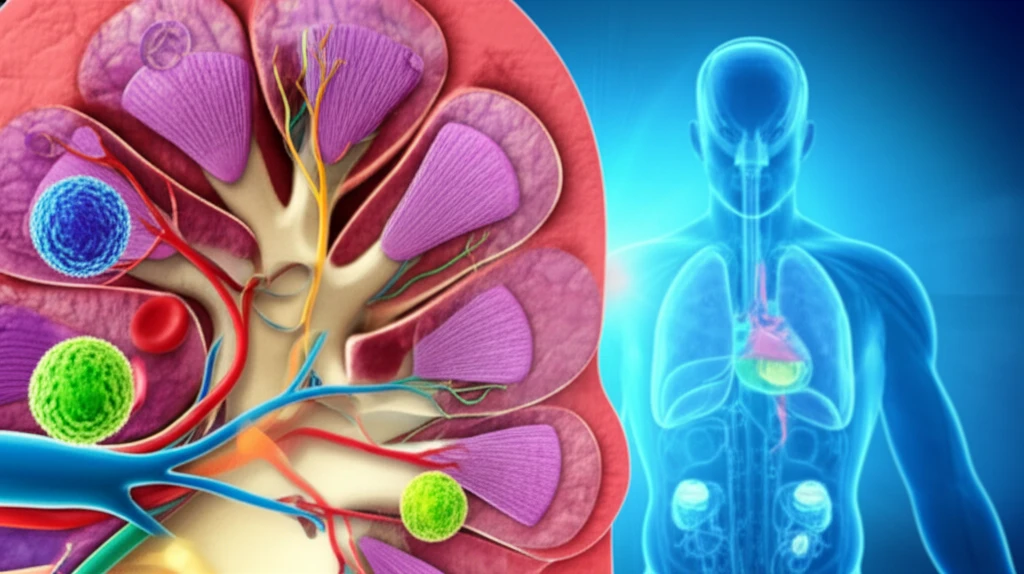
Unraveling the Mystery: How Doctors Are Using Immunostaining to Tackle Kidney Disease

"Groundbreaking research reveals new insights into the role of immune cells in a specific form of kidney disease, potentially paving the way for more effective treatments."
Kidney disease, often a silent and insidious threat, affects millions worldwide. Its impact extends beyond physical health, touching every aspect of life. While treatments exist, the complexity of the disease necessitates continuous research. Recent advancements in medical science are offering new hope, particularly in understanding and combating a specific form of kidney ailment called antineutrophil cytoplasmic antibody (ANCA)-associated glomerulonephritis, or ANCA-GN.
A recent study published in the 'American Journal of Nephrology' has shed light on the intricate mechanisms underlying ANCA-GN. The research delves into the use of immunostaining, a sophisticated technique used to visualize immune cells within kidney tissues. This method provides unprecedented detail, revealing how these cells contribute to disease progression. The implications of this research could revolutionize how doctors diagnose and treat this form of kidney disease.
This article explores the groundbreaking research, breaking down complex medical concepts into understandable insights. We'll examine the key findings, the innovative techniques used, and the potential impact on patients and the future of kidney disease treatment. By exploring this research, we aim to empower you with knowledge, offering a clear understanding of the latest developments in healthcare.
Unpacking ANCA-Associated Glomerulonephritis and the Role of Immunostaining
ANCA-associated glomerulonephritis (ANCA-GN) is a type of kidney disease characterized by inflammation of the glomeruli, the tiny filters within the kidneys. This inflammation can impair the kidneys' ability to remove waste and excess fluids from the body, potentially leading to kidney failure. The disease is closely linked to the presence of ANCA antibodies, which mistakenly attack the body's tissues.
- The study found that the majority of the interstitial infiltrate consisted of T lymphocytes.
- The study examined 33 patients treated with cyclophosphamide (CYC; n = 17) or rituximab (RTX; n = 16).
- The researchers investigated the relationship between these cell types and treatment outcomes, such as kidney function.
The Future of Kidney Disease Treatment: A Glimpse of Hope
This research marks a significant step in understanding the complex nature of kidney disease and the potential role of immune cells in its progression. By using innovative techniques like immunostaining, doctors and researchers are gaining invaluable insights that could transform patient care. While more research is needed, the study opens new avenues for developing more targeted and effective treatments, offering a brighter future for those affected by ANCA-GN and similar conditions.