
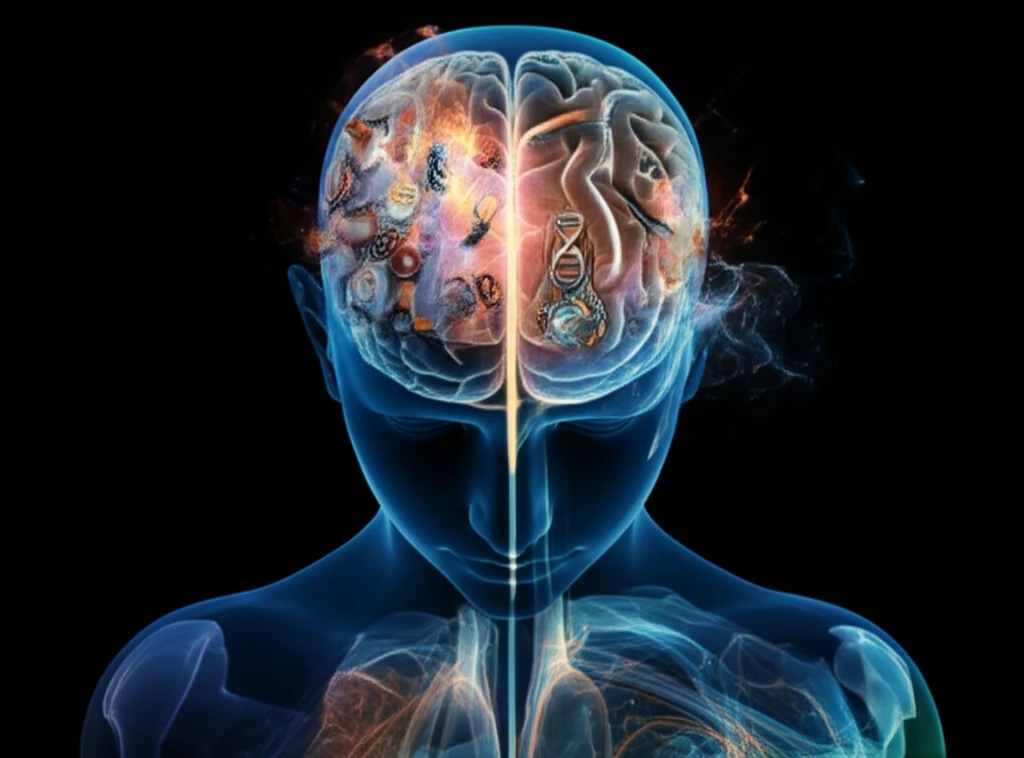
Illustration of a brain with glowing pathways, representing medical diagnostics. Showing the impact of modern medicine, and the use of advance technologies

Unraveling the Mystery: How a Rare Infection Changed One Woman's Life and the Future of Diagnosis

"A groundbreaking case study reveals the power of cutting-edge technology in identifying and treating rare and complex medical conditions, offering hope for those with mysterious illnesses."


For years, she endured a relentless cycle of fever, headaches, and pain, a shadow of illness hanging over her life. This wasn't a common ailment; it was a medical puzzle that baffled doctors, leading to countless tests and treatments, yet offering little in the way of answers. But her story takes a dramatic turn, showcasing the incredible power of modern medicine and offering a beacon of hope for anyone facing an unknown illness.

This is the story of a woman whose persistent symptoms led her on a 15-year odyssey through the labyrinth of medical diagnoses. Her journey highlights the challenges of identifying rare and complex conditions, often characterized by vague symptoms and inconclusive test results. But thanks to the relentless pursuit of answers and a groundbreaking diagnostic approach, her case became a turning point, offering both a diagnosis and a path toward effective treatment.

This remarkable case study sheds light on the power of advanced diagnostics, particularly in the realm of infectious diseases. It's a tale of medical detective work, where cutting-edge technology played a crucial role in unraveling a complex medical mystery. It's a story that will resonate with anyone who has faced the frustration of an undiagnosed illness and offers a powerful message of hope and resilience.

The Unseen Culprit: Unmasking Neurocysticercosis Through Advanced Diagnostics

Illustration of a brain with glowing pathways, representing medical diagnostics. Showing the impact of modern medicine, and the use of advance technologies

The woman's journey began with a series of puzzling symptoms that resisted conventional diagnosis. Initially, she experienced episodes of back pain, fever, and neck stiffness. As time went on, the symptoms evolved, suggesting a progression that baffled physicians. What started as intermittent discomfort slowly escalated into a chronic condition that significantly impacted her life.

Conventional diagnostic methods repeatedly failed to provide clear answers. Despite extensive testing, including spinal taps, MRIs, and biopsies, the root cause of her symptoms remained elusive. She underwent multiple treatments, none of which provided lasting relief, leaving her and her medical team in a state of uncertainty.

  • Initial Symptoms: Back pain, fever, neck stiffness
  • Evolving Symptoms: The condition progressed to the chronic lumbar arachnoiditis
  • Diagnostic Challenges: The initial diagnostic methods could not find any answers, that lead to multiple treatments which were not working.
The breakthrough came through a revolutionary technique known as metagenomic next-generation sequencing (mNGS). This advanced diagnostic tool analyzes the genetic material present in a sample, enabling the identification of various pathogens, even those that might be undetectable through standard methods. It was a game-changer in this case, leading to a definitive diagnosis and a targeted treatment plan.

A New Era of Diagnostics

This case study underscores the critical role of advanced diagnostics in solving complex medical mysteries. It highlights the importance of ongoing research and innovation in the field of medicine, offering a sense of hope for those who continue to battle with undiagnosed conditions. This woman's journey is a testament to the resilience of the human spirit and the power of medical science to transform lives.

About this Article -

This article was crafted using a human-AI hybrid and collaborative approach. AI assisted our team with initial drafting, research insights, identifying key questions, and image generation. Our human editors guided topic selection, defined the angle, structured the content, ensured factual accuracy and relevance, refined the tone, and conducted thorough editing to deliver helpful, high-quality information.See our About page for more information.

Everything You Need To Know

1

What were the initial symptoms that the woman experienced at the beginning of her 15-year health journey?

Initially, the woman experienced episodes of back pain, fever, and neck stiffness. As time progressed, these symptoms evolved, eventually leading to a diagnosis of chronic lumbar arachnoiditis. The progression of these symptoms played a crucial role in the diagnostic challenges, as they were initially non-specific and didn't immediately point to the underlying condition.

2

Why were conventional diagnostic methods, such as spinal taps, MRIs, and biopsies, not effective in diagnosing the woman's condition?

Conventional diagnostic methods were ineffective because the root cause of her symptoms was not readily detectable through standard testing. The underlying infection was difficult to identify using traditional methods, as the symptoms were vague and did not provide a clear indication of the specific pathogen involved. This highlights the limitations of conventional methods when dealing with rare or complex conditions, where the pathogen might be present in low quantities or exhibit atypical characteristics.

3

How did metagenomic next-generation sequencing (mNGS) contribute to finally diagnosing the woman's illness?

Metagenomic next-generation sequencing (mNGS) was the key to finally diagnosing the woman's illness. This advanced diagnostic tool analyzes all the genetic material in a sample, allowing for the identification of various pathogens, including those that might be missed by standard tests. In this case, mNGS was able to detect the specific infectious agent responsible for her symptoms, leading to a definitive diagnosis and a targeted treatment plan. mNGS offers a broader and more sensitive approach to pathogen detection, making it invaluable for complex and rare cases.

4

What is the significance of this case in highlighting the challenges of diagnosing rare and complex medical conditions?

This case highlights the significant challenges in diagnosing rare and complex medical conditions, which are often characterized by vague symptoms and inconclusive test results. The woman's 15-year journey underscores the difficulties that both patients and medical professionals face when dealing with conditions that are not easily identifiable through conventional methods. It emphasizes the need for advanced diagnostic tools, such as metagenomic next-generation sequencing (mNGS), and a persistent, collaborative approach to unravel medical mysteries.

5

In what ways does this case offer hope for individuals who are currently battling undiagnosed illnesses and facing similar diagnostic challenges?

This case offers significant hope by demonstrating the potential of advanced diagnostics, specifically metagenomic next-generation sequencing (mNGS), to identify the root causes of previously undiagnosed illnesses. It shows that even after years of unsuccessful treatments and diagnostic tests, a breakthrough is possible with the application of cutting-edge technology. This can encourage individuals with undiagnosed conditions to seek out specialized diagnostic approaches and remain hopeful about finding answers, and that medical science continues to evolve and provide new solutions for complex medical mysteries.

Newsletter Subscribe

Subscribe to get the latest articles and insights directly in your inbox.