
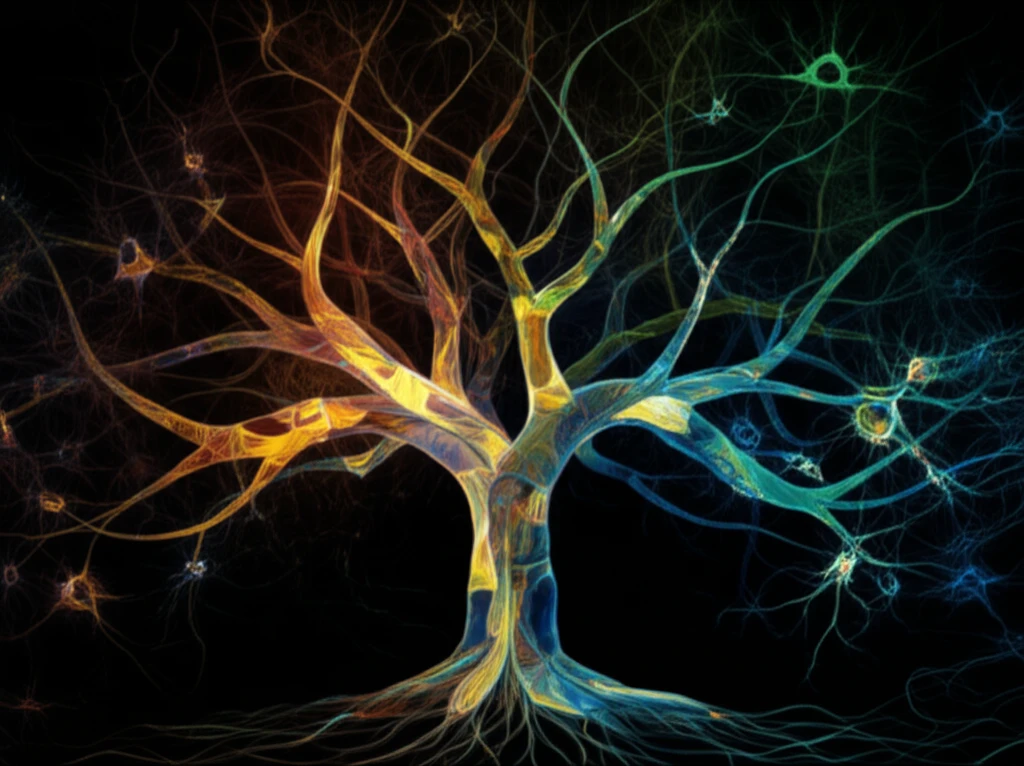
Family tree transforming into neural pathways, symbolizing genetic inheritance and neurological disease.

Unraveling LBSL: When Family Genes Tell Different Stories

"A Sudanese family's case sheds light on the unpredictable nature of DARS2-related leukoencephalopathy and the importance of genetic screening."


Imagine a disease where the blueprint of your body – your genes – holds the key, yet the story they tell varies dramatically from person to person, even within the same family. This is the reality of Leukoencephalopathy with brainstem and spinal cord involvement and lactate elevation, or LBSL. LBSL (OMIM #611105) is a rare genetic disorder affecting the central nervous system. It's characterized by progressive damage to the brain's white matter, brainstem, and spinal cord, often accompanied by elevated levels of lactate, a chemical compound involved in energy production.

LBSL stems from mutations in the DARS2 gene, responsible for producing an enzyme crucial for mitochondrial function. Mitochondria are the powerhouses of our cells, and when DARS2 malfunctions, these powerhouses falter, leading to a cascade of neurological problems. While the genetic cause is singular, the presentation of LBSL is anything but uniform. Symptoms can range from mild motor impairments to severe disability, with onset occurring anywhere from early childhood to adulthood.

A recent case study from a Sudanese family, published in BMC Neurology, highlights this remarkable variability. The study, led by Ashraf Yahia and colleagues, details the experiences of two siblings diagnosed with LBSL and their elder sister, all carrying the same DARS2 mutations. Their story underscores the complexities of LBSL, the importance of considering genetic screening even in seemingly healthy individuals, and the challenges of predicting the course of this rare condition.

A Family's Tale: Different Faces of the Same Mutation

Family tree transforming into neural pathways, symbolizing genetic inheritance and neurological disease.

The Sudanese family presented a unique puzzle for doctors. Two siblings, aged 18 and 15, exhibited classic LBSL symptoms since infancy: pyramidal signs (indicating motor pathway damage) and developmental delays. Genetic testing confirmed they both carried two compound heterozygous variants in the DARS2 gene (NM_018122.4:c.1762C > G and c.563G > A), meaning they inherited a different mutated copy of the gene from each parent.

However, the siblings' 20-year-old sister presented a different picture. While genetic testing revealed she also carried the same two DARS2 mutations, her clinical symptoms were minimal – only brisk reflexes and mild spasticity in her legs. This discrepancy raised a crucial question: how could individuals with the same genetic defect experience such vastly different outcomes?

  • The Affected Siblings: Displayed delayed motor development, speech difficulties, and seizures (in one case). They experienced progressive spasticity, requiring support for walking, and exhibited ocular cerebellar signs like nystagmus.
  • The Minimally Affected Sister: Showed only subtle signs on physical examination, with no functional impairments. She had normal cognitive function and attended university.
  • A Surprising Twist: Despite the elder sister's mild clinical presentation, brain MRI scans revealed abnormalities similar to her affected siblings, including high signal intensity in the periventricular white matter and dentate nuclei. Furthermore, her serum lactate levels were also elevated, comparable to those of her ill sisters.
This dissociation between clinical presentation and radiological findings is a key takeaway from the study. It suggests that the severity of LBSL's impact on the brain and spinal cord doesn't always correlate with the outward symptoms a person experiences. This has significant implications for how we approach diagnosis and genetic counseling for LBSL.

Implications and Future Directions

The Sudanese family's story underscores the importance of considering genetic screening for LBSL, even in individuals who appear relatively healthy. Identifying asymptomatic or minimally symptomatic carriers is particularly relevant in communities where consanguineous marriage (marriage between closely related individuals) is common, as it increases the risk of inheriting recessive genetic disorders like LBSL.

The study also highlights the need for further research to understand the factors that contribute to the variable expressivity of LBSL. Why do some individuals with DARS2 mutations develop severe symptoms, while others remain largely unaffected? Potential explanations include other genetic modifiers, environmental factors, or differences in mitochondrial function.

Ultimately, unraveling the complexities of LBSL's phenotypic variability will pave the way for more accurate diagnoses, improved genetic counseling, and potentially, targeted therapies that can address the underlying mechanisms of this challenging neurological disorder. Further functional studies are needed to confirm the pathogenicity of the reported variants. This report is the first to report cases of LBSL from sub-Saharan Africa.

About this Article -

This article was crafted using a human-AI hybrid and collaborative approach. AI assisted our team with initial drafting, research insights, identifying key questions, and image generation. Our human editors guided topic selection, defined the angle, structured the content, ensured factual accuracy and relevance, refined the tone, and conducted thorough editing to deliver helpful, high-quality information.See our About page for more information.

This article is based on research published under:

DOI-LINK: 10.1186/s12883-018-1180-7, Alternate LINK

Title: Intra-Familial Phenotypic Heterogeneity In A Sudanese Family With Dars2-Related Leukoencephalopathy, Brainstem And Spinal Cord Involvement And Lactate Elevation: A Case Report

Subject: Neurology (clinical)

Journal: BMC Neurology

Publisher: Springer Science and Business Media LLC

Authors: Ashraf Yahia, Liena Elsayed, Arwa Babai, Mustafa A. Salih, Sarah Misbah El-Sadig, Mutaz Amin, Mahmoud Koko, Rayan Abubakr, Razaz Idris, Shaimaa Omer M.A. Taha, Salah A. Elmalik, Alexis Brice, Ammar Eltahir Ahmed, Giovanni Stevanin

Published: 2018-10-23

Everything You Need To Know

1

What is LBSL?

LBSL, or Leukoencephalopathy with brainstem and spinal cord involvement and lactate elevation, is a rare genetic disorder. It causes progressive damage to the brain's white matter, brainstem, and spinal cord. Symptoms can vary, and it's often associated with elevated levels of lactate, a marker of mitochondrial dysfunction, which relates to how cells produce energy. The severity of symptoms ranges from mild motor impairments to severe disability.

2

Why is the DARS2 gene so important in LBSL?

The DARS2 gene is critical because it produces an enzyme essential for the proper functioning of mitochondria. Mitochondria are the energy powerhouses of our cells. Mutations in the DARS2 gene lead to mitochondrial dysfunction, disrupting energy production within the central nervous system. This disruption then triggers a cascade of neurological problems, characteristic of LBSL.

3

How does the Sudanese family case demonstrate the complexities of LBSL?

The Sudanese family case highlights that individuals with the same DARS2 mutations can have vastly different clinical outcomes. Some siblings may experience severe symptoms like motor impairments and developmental delays, while others, despite carrying the same genetic mutations, may exhibit minimal symptoms. The case illustrates a dissociation between outward symptoms and what is seen on brain imaging (MRI scans). Even with the same genetic defect, the impact of LBSL on the brain and spinal cord may not directly correlate with the symptoms experienced. The elder sister in the case study, despite being asymptomatic, showed the same abnormalities on the brain MRI as her siblings. This presents significant implications for diagnosis and genetic counseling for LBSL.

4

Why is genetic screening important in the context of LBSL?

Genetic screening is important for LBSL because it can identify individuals who carry the mutated DARS2 gene, even if they don't show any symptoms. Early detection is crucial for genetic counseling. Identifying carriers becomes especially relevant in communities where consanguineous marriage is common, as this increases the chances of inheriting recessive genetic disorders like LBSL. Early diagnosis also allows for more informed management and monitoring of the condition, helping families prepare for potential health challenges.

5

What are the broader implications of these findings regarding LBSL?

The implications of the study's findings include the need to consider genetic screening in cases where LBSL is suspected, even in those with mild or no symptoms. Understanding the spectrum of how LBSL manifests also improves genetic counseling. This allows doctors and genetic counselors to better inform families about the possibilities, from the mildest to the most severe forms of the disease, providing families with a more realistic and thorough understanding of the disease's potential impact. It helps families to be prepared.

Newsletter Subscribe

Subscribe to get the latest articles and insights directly in your inbox.