
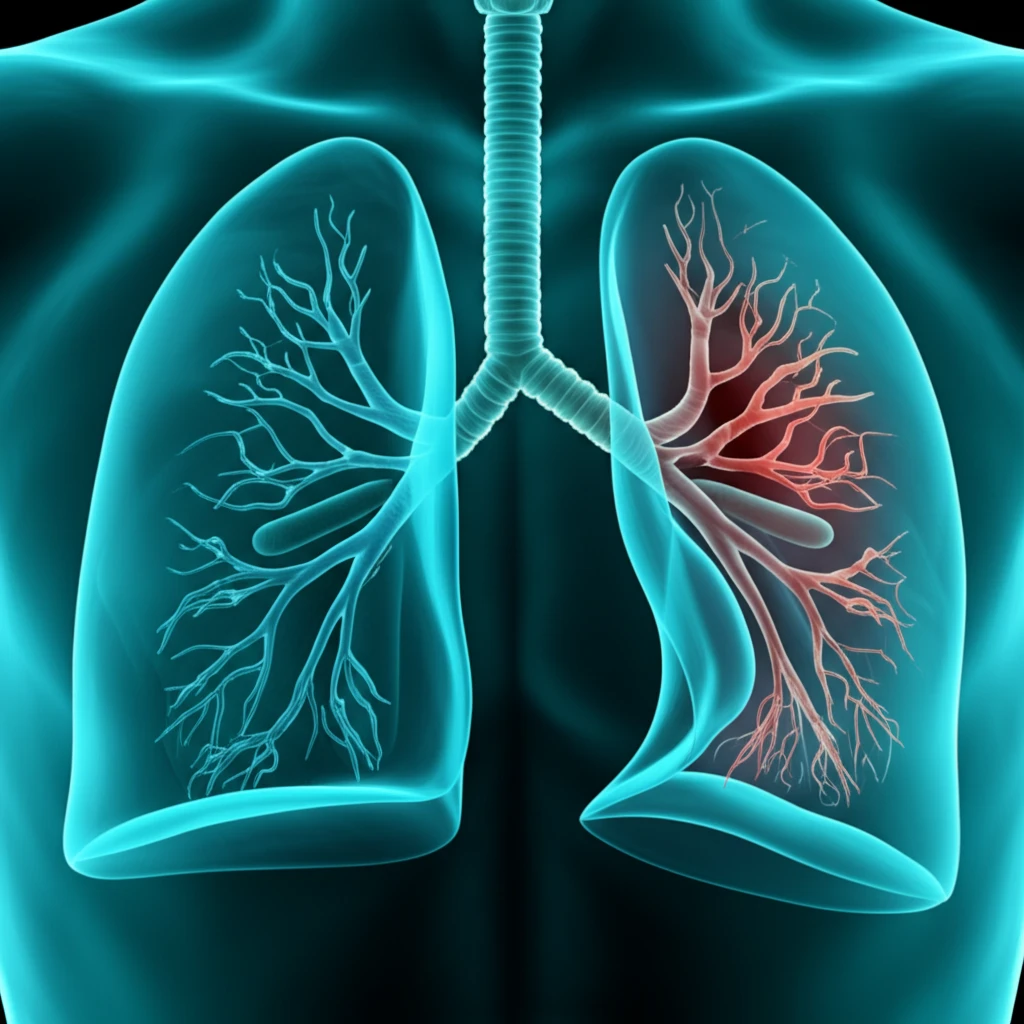
Unmasking Tuberculosis: Early Detection and Management Strategies

"A comprehensive look at innovative diagnostic tools, risk factors, and public health approaches in combating TB, particularly in vulnerable populations."
Tuberculosis (TB) remains a global health challenge, particularly in regions with limited resources and high rates of HIV co-infection. Early detection and appropriate management are critical to reducing TB-related morbidity and mortality. This article delves into recent research and findings presented at a pulmonary conference, shedding light on innovative diagnostic tools, risk factors, and effective public health strategies in combating TB.
The diagnostic journey for TB can often be complex, requiring a multi-faceted approach that includes bacteriological confirmation, histological examination, and advanced molecular techniques. The studies highlighted here address various aspects of TB, from the relationship between bacillary load and disease presentation to the effectiveness of new diagnostic tools like GeneXpert in resource-limited settings.
Moreover, the increasing incidence of smear-negative pulmonary tuberculosis poses a significant diagnostic challenge, necessitating the use of more sensitive and rapid diagnostic methods. This article aims to provide a comprehensive overview of current approaches to TB management, emphasizing the importance of tailored strategies for different patient populations and settings.
Decoding the Diagnostic Dilemma: Advanced Tools and Techniques
Accurate and timely diagnosis is paramount in TB management. Conventional methods such as sputum smear microscopy, while widely accessible, have limited sensitivity, particularly in patients with smear-negative TB or those co-infected with HIV. Recent advancements in molecular diagnostics, such as the GeneXpert MTB/RIF assay, have revolutionized TB detection by providing rapid and accurate identification of Mycobacterium tuberculosis and simultaneous detection of rifampicin resistance.
- GeneXpert MTB/RIF Assay: Provides rapid detection of Mycobacterium tuberculosis and rifampicin resistance.
- Sputum Smear Microscopy: A conventional method with limited sensitivity, particularly in smear-negative TB.
- Histological Examination: Useful for confirming TB in extrapulmonary sites and excluding other differential diagnoses.
- Molecular Diagnostics: Revolutionize TB detection by providing rapid and accurate identification.
Optimizing Public Health Strategies: Addressing Risk Factors and Improving Access
Effective TB control requires a comprehensive approach that addresses underlying risk factors, improves access to healthcare services, and implements targeted interventions for vulnerable populations. Studies have identified several factors associated with increased TB risk, including HIV co-infection, smoking, diabetes, and socioeconomic disparities. Addressing these risk factors through public health initiatives and integrated care models is essential to reducing TB incidence and improving patient outcomes.