
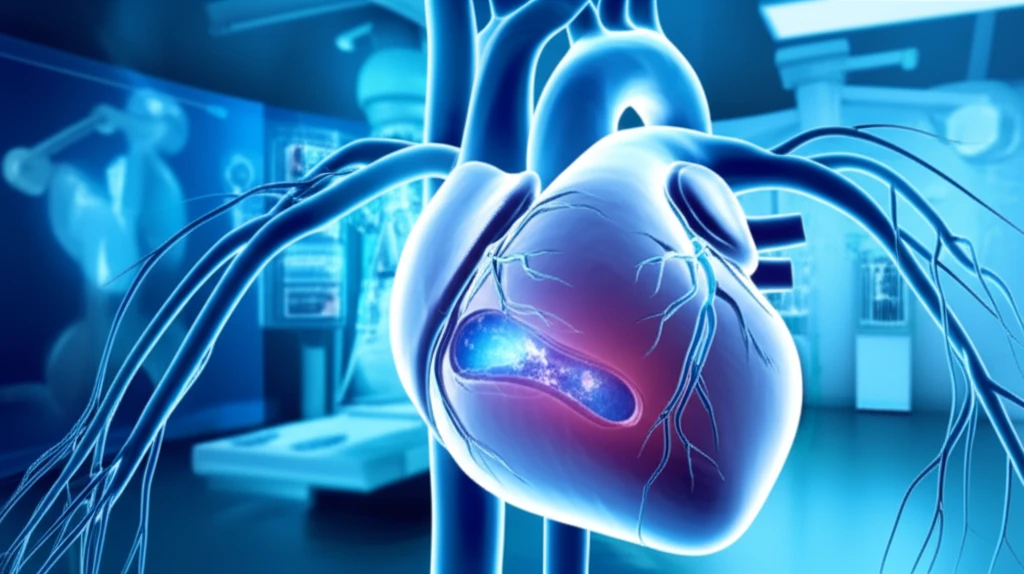
A digital illustration showcasing a human heart with a ruptured artery, highlighting the use of advanced imaging techniques in cardiology.

Unmasking the Silent Threat: How Advanced Imaging is Revolutionizing Heart Health

"From Shadows to Solutions: A Groundbreaking Look at Plaque Rupture and Heart Disease through Cutting-Edge Imaging Techniques"


Heart disease remains a formidable challenge, claiming countless lives each year. Among the various forms of heart disease, acute coronary syndrome (ACS) stands out as a particularly dangerous condition. ACS often arises from the sudden rupture of plaque within the arteries, leading to blood clots that can swiftly block blood flow to the heart. This can cause a heart attack or even sudden cardiac arrest.

In the relentless quest to combat heart disease, medical science continues to develop increasingly sophisticated diagnostic tools. One such advancement is optical frequency domain imaging (OFDI), a cutting-edge technique that offers unparalleled views of the coronary arteries. Unlike older methods, OFDI can visualize the intricate details within the artery walls, including the presence of calcified plaques and the subtle signs of impending rupture.

This article explores how OFDI is transforming our ability to diagnose and manage ACS. By examining a case study where OFDI played a crucial role, we’ll delve into the technology's capabilities and the significant implications it holds for individuals at risk of heart disease. Understanding these advancements is critical for anyone interested in heart health, ensuring proactive measures for a healthier future.

Unveiling the Culprit: The Role of Plaque Rupture in Acute Coronary Syndrome

A digital illustration showcasing a human heart with a ruptured artery, highlighting the use of advanced imaging techniques in cardiology.

At the heart of ACS lies the perilous phenomenon of plaque rupture. Plaque, a buildup of cholesterol, fats, and other substances, accumulates within the arteries over time. This plaque can become unstable, and if the fibrous cap that covers the plaque breaks, it can lead to the formation of a blood clot. This clot can then obstruct the artery, thereby cutting off blood supply to the heart muscle, a condition known as a heart attack.

Traditional diagnostic methods such as intravascular ultrasound (IVUS) have provided valuable insights into coronary artery disease. However, these methods often fall short in fully characterizing the structure of plaques, especially those with significant calcification. Calcification, the hardening of the arteries due to calcium deposits, can obscure the finer details that are key to identifying vulnerable plaques. This is where OFDI steps in, offering a clearer and more detailed view.

  • Superior Imaging: OFDI offers higher resolution than IVUS, providing a much clearer view of the artery walls.
  • Calcification Assessment: OFDI can better characterize calcified plaques, which are often difficult to assess with other methods.
  • Plaque Vulnerability: OFDI can identify features within plaques that indicate a higher risk of rupture.
  • Early Detection: By identifying vulnerable plaques, OFDI enables earlier and more targeted interventions.
In the case study presented in the original research paper, a 68-year-old woman arrived at the hospital with acute coronary syndrome. Emergency coronary angiography revealed severe calcification and a 90% stenosis in the right coronary artery (RCA). IVUS images were taken but they did not show any evidence of plaque rupture. However, OFDI images revealed a cavity within the calcified plaque in the RCA. This cavity indicated a plaque rupture that was missed by the IVUS. The ability to detect this rupture, even within a calcified plaque, highlights the power of OFDI.

A Brighter Outlook for Heart Health

The case study underscores the critical role of advanced imaging techniques like OFDI in the fight against heart disease. As technology continues to evolve, the ability to detect subtle signs of plaque vulnerability will improve, enabling physicians to provide earlier and more effective treatment. This proactive approach can significantly reduce the risk of life-threatening events, paving the way for a healthier future for all. Ongoing research and clinical trials are essential to further validate and refine the use of OFDI, expanding its potential to save lives and improve the quality of life for those at risk of heart disease.

About this Article -

This article was crafted using a human-AI hybrid and collaborative approach. AI assisted our team with initial drafting, research insights, identifying key questions, and image generation. Our human editors guided topic selection, defined the angle, structured the content, ensured factual accuracy and relevance, refined the tone, and conducted thorough editing to deliver helpful, high-quality information.See our About page for more information.

This article is based on research published under:

DOI-LINK: 10.1536/ihj.16-136, Alternate LINK

Title: Acute Coronary Syndrome Demonstrating Plaque Rupture In Calcified Lesions Visualized By Optical Frequency Domain Imaging

Subject: Cardiology and Cardiovascular Medicine

Journal: International Heart Journal

Publisher: International Heart Journal (Japanese Heart Journal)

Authors: Yutaka Goryo, Teruyoshi Kume, Yusuke Kobayashi, Hiroshi Okamoto, Ai Kawamura, Kenzo Fukuhara, Terumasa Koyama, Ryotaro Yamada, Koichiro Imai, Yoji Neishi, Shiro Uemura

Published: 2017-01-01

Everything You Need To Know

1

What is acute coronary syndrome (ACS), and why is it considered so dangerous?

Acute coronary syndrome (ACS) is a dangerous condition that often arises from the sudden rupture of plaque within the arteries. This rupture leads to the formation of blood clots, which can swiftly block blood flow to the heart. This blockage can cause a heart attack or even sudden cardiac arrest, making ACS a life-threatening condition that requires immediate medical intervention.

2

How does optical frequency domain imaging (OFDI) improve the diagnosis of heart conditions compared to traditional methods like intravascular ultrasound (IVUS)?

Optical frequency domain imaging (OFDI) offers superior imaging capabilities compared to intravascular ultrasound (IVUS). OFDI provides higher resolution images of the artery walls, allowing for a clearer view of intricate details. It excels at characterizing calcified plaques, which are often difficult to assess with IVUS. OFDI can also identify features within plaques that indicate a higher risk of rupture, enabling earlier and more targeted interventions. While IVUS provides valuable insights, OFDI's enhanced visualization significantly improves the ability to diagnose and manage acute coronary syndrome (ACS).

3

What role does plaque rupture play in the development of acute coronary syndrome (ACS)?

Plaque rupture is a central event in the development of acute coronary syndrome (ACS). Plaque, composed of cholesterol, fats, and other substances, accumulates within the arteries over time. When the fibrous cap covering the plaque breaks, it triggers the formation of a blood clot. This clot can obstruct the artery, cutting off blood supply to the heart muscle, leading to a heart attack. Identifying and understanding plaque rupture is crucial in preventing and managing ACS.

4

In the case study, how did optical frequency domain imaging (OFDI) provide insights that intravascular ultrasound (IVUS) missed, and what were the implications for the patient?

In the case study, a 68-year-old woman with acute coronary syndrome underwent both intravascular ultrasound (IVUS) and optical frequency domain imaging (OFDI). While IVUS did not show any evidence of plaque rupture, OFDI revealed a cavity within a calcified plaque in the right coronary artery (RCA), indicating a rupture that IVUS had missed. This detection was critical because it allowed physicians to identify the underlying cause of the patient's ACS despite the obscuring effects of calcification. The ability of OFDI to detect subtle signs of plaque vulnerability, even within calcified plaques, highlights its superiority in diagnosing and managing complex cases of ACS.

5

What are the potential future implications of using optical frequency domain imaging (OFDI) more widely in the diagnosis and management of heart disease?

The wider adoption of optical frequency domain imaging (OFDI) holds significant potential for improving the diagnosis and management of heart disease. By enabling earlier and more accurate detection of vulnerable plaques, OFDI can facilitate earlier interventions, potentially reducing the risk of life-threatening events such as heart attacks. Ongoing research and clinical trials are crucial to further validate and refine the use of OFDI, expanding its potential to save lives and improve the quality of life for individuals at risk of acute coronary syndrome (ACS). Furthermore, as technology evolves, the ability to detect subtle signs of plaque vulnerability will improve, enabling physicians to provide even more effective and personalized treatment strategies. The development of hybrid imaging modalities combining OFDI with other techniques may also enhance diagnostic accuracy and clinical decision-making.

Newsletter Subscribe

Subscribe to get the latest articles and insights directly in your inbox.