
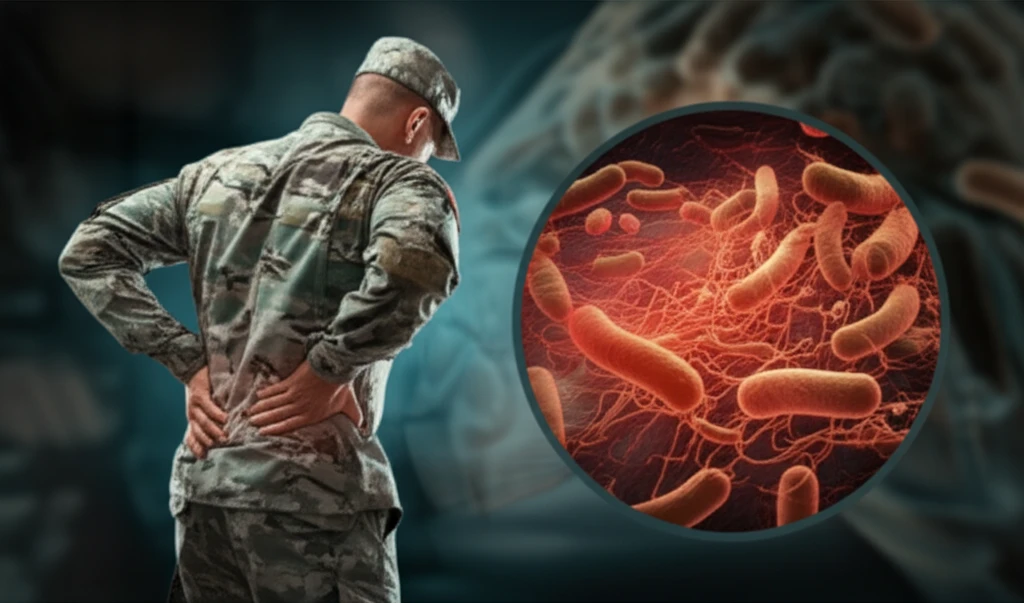
Illustration of a soldier with back pain facing a microscopic view of a bacterial infection.

Unmasking the Silent Culprit: How a Rare Infection Brought a Soldier's Back Pain to Light

"Unraveling the Mystery of Septic Sacroiliitis: A Soldier's Journey Through Diagnosis and Recovery."


In the realm of medicine, where the body's resilience often masks the subtle whispers of illness, a peculiar case involving a seemingly ordinary ailment in a soldier has illuminated a rare and often-overlooked condition: septic sacroiliitis. This infection, affecting the sacroiliac (SI) joint, is uncommon in healthy individuals, yet its presentation can be deceptive, leading to delays in diagnosis and potential complications. This article dives deep into this intriguing case, highlighting the diagnostic challenges, the path to recovery, and the broader implications for both military medicine and general healthcare.

The story begins with a 26-year-old soldier, a picture of health, who presented with a common complaint: back pain. Initially attributed to a previous injury and degenerative disc disease, the pain worsened, prompting a deeper investigation. What unfolded was a diagnostic puzzle, revealing an unexpected culprit – Pseudomonas fluorescens, a bacterium usually found in the environment, not typically associated with infections in healthy individuals. This case serves as a valuable lesson in the complexities of medical diagnosis and the importance of considering rare possibilities.

Through the lens of this soldier's experience, we'll explore the diagnostic journey, the microbiological challenges, and the swift response to treatment. Furthermore, we'll discuss the critical need for increased awareness among medical professionals, particularly in the military, where the physical demands and potential for trauma make early recognition of such infections paramount. This is not just a medical case study; it's a testament to the importance of vigilance and the impact of timely intervention in preserving health and readiness.

Unveiling the Enigma: The Diagnostic Odyssey of Septic Sacroiliitis

Illustration of a soldier with back pain facing a microscopic view of a bacterial infection.

The soldier's initial presentation was far from straightforward. The back pain, radiating to his left leg, was initially managed as a musculoskeletal issue. However, the pain's persistence and the soldier's increasing difficulty with mobility raised a red flag. The diagnostic process involved a series of investigations, including MRI scans, which initially revealed signs of degenerative lumbar disk disease, a common finding. Yet, as the pain intensified and additional symptoms emerged, the focus shifted, ultimately leading to the discovery of the true cause.

The diagnostic journey encountered several hurdles. The non-specific nature of the symptoms – fever, low back pain and weight-bearing difficulty – made it difficult to immediately pinpoint the underlying cause. The initial MRI findings did not show any acute pathology and the diagnosis was delayed. However, subsequent imaging revealed changes in the SI joint, hinting at an inflammatory process. A CT-guided arthrocentesis, where fluid was extracted from the joint, provided the crucial clue. The fluid analysis revealed an infection, leading the medical team to investigate the source.

  • Initial Symptoms: Low back pain, difficulty with weight-bearing, and radiation to the leg.
  • Diagnostic Tools: MRI, CT scan, and arthrocentesis of the sacroiliac joint.
  • Challenges: Non-specific symptoms, initial misdiagnosis, and the rarity of the infection.
The identification of P. fluorescens as the infectious agent was a microbiological challenge in itself. The bacterium, often found in soil and water, is not a typical suspect in such infections. Automated testing initially misidentified the organism, underscoring the potential pitfalls in diagnostic microbiology. Confirmatory tests were essential in confirming the diagnosis. Once identified, targeted antibiotic therapy was initiated, leading to a rapid clinical and radiological response. This case highlights the significance of enhanced microbiological techniques in the face of unusual presentations.

A Call for Vigilance: Lessons Learned and the Path Forward

This case serves as a powerful reminder of the importance of considering less common conditions in the differential diagnosis, especially in the military population, where physical demands and trauma are prevalent. The soldier's swift recovery highlights the significance of early detection and targeted treatment. Moreover, this case underscores the need for heightened awareness among healthcare professionals and the crucial role of advanced diagnostic techniques in unraveling complex medical mysteries. The journey of this soldier, from back pain to recovery, offers valuable lessons and reinforces the enduring commitment to excellence in healthcare and the preservation of readiness.

About this Article -

This article was crafted using a human-AI hybrid and collaborative approach. AI assisted our team with initial drafting, research insights, identifying key questions, and image generation. Our human editors guided topic selection, defined the angle, structured the content, ensured factual accuracy and relevance, refined the tone, and conducted thorough editing to deliver helpful, high-quality information.See our About page for more information.

Everything You Need To Know

1

What is septic sacroiliitis and why is it important to recognize?

Septic sacroiliitis is an uncommon infection affecting the sacroiliac (SI) joint, often presenting diagnostic challenges due to its rarity and deceptive symptoms. Recognizing this condition is crucial because delayed diagnosis can lead to potential complications. Early detection and targeted treatment, as demonstrated in the case of the soldier, are vital for swift recovery and preventing long-term health issues, particularly in physically active populations like the military, where trauma and physical demands increase the risk.

2

How was the diagnosis of septic sacroiliitis in the soldier initially complicated?

The diagnosis was initially complicated because the soldier's presenting symptom of back pain was first attributed to a previous injury and degenerative disc disease, common issues, leading to an initial misdiagnosis. The non-specific nature of the symptoms, including fever and difficulty with weight-bearing, further obscured the underlying cause. Initial MRI findings also pointed towards degenerative lumbar disk disease, delaying the recognition of the SI joint infection. It was only with persistent symptoms and subsequent imaging that the focus shifted, eventually leading to the identification of septic sacroiliitis through CT-guided arthrocentesis.

3

Why was the identification of Pseudomonas fluorescens significant in the soldier's case?

The identification of Pseudomonas fluorescens was significant because this bacterium is not typically associated with infections in healthy individuals. It's commonly found in the environment, such as soil and water, making it an unusual culprit for septic sacroiliitis. Its initial misidentification by automated testing underscores the challenges in diagnostic microbiology and highlights the necessity of confirmatory tests when dealing with atypical pathogens. Identifying P. fluorescens allowed for targeted antibiotic therapy, which proved crucial for the soldier's rapid recovery.

4

What diagnostic tools were essential in uncovering the soldier's septic sacroiliitis, and what challenges were faced?

Several diagnostic tools were essential: MRI scans, CT scans, and arthrocentesis of the sacroiliac joint. Initially, MRI scans revealed signs of degenerative lumbar disk disease, which led to a misdiagnosis. The ultimate diagnosis was made after a CT-guided Arthrocentesis, where fluid was extracted from the SI joint, provided the crucial clue, revealing an infection. The challenges included the non-specific nature of the soldier’s symptoms and the rarity of septic sacroiliitis in healthy individuals, which delayed the diagnostic process. Additionally, microbiological challenges arose when automated testing initially misidentified Pseudomonas fluorescens.

5

What broader lessons can be learned from the soldier's case of septic sacroiliitis, particularly for military medicine and healthcare in general?

The soldier's case emphasizes the importance of considering less common conditions in differential diagnoses, especially in populations with high physical demands and potential for trauma, such as the military. It underscores the need for heightened awareness among healthcare professionals about rare infections like septic sacroiliitis. The case also highlights the critical role of advanced diagnostic techniques and enhanced microbiological methods in unraveling complex medical mysteries. The success of early detection and targeted treatment reinforces the commitment to excellence in healthcare and preservation of readiness, ensuring that unusual presentations are thoroughly investigated to prevent delays in appropriate care.

Newsletter Subscribe

Subscribe to get the latest articles and insights directly in your inbox.