
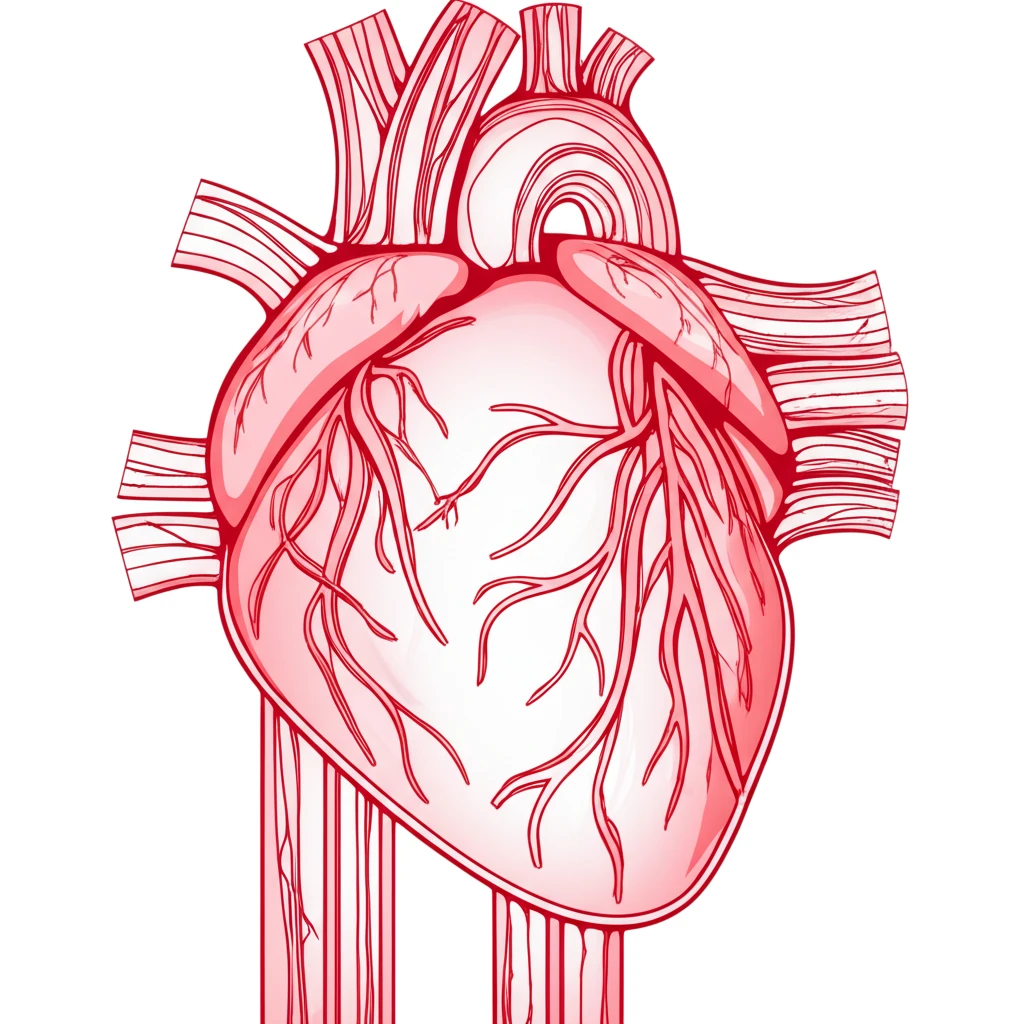
Surreal illustration of a heart with microvascular structures

Unmasking the Heart's Secrets: When Cardiomyopathy and Microvascular Disease Collide

"A Deep Dive into Arrhythmogenic Right Ventricular Cardiomyopathy (ARVC) and Cardiac Microvascular Disease: Understanding the Rare Connection."


The heart, a tireless engine of life, is sometimes subject to mysteries that even modern medicine struggles to fully understand. Among these enigmas is the intricate relationship between arrhythmogenic right ventricular cardiomyopathy (ARVC) and cardiac microvascular disease. This article delves into this complex interplay, offering a comprehensive overview of these conditions, their potential connections, and the implications for those affected.

ARVC, a condition characterized by arrhythmias and structural changes in the heart's right ventricle, presents a significant risk of sudden cardiac death. Cardiac microvascular disease, on the other hand, affects the tiny blood vessels of the heart, potentially leading to ischemia and other complications. The co-occurrence of these two conditions raises important questions about their relationship and the potential impact on patient outcomes.

This exploration is not merely academic; it is designed to provide accessible information, promote understanding, and foster informed conversations about heart health. By examining the latest research and expert insights, we aim to empower you with knowledge about these intricate heart conditions and their impact on overall well-being.

Unraveling ARVC: A Closer Look at the Cardiomyopathy

Surreal illustration of a heart with microvascular structures

Arrhythmogenic right ventricular cardiomyopathy (ARVC) is a genetic heart disease that primarily affects the right ventricle. It's characterized by the replacement of heart muscle tissue with fibrous or fatty tissue, which can disrupt the heart's electrical signals and lead to arrhythmias. These irregular heartbeats can range from mild to life-threatening, increasing the risk of sudden cardiac arrest.

The progression of ARVC often involves the thinning and weakening of the right ventricular wall. This can lead to enlargement of the right ventricle, further compromising its function. Patients with ARVC may experience symptoms such as palpitations, chest pain, shortness of breath, and fatigue. In some cases, ARVC can remain asymptomatic for years, making early detection challenging.

  • Genetic Predisposition: ARVC is often inherited, with specific gene mutations playing a crucial role in its development.
  • Structural Changes: The replacement of heart muscle with fibrous or fatty tissue is a hallmark of the disease.
  • Arrhythmias: Irregular heartbeats are a common manifestation, potentially leading to serious complications.
  • Risk of Sudden Cardiac Death: Due to the potential for life-threatening arrhythmias, ARVC is a significant concern.
Understanding ARVC is the first step towards managing the condition and mitigating potential risks. This understanding is crucial for recognizing the potential connection with cardiac microvascular disease, which further complicates the picture of heart health.

Charting a Course Forward: Management and Future Directions

The intersection of ARVC and microvascular disease underscores the importance of comprehensive cardiac care. Continued research, early detection strategies, and patient-centered management approaches are essential in navigating the complexities of these conditions. By fostering collaboration among healthcare professionals, researchers, and patients, we can work towards a future where these heart conditions are better understood, effectively managed, and ultimately, less threatening to life. The journey to heart health is ongoing, and with knowledge and proactive care, we can strive for a future of healthier hearts for all.

About this Article -

This article was crafted using a human-AI hybrid and collaborative approach. AI assisted our team with initial drafting, research insights, identifying key questions, and image generation. Our human editors guided topic selection, defined the angle, structured the content, ensured factual accuracy and relevance, refined the tone, and conducted thorough editing to deliver helpful, high-quality information.See our About page for more information.

This article is based on research published under:

DOI-LINK: 10.2459/jcm.0b013e328361d1c7, Alternate LINK

Title: Arrhythmogenic Right-Ventricular Cardiomyopathy And Cardiac Microvascular Disease

Subject: Cardiology and Cardiovascular Medicine

Journal: Journal of Cardiovascular Medicine

Publisher: Ovid Technologies (Wolters Kluwer Health)

Authors: Giovanni B. Forleo, Francesco Summaria, Domenico G. Della Rocca, Chiara Lanzillo, Fabio Ticconi, Domenico Sergi, Luca Santini, Francesco Romeo

Published: 2017-10-01

Everything You Need To Know

1

What is Arrhythmogenic Right Ventricular Cardiomyopathy (ARVC), and what are its primary characteristics?

Arrhythmogenic Right Ventricular Cardiomyopathy (ARVC) is a genetic heart disease primarily affecting the right ventricle. It is characterized by the replacement of heart muscle tissue with fibrous or fatty tissue, which disrupts the heart's electrical signals, leading to arrhythmias. These irregular heartbeats can range from mild to life-threatening, increasing the risk of sudden cardiac arrest. The thinning and weakening of the right ventricular wall can lead to enlargement of the right ventricle, further compromising its function. While the definition focuses on structural and electrical abnormalities, it doesn't address potential triggers or lifestyle factors that might exacerbate the condition. Further research is needed to fully understand these aspects.

2

How does Cardiac Microvascular Disease impact the heart, and what complications can arise from it?

Cardiac Microvascular Disease affects the tiny blood vessels of the heart, potentially leading to ischemia and other complications. While the answer mentions ischemia, it doesn't elaborate on the specific mechanisms by which microvascular dysfunction leads to reduced blood flow and oxygen supply to the heart muscle. Additionally, it does not mention the potential for angina (chest pain) or the impact on overall cardiac function. Further clarification on the diagnostic methods and treatment options for Cardiac Microvascular Disease would be beneficial.

3

What is the connection between Arrhythmogenic Right Ventricular Cardiomyopathy (ARVC) and Cardiac Microvascular Disease, and why is this relationship important?

The co-occurrence of Arrhythmogenic Right Ventricular Cardiomyopathy (ARVC) and Cardiac Microvascular Disease raises important questions about their relationship and the potential impact on patient outcomes. The intersection of ARVC and microvascular disease underscores the importance of comprehensive cardiac care. Understanding this connection is crucial for recognizing the combined impact on heart health, even though the specific mechanisms linking the two conditions are still under investigation. The answer highlights the need for a comprehensive approach to cardiac care but could benefit from elaborating on the potential synergistic effects of these conditions on disease progression and patient prognosis.

4

What are the genetic factors involved in Arrhythmogenic Right Ventricular Cardiomyopathy (ARVC), and how does genetic predisposition influence the development of the disease?

Arrhythmogenic Right Ventricular Cardiomyopathy (ARVC) is often inherited, with specific gene mutations playing a crucial role in its development. While it mentions genetic mutations, it does not specify which genes are commonly associated with ARVC or the inheritance patterns (e.g., autosomal dominant, autosomal recessive). Providing more detailed information about the genetic basis of ARVC would enhance understanding of the disease's etiology. Further exploration of genetic testing and counseling for individuals with a family history of ARVC would also be valuable.

5

What management strategies are recommended for individuals with both Arrhythmogenic Right Ventricular Cardiomyopathy (ARVC) and Cardiac Microvascular Disease, and what future directions are being explored in the treatment of these conditions?

The intersection of Arrhythmogenic Right Ventricular Cardiomyopathy (ARVC) and microvascular disease underscores the importance of comprehensive cardiac care. Continued research, early detection strategies, and patient-centered management approaches are essential in navigating the complexities of these conditions. It does not detail specific management strategies such as medication, lifestyle modifications, or interventional procedures. Providing information on the current standards of care for managing both conditions would be beneficial. Elaboration on ongoing clinical trials and emerging therapies would also be valuable.

Newsletter Subscribe

Subscribe to get the latest articles and insights directly in your inbox.