
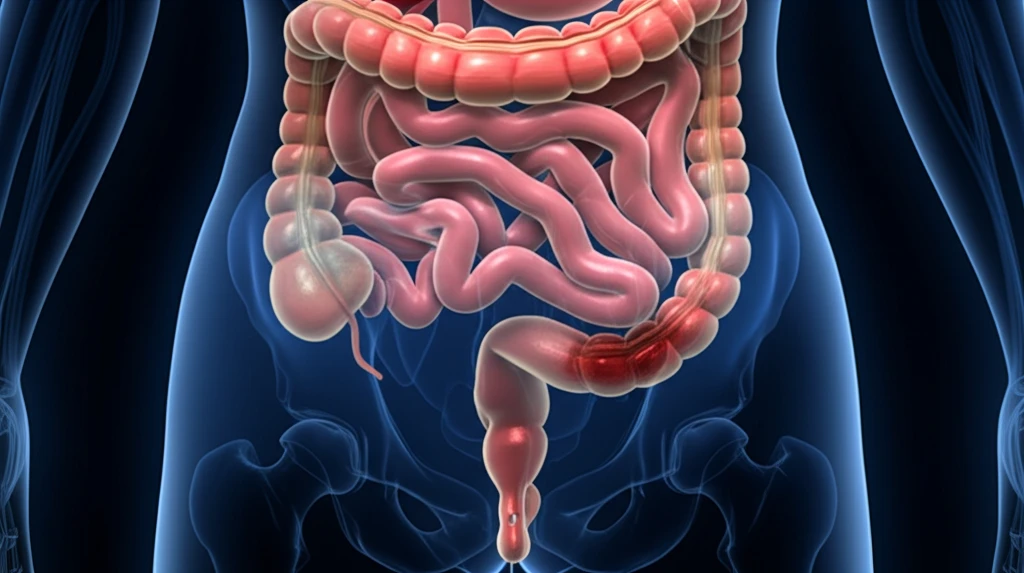
Unmasking Endometriosis: Your Guide to Understanding, Diagnosing, and Managing Intestinal Involvement

"Navigate the complexities of intestinal endometriosis, from identifying symptoms and diagnosis techniques to exploring treatment options and improving your quality of life."
Endometriosis, characterized by the presence of endometrial tissue outside the uterus, predominantly affects women of reproductive age, typically between 20 and 45 years old. This condition occurs in up to 15% of fertile women and as high as 30% of infertile women, making it a significant concern for women's health. While endometriosis commonly involves the pelvic organs, it can also affect the gastrointestinal tract, leading to a range of symptoms and diagnostic challenges.
In many instances, endometrial implants on the bowel serosa remain asymptomatic, posing difficulties in early detection. However, when deep infiltrating implants are present, women may experience a constellation of symptoms, including abdominal pain, dysmenorrhea (painful menstruation), dyspareunia (painful intercourse), low backache, and localized tenderness. These symptoms can significantly impact a woman's quality of life, making accurate diagnosis and effective management crucial.
Diagnostic imaging plays a vital role in identifying intestinal endometriosis. Sonography, for example, can reveal hypoechoic thickening or nodules/masses with irregular contours, as well as cystic lesions with anechoic fluid content and hyperechoic blood deposits. These abnormalities often deform the profiles of the bowel and, in rare cases, can lead to complications such as invagination and volvulus. This article serves as a comprehensive guide to understanding, diagnosing, and managing intestinal endometriosis.
The Scope of Intestinal Endometriosis
Endometriosis is a common disease affecting women of reproductive age, yet intestinal involvement remains difficult to diagnose preoperatively because its symptoms overlap with other conditions such as irritable bowel syndrome. When endometrial-like tissue infiltrates the intestinal wall, most often the sigmoid colon and rectum, the condition is referred to as intestinal or bowel endometriosis. This subtype is frequently misdiagnosed, as evaluations can yield unspecific results, and patients may endure prolonged diagnostic delays before the correct diagnosis is established.
Diagnostic and Surgical Limitations
Colonoscopy, while widely used, has a sensitivity of only 7% for detecting bowel endometriosis lesions, largely because most lesions occur in deeper layers such as the serosa and muscularis, which colonoscopy cannot adequately examine. Surgical intervention for intestinal endometriosis is inherently complex and should ideally be carried out by a highly skilled specialist, often in collaboration with a colorectal surgeon. Depending on disease depth, surgeons may choose conservative approaches like rectal shaving or disc excision, or more radical procedures involving intestinal resection.
Early Recognition of Bowel Endometriosis
Intestinal endometriosis has been recognized for decades; a 1967 study from St. Mary's Hospital in St. Louis identified 35 cases of intestinal tract involvement among 360 endometriosis patients over a 20-year period, underscoring its relative rarity compared to pelvic disease. The condition primarily affects women of reproductive age, typically between 25 and 40 years old, though it can occur in any woman with endometriosis. Over time, the medical community has increasingly acknowledged that ectopic endometrial glands and stroma can involve organs well beyond the pelvic cavity.
Decoding Intestinal Endometriosis: Etiology, Symptoms, and Diagnosis
The exact cause of endometriosis remains a topic of ongoing research, but several theories have been proposed to explain the ectopic location of endometrial tissue. The most widely accepted explanation is the retrograde passage of endometrial tissue through the fallopian tubes during menstruation, leading to implantation on pelvic organs and the peritoneum. From these sites, the tissue can spread to more distant locations via hematogenous or lymphatic dissemination, or even during surgical interventions. Another hypothesis suggests endometrial metaplasia, a process involving the transformation of multipotential peritoneal mesothelial cells into endometrial tissue.
- Cyclic Pelvic Pain (Dysmenorrhea): Many women experience severe pain during menstruation.
- Painful Intercourse (Dyspareunia): Deep pain during or after sexual activity is a common symptom.
- Non-Menstrual Pelvic Pain: Chronic pelvic pain that is not necessarily tied to the menstrual cycle.
- Gastrointestinal Symptoms: These include bloating, constipation, diarrhea, and nausea, which can worsen during menstruation.
Current Evidence on Bowel Obstruction and Diagnostic Challenges
While endometriosis is a common gynecological condition, intestinal involvement leading to bowel obstruction is rare, occurring in only 0.1–0.7% of cases according to recent case reports. Diagnostic delay remains a persistent problem, as non-specific gastrointestinal symptoms frequently lead clinicians toward other diagnoses. These findings highlight the need for greater clinical awareness and improved diagnostic strategies when evaluating women of reproductive age presenting with unexplained bowel symptoms.
The Gap Between Awareness and Accurate Diagnosis
The NHS acknowledges that endometriosis, while typically found around the womb, ovaries, fallopian tubes, and pelvic lining, also sometimes affects organs such as the bladder and bowel. Despite this recognition, many patients with bowel involvement report being misdiagnosed or facing years of delayed diagnosis. Treatment and support services exist for problems caused by endometriosis, but the persistent overlap with gastrointestinal conditions means that intestinal disease remains an underdiagnosed manifestation.
Quality of Life and Disease Depth
Deep intestinal endometriosis is defined by the infiltration of endometrial tissue into the intestinal muscular layer, distinguishing it from superficial peritoneal disease. This deeper penetration is associated with more severe symptoms and greater impairment of quality of life compared to endometriosis confined to pelvic organs. Understanding this distinction is critical for guiding treatment decisions, as superficial and deep disease require different surgical and medical management approaches.
Empowering Women Through Knowledge and Proactive Management
Intestinal endometriosis presents a complex challenge, but with increased awareness, early diagnosis, and tailored management strategies, women can effectively navigate this condition and improve their quality of life. By understanding the etiology, recognizing the symptoms, and utilizing advanced diagnostic techniques, healthcare professionals can provide timely and appropriate care. It's important for women experiencing symptoms suggestive of endometriosis to seek medical attention and engage in open communication with their healthcare providers. Together, they can develop a personalized treatment plan that addresses their specific needs and empowers them to live full and active lives.
Expert Perspectives on Diagnosis and Management
Experts estimate that 80% of extragenital endometriosis cases involve the intestinal tract, leading to severe symptoms that demand timely management. Meta-analyses have confirmed that transvaginal sonography (TVS) and MRI are equivalent in diagnosing the specific pelvic anatomic locations of endometriosis lesions, providing clinicians with reliable non-invasive tools. Additionally, intestinal ultrasound is validated as a useful technique for detecting intestinal endometriosis, potentially avoiding the need for CT studies in young patients.
Evolving Treatment Paradigms
Current treatments for bowel endometriosis include both surgical and pharmacological options, with the choice of approach depending on disease severity and patient circumstances. Surgical strategies range from conservative lesion excision to more extensive bowel resection, while medications aim to manage symptoms and slow disease progression. Ongoing research continues to refine these approaches, seeking to balance effective disease control with preservation of bowel function and quality of life.
Systemic Barriers to Timely Care
Intestinal endometriosis sits at the intersection of gynecology and gastroenterology, yet neither specialty alone typically possesses the full range of expertise needed for optimal diagnosis and management. This disciplinary gap, combined with the condition's symptom overlap with common gastrointestinal disorders, contributes to systemic underdiagnosis and delayed referral. Greater integration between specialties and improved clinician education remain essential steps toward reducing the burden of this condition.
Acute Presentations and Life-Threatening Complications
Intestinal endometriosis can present as acute or subacute bowel obstruction in women of reproductive age, a dramatic and often unexpected manifestation of the disease. In rare but serious cases, deep infiltrating endometriosis has caused intestinal perforation even during pregnancy, as documented in a case of cecal and appendix perforation at 35 weeks gestation that mimicked acute appendicitis. These cases underscore the potentially life-threatening consequences of undiagnosed intestinal endometriosis and the critical importance of clinical vigilance.