
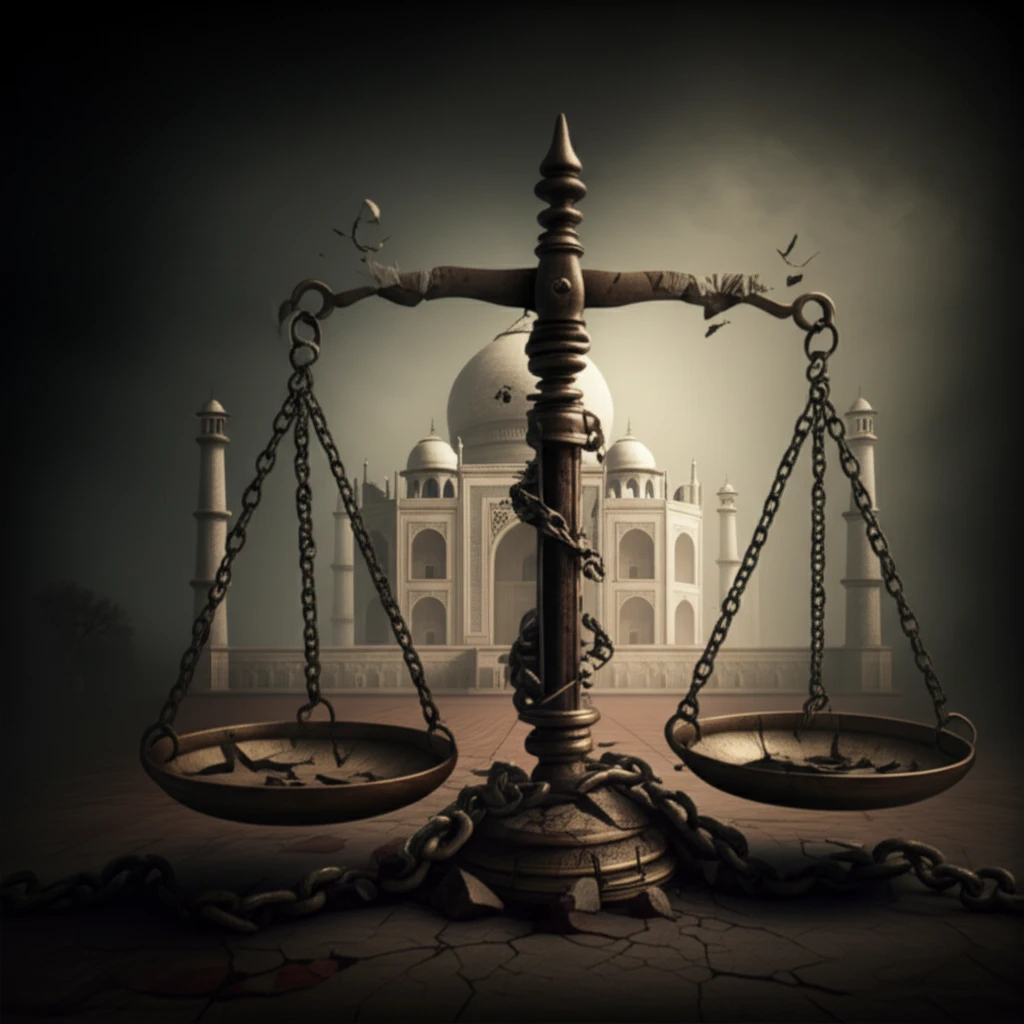
Broken scales of justice in front of the Taj Mahal, symbolizing corruption in India.

Unmasking Corruption: Can India Win the Fight?

"Dive into the deep-rooted issues of corruption in India, exploring its causes, consequences, and the bold steps needed for a transparent future."


In recent years, corruption in India has surged to epidemic proportions, casting a long shadow over the nation's economy, political stability, and administrative efficiency. This pervasive issue is reflected in political instability, bureaucratic hurdles, a weakened legislative system, and a compromised judiciary. The average Indian citizen finds themselves caught between political maneuvering and bureaucratic red tape, struggling against a system rife with corruption.

Anti-corruption agencies, designed to be the frontline defenders against this menace, have often been rendered ineffective due to political interference and excessive delays in finalizing investigations. What India desperately needs is a strong political commitment to implement anti-corruption strategies that redefine the state's role, emphasizing the reduction of state ownership and discretionary controls.

The hydra-headed problem of corruption has once again taken center stage, prompting various political parties, civil society organizations, and respected individuals to address it with renewed vigor. However, since India's independence, it has been a common experience that the ruling party often makes grand promises while in power, while opposition parties—often with their own tainted leaders—seize the opportunity to criticize the government. This cycle often becomes a mere game of one-upmanship, with little real progress made.

What Fuels Corruption in India?

Broken scales of justice in front of the Taj Mahal, symbolizing corruption in India.

Corruption in India stems from a complex web of factors. Government restrictions and regulations create opportunities for 'rents,' where public officials can exploit their positions for personal gain. Discretion over who receives benefits and how much fosters an environment ripe for corrupt practices. Sources of corruption vary widely, from manipulating tax dues and subsidies to offering employment benefits in exchange for favors. Bribery, extortion, influence peddling, nepotism, and the use of 'speed money' are all common forms.

While corruption is often associated with government, it also thrives in the overgrown private sector. Bribes can take many forms, including access to privileged educational institutions, healthcare, real estate, and appointments to influential positions. Government contracts are particularly vulnerable, as seen in the Common Wealth Games (CWG) scam, where bribes influenced the choice of public goods and services. 'Speed money' facilitates the quick approval of permits and licenses, while 'grace money' accelerates business transactions.

  • Lack of Transparency: Complex and opaque government processes make it difficult to detect and prosecute corruption.
  • Discretionary Powers: Broad discretionary powers held by public officials create opportunities for abuse.
  • Weak Accountability: Inadequate mechanisms for holding public officials accountable for their actions.
  • Low Salaries: Insufficient compensation for public officials can incentivize them to seek bribes.
  • Social Acceptance: In some cases, corruption is tolerated or even accepted as a way of getting things done.
The labyrinthine nature of government rules and regulations provides fertile ground for bureaucratic corruption. Policies and restrictions related to tariffs, import-export regulations, subsidies, tax concessions, price controls, exchange rates, and credit controls can all be manipulated for personal gain. When bribes are substantial, the chances of getting caught are minimal, and penalties are not a deterrent, corruption spreads rapidly.

A Call to Action: Towards a Corruption-Free India

Corruption is a universal problem that becomes increasingly difficult to eradicate as it spreads. While numerous systems are in place to combat corruption, they often fail due to a lack of political will. To truly address this issue, India needs strong political commitment, drastic reforms in its political processes, and empowered institutions capable of prosecuting and convicting corrupt individuals. By empowering citizens, promoting transparency, and holding those in power accountable, India can pave the way towards a more transparent and equitable future.

About this Article -

This article was crafted using a human-AI hybrid and collaborative approach. AI assisted our team with initial drafting, research insights, identifying key questions, and image generation. Our human editors guided topic selection, defined the angle, structured the content, ensured factual accuracy and relevance, refined the tone, and conducted thorough editing to deliver helpful, high-quality information.See our About page for more information.

This article is based on research published under:

DOI-LINK: 10.1177/0019556120110332, Alternate LINK

Title: Corruption: The Omnipresent Cascading Problem

Subject: General Medicine

Journal: Indian Journal of Public Administration

Publisher: SAGE Publications

Authors: P. Mohan Rao, C.G.K. Murthy

Published: 2011-07-01

Everything You Need To Know

1

What are the main causes of corruption in India?

Corruption in India involves a complex web of factors that includes government restrictions and regulations which provide opportunities for 'rents' where officials exploit their positions for personal gain. Discretionary powers enable officials to choose who receives benefits, fueling corruption. Sources of corruption include manipulating taxes, subsidies, and employment benefits for favors. Bribery, extortion, influence peddling, nepotism, and 'speed money' are common forms. These factors collectively contribute to corruption's prevalence across various sectors, including government and the private sector.

2

How do Lack of Transparency, Discretionary Powers, Weak Accountability, Low Salaries, and Social Acceptance contribute to corruption?

The lack of Transparency in government processes makes it difficult to detect and prosecute corruption, as explained. When processes are complex and opaque, they shield corrupt activities from scrutiny. Discretionary Powers create opportunities for abuse because public officials have broad latitude in decision-making, increasing the chances for them to exploit their positions. Weak Accountability, with inadequate mechanisms for holding public officials accountable, lets corruption flourish. Low Salaries incentivize officials to seek bribes. Social Acceptance, where corruption is tolerated or even seen as a way of getting things done, normalizes corrupt practices, making them more widespread and difficult to combat.

3

Can you provide examples of how corruption manifests in real-world scenarios?

The Common Wealth Games (CWG) scam, serves as a prime example of corruption within government contracts where bribes influenced the choice of public goods and services. 'Speed money' facilitates quick approvals of permits and licenses, accelerating illicit transactions. 'Grace money' similarly speeds up business transactions. These practices indicate how corruption permeates various sectors, including government contracts, and highlight the need for reforms.

4

What role do anti-corruption agencies play, and why do they often fail?

Anti-corruption agencies are designed to combat corruption, but often face ineffectiveness because of political interference and delays in investigations. This lack of effectiveness is detrimental because it undermines efforts to hold corrupt individuals accountable and maintain transparency. To be effective, these agencies need to be independent and free from political influence. Empowering institutions and providing them with the resources to prosecute and convict those involved in corruption is key to establishing accountability and deterring future offenses.

5

What steps can be taken to combat corruption effectively and pave the way for a corruption-free India?

India needs strong political commitment to implement anti-corruption strategies. This requires redefining the state's role, emphasizing the reduction of state ownership and discretionary controls. Empowering citizens, promoting transparency, and holding those in power accountable are essential steps. These reforms are crucial for creating a transparent and equitable future by building trust between the government and the people and ensuring resources are allocated efficiently and fairly.

Newsletter Subscribe

Subscribe to get the latest articles and insights directly in your inbox.