
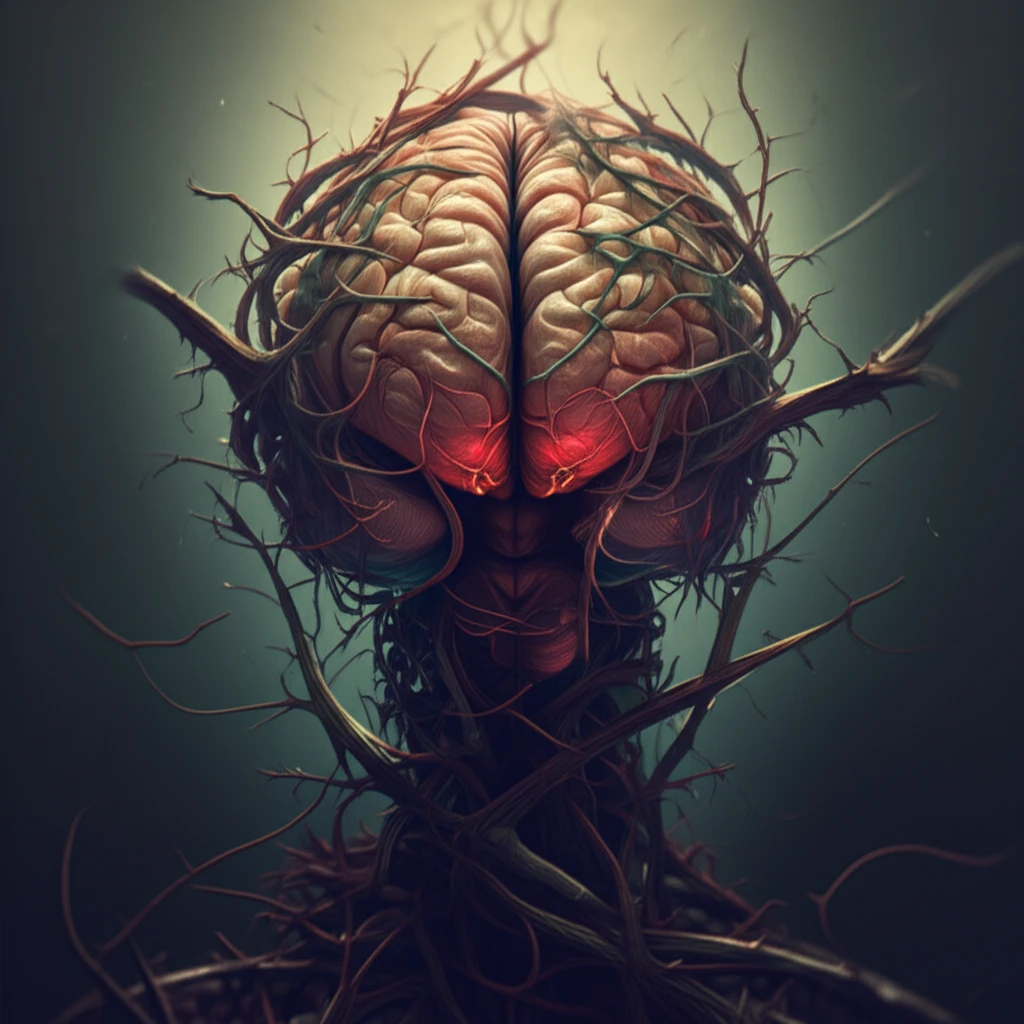
Brain entangled in vines, symbolizing cognitive impairment in depression.

Unlocking Your Mind: A Guide to Cognitive Enhancement in Depression

"Discover how cognitive impairments impact daily life in individuals with major depressive disorder (MDD) and explore cutting-edge treatment options for improved mental clarity and focus."


Cognitive dysfunction is a common and debilitating symptom that cuts across numerous mental disorders. For individuals grappling with major depressive disorder (MDD), these cognitive deficits can significantly hinder occupational performance and overall functional ability. These impairments manifest in several key areas, including learning and memory, executive functioning, processing speed, and attention, often persisting even when mood symptoms are well-managed.

While many available antidepressants effectively target core mood symptoms, their ability to directly improve cognitive deficits remains limited. This gap highlights the critical need for interventions specifically designed to enhance cognitive function in individuals with MDD. Understanding the complex interplay of neurobiological mechanisms involved, such as neuroinflammation, is crucial for developing targeted treatments.

This article will explore the importance of prioritizing cognitive deficits as a key therapeutic target in MDD. We will delve into the neurobiological factors that contribute to cognitive dysfunction and provide an update on the latest treatment approaches, paving the way for a brighter future for those seeking comprehensive recovery.

The Cognitive Impact of Depression: Why It Matters

Brain entangled in vines, symbolizing cognitive impairment in depression.

Major depressive disorder (MDD) is a widespread and debilitating mental health condition, affecting approximately 350 million people worldwide. Beyond the well-recognized emotional symptoms, MDD significantly impacts cognitive functions, leading to substantial functional disability. This can manifest as difficulty concentrating, memory problems, slowed thinking, and impaired decision-making.

The economic burden of MDD is also substantial. In 2016 alone, losses in workplace productivity and occupational functioning due to MDD-related cognitive impairments amounted to $32.3 billion in Canada and $201.5 billion in the United States. These figures highlight the urgent need for effective interventions that address both mood and cognitive symptoms to restore functional capacity and economic productivity.

  • Prevalence and Impact: MDD affects millions globally, leading to significant functional disability.
  • Economic Burden: Cognitive impairments associated with MDD result in substantial economic losses due to decreased workplace productivity.
  • Core Diagnostic Criterion: Cognitive dysfunction is now recognized as a core diagnostic criterion of MDD, emphasizing its importance in understanding and treating the disorder.
  • Functional Remission: Many individuals with MDD do not achieve functional remission even after successful treatment of mood symptoms.
It's important to note that improvements in mood do not automatically translate into improvements in cognitive function. Domain-specific cognitive deficits, such as those affecting learning, memory, executive function, processing speed, and attention, are commonly observed in individuals experiencing a major depressive episode (MDE). In fact, cognitive dysfunction in MDD is increasingly viewed as an endophenotype that worsens with recurring episodes.

Moving Forward: Integrating Cognitive Treatments into Depression Care

Cognitive deficit is a core domain of depressive psychopathology and a principal mediator of psychosocial and workplace functioning. Obtaining cognitive recovery in individuals with MDD is necessary to achieve optimal functional outcomes. While the current clinical approaches may not fully address cognitive function in MDD, further research into neural substrates and metabolites involved in cognitive symptoms is essential. By adopting a domain-based approach to assess and treat psychiatric conditions, including MDD, we can develop more practical and effective interventions, ultimately improving outcomes for individuals affected by this complex disorder.

About this Article -

This article was crafted using a human-AI hybrid and collaborative approach. AI assisted our team with initial drafting, research insights, identifying key questions, and image generation. Our human editors guided topic selection, defined the angle, structured the content, ensured factual accuracy and relevance, refined the tone, and conducted thorough editing to deliver helpful, high-quality information.See our About page for more information.

This article is based on research published under:

DOI-LINK: 10.1017/s1092852918001207, Alternate LINK

Title: Cognitive Impairment In Major Depressive Disorder

Subject: Psychiatry and Mental health

Journal: CNS Spectrums

Publisher: Cambridge University Press (CUP)

Authors: Zihang Pan, Caroline Park, Elisa Brietzke, Hannah Zuckerman, Carola Rong, Rodrigo B. Mansur, Dominika Fus, Mehala Subramaniapillai, Yena Lee, Roger S. Mcintyre

Published: 2018-11-23

Everything You Need To Know

1

How does depression affect a person's cognitive abilities?

Major depressive disorder (MDD) significantly impairs cognitive functions, affecting areas like learning, memory, executive function, processing speed, and attention. These deficits often persist even when emotional symptoms are well-managed, leading to difficulties in concentration, memory problems, and impaired decision-making. The impact extends beyond personal struggles, contributing to functional disability and decreased workplace productivity.

2

Why is cognitive dysfunction considered a core criterion of MDD?

Cognitive dysfunction is now recognized as a core diagnostic criterion of major depressive disorder (MDD). This shift emphasizes the critical role of cognitive impairments in understanding and treating the disorder. This means that healthcare professionals are increasingly considering cognitive symptoms, such as those affecting learning, memory, executive function, processing speed, and attention, when diagnosing and managing MDD. It highlights the need for interventions targeting these specific deficits to improve overall patient outcomes.

3

Why are current antidepressant medications not always sufficient for treating depression?

Currently, many antidepressants primarily target the emotional symptoms of major depressive disorder (MDD), but their impact on cognitive deficits, which include challenges in learning, memory, executive function, processing speed, and attention, is often limited. Because of this, there's a significant gap in treatment. This limitation underscores the need for treatments specifically designed to enhance cognitive function to achieve comprehensive recovery. This approach focuses on directly addressing the cognitive impairments that impact daily life.

4

What is the economic impact of cognitive impairments in MDD?

The economic burden of cognitive impairments related to major depressive disorder (MDD) is substantial. Reduced workplace productivity due to these cognitive deficits, such as difficulties in learning, memory, executive function, processing speed, and attention, results in significant economic losses. For instance, in 2016, losses in workplace productivity and occupational functioning due to MDD-related cognitive impairments amounted to billions of dollars in countries like Canada and the United States. Addressing these cognitive issues is therefore crucial for restoring functional capacity and promoting economic productivity.

5

Why is achieving cognitive recovery important in the context of MDD?

Functional remission in major depressive disorder (MDD) requires more than just the resolution of mood symptoms. Even with successful treatment of mood symptoms, many individuals still struggle with cognitive deficits. Cognitive dysfunction, which includes problems with learning, memory, executive function, processing speed, and attention, can persist and significantly impact daily life. Achieving optimal functional outcomes necessitates addressing these domain-specific cognitive deficits, highlighting the importance of integrating cognitive treatments into depression care.

Newsletter Subscribe

Subscribe to get the latest articles and insights directly in your inbox.