
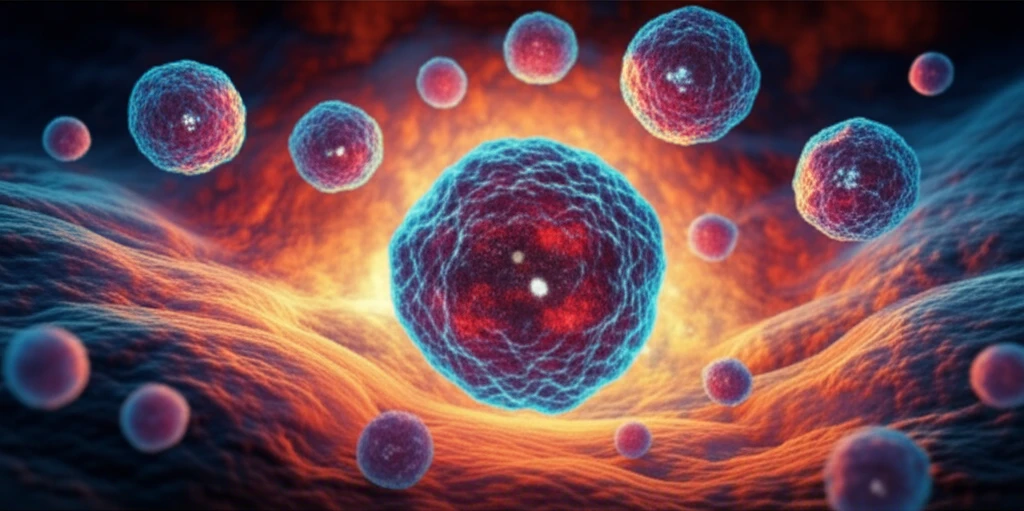
Illustration of lung cells healing, highlighting the role of tissue factor, symbolizing healing and repair in respiratory health.

Unlocking Your Lungs' Secrets: How Tissue Factor Could Revolutionize Healing

"New Research Reveals Tissue Factor's Unexpected Role in Airway Repair and What It Means for Your Respiratory Health"


We often take our ability to breathe for granted, but when our airways face inflammation or injury, the body’s natural repair mechanisms kick into high gear. Emerging research is shining a light on an unexpected player in this process: tissue factor (TF). Traditionally known for its role in blood clotting, TF is now being recognized for its critical function in wound healing within the lungs. This discovery could revolutionize how we approach and treat various respiratory conditions.

This groundbreaking study published in the journal CHEST, explores the role of TF in facilitating wound healing within human airway epithelial cells. The research, led by a team of experts, unveils how TF is released in response to pro-inflammatory stimuli. The study investigates the implications of this release on cell growth and repair, which is essential in understanding the body's response to airway damage. Moreover, the findings have significant implications for treatments of several respiratory diseases.

This article will delve into the intricacies of TF and its impact on airway health, offering insights into the latest scientific findings and their practical applications. Whether you're a healthcare professional, a patient, or simply curious about respiratory health, this exploration will provide a comprehensive understanding of this exciting new area of medical research.

Unveiling Tissue Factor: The Unsung Hero of Airway Healing

Illustration of lung cells healing, highlighting the role of tissue factor, symbolizing healing and repair in respiratory health.

Tissue factor (TF), a transmembrane glycoprotein, is traditionally known for its role in initiating the coagulation cascade, a critical process for blood clotting. However, the new study by Davis et al. highlights TF’s unexpected role in airway wound repair. This finding opens up new avenues for understanding and treating respiratory conditions, demonstrating TF's multifaceted functions.

The research team exposed airway epithelial cells to pro-inflammatory stimuli and measured the release of TF. Their findings revealed that TF levels increased significantly in response to lipopolysaccharide (LPS), a substance known to trigger inflammation. This increase, which was dependent on cell growth, suggests that TF is part of a wound repair program. The study also examined the effects of TF pathway inhibitors and growth factors on cell growth and wound healing. The results showed that inhibiting the TF pathway reduced cell growth, while exposure to TF increased the rate of airway healing after injury. These results highlight the significance of TF in the healing processes.

  • TF's Dual Nature: TF is traditionally associated with blood clotting but also plays a crucial role in cell growth and repair within the airways.
  • Inflammation Trigger: Exposure to substances like LPS causes airway epithelial cells to release TF.
  • Healing Accelerator: TF speeds up the healing process in injured airways.
  • Therapeutic Potential: Inhibiting TF could slow cell growth, while enhancing it might accelerate healing.
The implications of these findings are profound. The study's insights not only enhance our understanding of respiratory diseases but also pave the way for innovative therapeutic strategies. Targeting TF could offer new treatment options for conditions characterized by impaired airway repair. As research continues, we can anticipate even more breakthroughs in this area, offering hope for improved respiratory health.

Looking Ahead: The Future of TF-Based Therapies

The latest research on tissue factor has opened up new possibilities for treating respiratory diseases. As we continue to uncover the intricacies of TF's role in airway health, we can anticipate a future where therapies are tailored to address the specific needs of patients. This includes strategies to regulate TF activity, manage inflammation, and enhance healing. The future of respiratory medicine looks promising as we harness the power of tissue factor to improve airway repair and overall respiratory health.

About this Article -

This article was crafted using a human-AI hybrid and collaborative approach. AI assisted our team with initial drafting, research insights, identifying key questions, and image generation. Our human editors guided topic selection, defined the angle, structured the content, ensured factual accuracy and relevance, refined the tone, and conducted thorough editing to deliver helpful, high-quality information.See our About page for more information.

Everything You Need To Know

1

What is tissue factor (TF), and what is its traditionally known role in the body?

Tissue factor (TF) is a transmembrane glycoprotein primarily recognized for initiating the coagulation cascade, which is essential for blood clotting. Recent research has unveiled a previously underappreciated role for tissue factor (TF) in airway wound repair, indicating that its functions extend beyond blood coagulation to include a significant role in tissue healing within the lungs.

2

How does inflammation affect tissue factor (TF) levels in airway epithelial cells, and what substance triggers this response?

Inflammation induces the release of tissue factor (TF) from airway epithelial cells. Specifically, exposure to lipopolysaccharide (LPS), a substance known to trigger inflammation, significantly increases tissue factor (TF) levels. This release is dependent on cell growth, suggesting that tissue factor (TF) is actively involved in a wound repair program within the airways.

3

What potential therapeutic implications does tissue factor (TF) research hold for treating respiratory diseases characterized by impaired airway repair?

Targeting tissue factor (TF) presents innovative treatment possibilities for respiratory diseases marked by impaired airway repair. Strategies could involve regulating tissue factor (TF) activity to modulate inflammation and boost healing. While inhibiting tissue factor (TF) might slow cell growth, enhancing it could accelerate airway healing, offering new avenues for therapies, although the implications of such modulation needs careful consideration to avoid unintended effects on the coagulation cascade, given the primary role of tissue factor (TF).

4

How did the study led by Davis et al. explore the role of tissue factor (TF) in airway wound repair, and what were the key findings regarding its impact on cell growth and healing?

The study by Davis et al. examined the role of tissue factor (TF) in airway wound repair by exposing airway epithelial cells to pro-inflammatory stimuli, such as lipopolysaccharide (LPS), and measuring the subsequent release of tissue factor (TF). The key findings indicated that tissue factor (TF) levels increased significantly in response to lipopolysaccharide (LPS). Inhibiting the tissue factor (TF) pathway reduced cell growth, while exposure to tissue factor (TF) accelerated the rate of airway healing after injury, highlighting tissue factor (TF)'s importance in these processes. The specific mechanisms by which tissue factor (TF) exerts these effects and its interaction with other growth factors in the lung environment are still areas of active investigation.

5

Considering tissue factor's (TF) dual role in both blood clotting and airway healing, what challenges and considerations arise when developing tissue factor (TF)-based therapies for respiratory conditions?

The dual nature of tissue factor (TF), being involved in both blood clotting and airway healing, presents several challenges when developing tissue factor (TF)-based therapies. The primary challenge is to selectively modulate tissue factor (TF) activity to promote airway repair without disrupting the coagulation cascade, which could lead to thrombotic complications. Future therapies may require precise targeting mechanisms to deliver tissue factor (TF) or tissue factor (TF) modulators specifically to the lung tissue, while minimizing systemic exposure. Further research is needed to fully understand the downstream signaling pathways of tissue factor (TF) in different cellular contexts to develop safe and effective treatments.

Newsletter Subscribe

Subscribe to get the latest articles and insights directly in your inbox.