
Unlocking Your Brain's Potential: How Mental Training Shapes Brain-Body Coordination

"New research reveals the surprising link between cognitive tasks and bodily activity, offering insights into optimizing brain function and physical performance through targeted training."
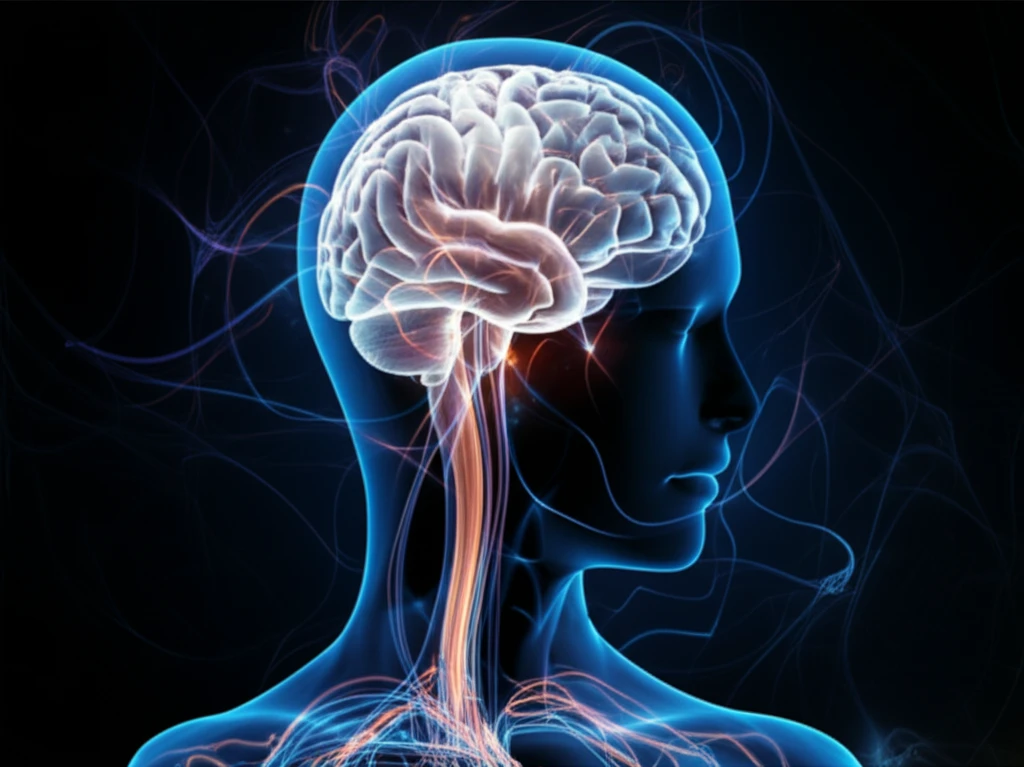
Our brains are not isolated computers but are intricately connected to our bodies, forming a dynamic system where mental and physical activities constantly influence each other. This connection is evident in how our heart rate variability (HRV) responds to different cognitive challenges.
A recent study delved into this brain-body relationship by examining how HRV changes during tasks requiring different levels of cognitive processing. Researchers compared HRV in mathematicians performing tasks involving both familiar, everyday language and more complex mathematical terms.
Heart rate variability, measured by sample entropy (SampEn), reveals the complexity and adaptability of the autonomic nervous system. Higher SampEn indicates greater variability and complexity, suggesting a more flexible and responsive system capable of handling diverse demands. The study aimed to uncover how HRV differs between early-formed and later-formed behaviors and under what conditions HRV would be higher, shedding light on the intricate interplay between brain activity and bodily functions.
The Growing Need for Cognitive Enhancement
Cognitive decline and neurodegenerative diseases represent a significant and growing public health concern, with projections suggesting a substantial increase in affected individuals in the coming decades. The demand for effective strategies to maintain and enhance brain function has never been greater, spanning educational, clinical, and general wellness contexts. Understanding how mental training can shape brain-body coordination is becoming increasingly important for promoting cognitive resilience across the lifespan.
Traditional Cognitive Training Approaches
Traditional cognitive training has evolved from foundational pen-and-paper methods to computerized multidomain programs, yet each approach carries distinct limitations. Research comparing computerized training with traditional educational programs reveals that efficacy varies significantly depending on the population and cognitive domains targeted. Perceptual-cognitive training methods have faced criticism for overstating transfer effects to real-world performance. Systematic reviews indicate that while multiple cognitive training modalities exist, their comparative effectiveness across different outcomes remains an area requiring further investigation.
Evolution of Mind-Brain Understanding
The scientific understanding of the mind-body connection has developed gradually through decades of interdisciplinary research spanning neuroscience, psychology, and exercise science. Early foundational work established that the brain possesses remarkable plasticity and can be influenced by targeted interventions. These discoveries paved the way for modern approaches that integrate cognitive training with physical exercise to optimize brain-body coordination.
Decoding HRV: A Window into Brain-Body Coordination
The study involved 35 mathematicians who completed two tasks: one using sentences with common, everyday words (representing early-formed behavior) and another using sentences with mathematical terms (representing later-formed behavior). Researchers recorded ECG data to analyze HRV and calculate SampEn.
- Cognitive Load and HRV: Higher cognitive demands lead to increased complexity in HRV.
- Brain-Body Interplay: The body's activity reflects and supports the brain's cognitive processes.
- Functional Systems: Behaviors are supported by integrated neuronal and bodily systems.
Neurobiological Evidence for Mind-Body Exercise
Recent systematic reviews and meta-analyses have revealed that mind-body exercise produces measurable changes in brain activation patterns, functional neural connections, and structural brain changes. The complex two-way relationship between body and brain is crucial for maintaining mental health and cognitive function, with disruptions contributing to cognitive decline and neurodegenerative disorders. Research on cognitive training demonstrates that it shapes brain plasticity through emerging schematic neural representations that may mediate cognitive transfer across domains. These findings underscore the neurobiological mechanisms through which integrated mental and physical training enhances brain-body coordination.
Critiques of Process Training Approaches
Performance-enhancing industries promoting perceptual-cognitive and brain training methods have faced significant scrutiny regarding their claimed benefits. Critics argue that these process training approaches often overstate the degree to which enhanced cognitive and perceptual skills transfer to meaningful improvements in everyday life activities and sport performance. The ecological dynamics perspective highlights methodological weaknesses in evaluating such training interventions, questioning whether laboratory-based cognitive gains translate to real-world functional improvements.
Training Modalities and Enhancement Strategies
Comparative research reveals that different cognitive enhancement approaches produce varying outcomes, with concurrent aerobic and resistance training showing promise for neurocognitive health. Head-to-head comparisons between nootropics and cognitive training suggest that while supplements may offer short-term effects, cognitive training tends to produce more lasting improvements. The emerging combination of cognitive training with noninvasive brain stimulation represents an innovative approach, though the evidence base for this synergy is still developing. These comparisons highlight that no single intervention represents a universal solution, and approach selection should consider individual needs and goals.
Practical Applications: Optimizing Your Brain-Body System
The study's findings highlight the potential for targeted mental training to enhance brain-body coordination. By engaging in activities that challenge our cognitive abilities, we can improve the flexibility and adaptability of our autonomic nervous system, leading to better overall performance.
Integrating Mind and Body for Optimal Brain Health
Expert synthesis of the literature confirms that mind-body exercise produces meaningful neurobiological effects, though the precise mechanisms remain an active area of investigation. Meta-analytic evidence demonstrates that the cognitive benefits of mind-body interventions are moderated by factors including cognitive status and total training time. The bidirectional relationship between physical and cognitive health suggests that integrated approaches addressing both domains simultaneously may yield the greatest benefits for brain-body coordination.
Advancing Exercise and Brain Health Research
Future research must address significant knowledge gaps and limitations in current population trials examining exercise effects on cognitive and brain health outcomes in aging. Clarifying the specific dose-response relationships between different exercise modalities and cognitive benefits remains a critical priority. Long-term studies tracking brain health trajectories in relation to sustained physical activity will be essential for developing evidence-based guidelines.
Addressing Cognitive Health at Scale
The rising prevalence of cognitive decline presents systemic challenges that extend beyond individual interventions to encompass public health infrastructure and accessibility. Integrating cognitive training programs into healthcare systems and community settings requires addressing barriers related to cost, technology access, and workforce training. These broader contextual factors influence how effectively mental training approaches can reach and benefit diverse populations.
Translating Training to Everyday Life
Cognitive flexibility training demonstrates strong potential to improve adaptive behavior across the lifespan with meaningful impact in real-world settings including education and clinical environments. Comprehensive intervention programs like Brain and Body Rehab Training integrate multidomain cognitive training with physical-cognitive exercises and lifestyle interventions, delivered through accessible digital platforms. The mind-body connection is scientifically supported as a bidirectional relationship, and incorporating body-mind techniques into daily routines promotes greater self-awareness, emotional regulation, and resilience.
Consider incorporating activities that demand focused attention and problem-solving, such as learning a new skill, playing strategic games, or engaging in complex tasks. These activities can help increase the complexity of your HRV, indicating improved brain-body coordination.
Ultimately, recognizing the intricate link between our brains and bodies opens new avenues for optimizing our mental and physical well-being. By understanding and leveraging this connection, we can unlock our full potential and enhance our ability to thrive in a complex world.