
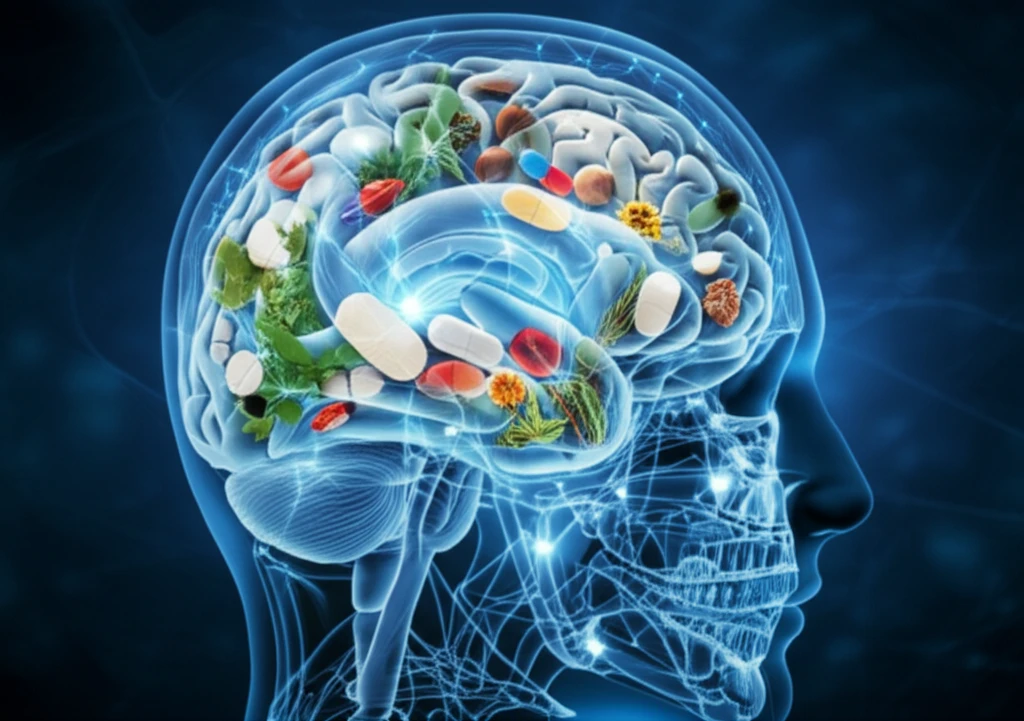
Digital illustration of a brain with glowing neural pathways, pills, herbs, and healthy foods, representing pharmacology and wellness.

Unlocking Your Brain's Potential: A Journey Through Pharmacology and Wellness

"Dive into the fascinating world where pharmacology meets personal well-being, exploring how drugs and lifestyle choices shape our cognitive and emotional landscape."


In an era where mental health and cognitive performance are paramount, understanding the tools and substances that influence our brains is more crucial than ever. Pharmacology, the science of how drugs interact with the body, offers profound insights into this area. But how does this complex field translate into practical advice for enhancing our well-being? This article delves into the intersection of pharmacology and wellness, providing a comprehensive guide to how different substances, from medications to natural supplements, impact our cognitive functions, emotional states, and overall health.

The human brain, a powerhouse of complexity, is susceptible to the effects of various chemicals, both beneficial and detrimental. From the antidepressants that stabilize mood to the stimulants that boost focus, understanding these interactions is essential for making informed choices. We'll explore how these substances work, their potential benefits, and the importance of responsible use. Furthermore, this exploration extends beyond traditional medications to encompass lifestyle choices, such as diet and exercise, and their pharmacological influences on the brain.

This journey aims to unravel the mysteries of how pharmacology shapes our mental and physical health. By examining the mechanisms behind drug actions, the impact of supplements, and the role of lifestyle in brain function, we aim to empower you with knowledge. Whether you're looking to understand your medications better, explore natural ways to enhance your cognitive abilities, or simply gain a deeper understanding of the brain, this article serves as your guide to navigate the fascinating world of pharmacology and its impact on well-being.

Decoding the Brain: An Introduction to Neurotransmitters and Their Role in Pharmacology

Digital illustration of a brain with glowing neural pathways, pills, herbs, and healthy foods, representing pharmacology and wellness.

At the heart of brain function lie neurotransmitters – chemical messengers that transmit signals between nerve cells (neurons). These tiny molecules play an enormous role in everything from our mood and sleep to our ability to focus and remember. Understanding these neurotransmitters is fundamental to grasping how drugs work in the brain. For example, selective serotonin reuptake inhibitors (SSRIs), commonly prescribed for depression, work by increasing the availability of serotonin, a neurotransmitter linked to mood regulation, in the brain.

The effects of various substances depend heavily on their interaction with these neurotransmitters. Certain drugs act as agonists, mimicking the effects of neurotransmitters, while others are antagonists, blocking their actions. Consider caffeine, a stimulant that blocks adenosine receptors, which promotes wakefulness, and enhances alertness. Knowing these basic principles can help you understand how the drugs and supplements you consume are likely to influence your body and mental state.

  • Serotonin: Regulates mood, sleep, and appetite.
  • Dopamine: Involved in motivation, reward, and motor control.
  • Norepinephrine: Affects alertness, attention, and the fight-or-flight response.
  • GABA: The primary inhibitory neurotransmitter, calming the nervous system.
  • Glutamate: The primary excitatory neurotransmitter, involved in learning and memory.
Understanding neurotransmitters also helps in recognizing the impact of both prescription and over-the-counter drugs, as well as the effect of dietary supplements. It forms the foundation for understanding how to use pharmacology to improve brain health and overall wellness. By targeting specific neurotransmitters, we can manage symptoms of mental health conditions, enhance cognitive functions, and support the natural mechanisms of the brain.

Empowering Your Mind: The Intersection of Pharmacology and Wellness

By understanding the impact of pharmacology on our mental and physical states, we can make informed decisions to promote our well-being. From the careful use of medications to the incorporation of lifestyle changes that support brain function, the possibilities are endless. The key is to approach this information with a balanced perspective, seeking guidance from healthcare professionals and making informed choices that support your overall health. As we continue to learn more about the complexities of the brain, pharmacology will remain a vital tool in our journey towards optimal wellness.

About this Article -

This article was crafted using a human-AI hybrid and collaborative approach. AI assisted our team with initial drafting, research insights, identifying key questions, and image generation. Our human editors guided topic selection, defined the angle, structured the content, ensured factual accuracy and relevance, refined the tone, and conducted thorough editing to deliver helpful, high-quality information.See our About page for more information.

Everything You Need To Know

1

How does pharmacology relate to everyday wellness and mental health?

Pharmacology studies how drugs and substances impact the body. It connects directly to wellness and mental health by helping us understand how medications, supplements, and even lifestyle choices affect our brain functions, emotional states, and overall health. For example, understanding how antidepressants affect neurotransmitters like Serotonin can inform decisions about managing mood disorders. Pharmacology provides critical knowledge for making informed choices to enhance well-being.

2

What role do neurotransmitters play in brain function, and how do drugs affect them?

Neurotransmitters are chemical messengers that transmit signals between neurons. They are fundamental to brain functions like mood, sleep, focus, and memory. Drugs can influence neurotransmitters in several ways; some drugs act as agonists, mimicking the effects of neurotransmitters (such as how certain substances might interact with Dopamine to affect motivation), while others act as antagonists, blocking their actions (like how caffeine blocks adenosine receptors). Understanding these interactions is vital for predicting how drugs impact our mental state.

3

Can you explain how SSRIs and caffeine affect neurotransmitters in the brain?

Selective Serotonin Reuptake Inhibitors (SSRIs), commonly prescribed for depression, increase the availability of Serotonin in the brain, which helps regulate mood. Caffeine, a stimulant, works by blocking adenosine receptors, leading to increased wakefulness and alertness. These examples illustrate how specific substances can target particular neurotransmitter systems to produce specific effects on mood and cognitive function. It's a key insight of pharmacology.

4

Beyond medication, how do lifestyle choices impact brain function from a pharmacological perspective?

Lifestyle choices, such as diet and exercise, have significant pharmacological influences on the brain. Nutrients from our diet can affect neurotransmitter synthesis and function; for example, certain amino acids are precursors to neurotransmitters like Dopamine and Serotonin. Exercise can increase the release of endorphins, which have mood-boosting effects. These lifestyle factors interact with brain chemistry in ways that can enhance cognitive abilities and overall mental well-being. This is an important extension of pharmacology beyond just drugs.

5

What are the implications of understanding how different substances affect neurotransmitters like Serotonin, Dopamine, Norepinephrine, GABA, and Glutamate?

Understanding how substances affect neurotransmitters allows for targeted interventions to manage mental health conditions, enhance cognitive functions, and support natural brain mechanisms. For instance, knowing that Serotonin regulates mood can inform the use of SSRIs for depression, while recognizing Dopamine's role in motivation can guide strategies to improve focus and productivity. Additionally, understanding the balance between excitatory neurotransmitters like Glutamate and inhibitory neurotransmitters like GABA is crucial for maintaining overall brain health and preventing neurological disorders. This knowledge empowers individuals to make informed decisions about medication, supplements, and lifestyle choices to optimize their well-being, aligning pharmacological understanding with personalized wellness strategies.

Newsletter Subscribe

Subscribe to get the latest articles and insights directly in your inbox.