
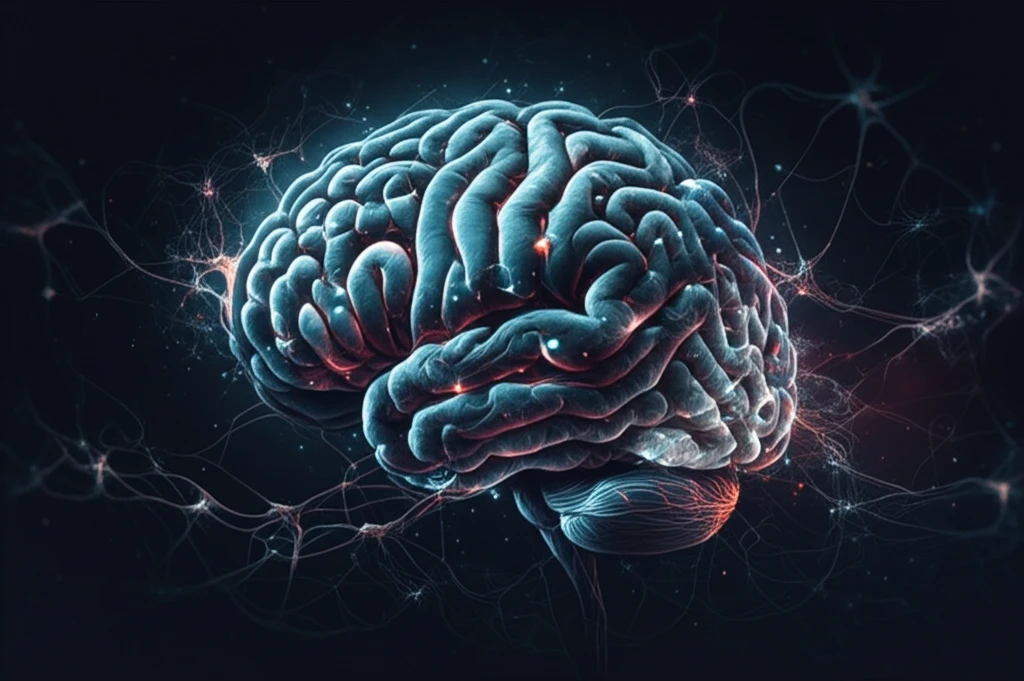
Unlocking Your Brain's Potential: A Beginner's Guide to Neuronal Systems

"Demystifying the complex world of neurons and how understanding them can improve your cognitive well-being."
Ever wondered what makes your brain tick? The answer lies in the intricate network of neuronal systems, the fundamental units responsible for everything from your thoughts and emotions to your movements and memories. Understanding these systems is like gaining access to the control panel of your own mind, offering valuable insights into how you learn, adapt, and experience the world.
This article serves as a friendly introduction to the basic structure of neuronal systems, breaking down complex concepts into easy-to-understand explanations. We'll explore how these systems are organized, the roles of different components, and how they work together to create the remarkable abilities of the human brain. Prepare to embark on a journey of self-discovery and unlock the potential within your own mind.
Think of your brain as a bustling city. Neurons are the individual citizens, each with their unique roles and responsibilities. These citizens are organized into districts (neuronal systems) that specialize in specific tasks. Just as a city needs infrastructure to function, neuronal systems rely on intricate communication networks to transmit information and coordinate activity.
New Neurons Even in Adulthood
The creation of new neurons in the brain is called neurogenesis, and it can happen even in adults. This means the brain is not a fixed, static organ but one capable of generating new nerve cells throughout life.
Studying the Synapse
Scientists have learned a great deal about neurons by studying the synapse, the place where a signal passes from the neuron to another cell. When the signal reaches the end of the axon, it moves into this gap, and observing this transfer is a foundational method in brain research.
A Long History of Neuron Research
Neurons and their role in the nervous system have been studied for well over a century, building the foundational understanding behind modern neuroscience. A useful analogy that emerged from this history is to think of a neuron as a tree, with three main parts including the dendrites.
The Building Blocks: Neurons and Their Roles
At the heart of every neuronal system lies the neuron, a specialized cell designed to transmit information throughout the brain. Each neuron consists of several key components:
- Dendrites: Branch-like extensions that receive signals from other neurons.
- Cell Body (Soma): The central part of the neuron, containing the nucleus and other essential organelles.
- Axon: A long, slender projection that transmits signals to other neurons.
- Synapses: Junctions between neurons where signals are transmitted.
A Three-Level Model of the Developing Mind
Recent work describes a three-level model of the developing mind that links functional and neuronal evidence with educational implications. This higher-order network reworking approach suggests that brain development can be understood across interacting levels rather than through a single mechanism alone.
Chaos and Patterns in Neuronal Systems
Neuronal systems are studied not only for their orderly patterns and information processing but also for their chaotic behavior. Understanding how patterns, information, and chaos interact remains a major challenge, since the same circuits can produce both stable signals and unpredictable dynamics.
Strength Encoded in Firing Frequency
When the brain gets really excited, it fires off a lot of signals, and how quickly these signals fire tells us how strong the original stimulus is. The stronger the stimulus, the higher the frequency of action potentials, while the synapse governs how each signal passes from one neuron to the next cell.
Empowering Your Mind Through Understanding
Understanding the basics of neuronal systems is the first step towards unlocking your brain's full potential. By learning how these systems work, you can gain valuable insights into how you learn, remember, and process information. This knowledge can empower you to make positive changes in your lifestyle, habits, and cognitive strategies, leading to improved mental performance and overall well-being. The journey to understanding your brain is a continuous one, filled with exciting discoveries and opportunities for personal growth. Embrace the power of knowledge and embark on a path towards a healthier, more vibrant mind.
How the Brain Controls the Body
Patient-friendly guides explain what the brain controls, what the major brain parts do, and how brain signalling works across regions. Taken together, the anatomy of neurons, the synapse, and action potentials show how individual cells combine into the functional architecture behind every brain function.
The Amygdala and Neuronal Circuits
The amygdala is described as the brain's fear response center, and ongoing research in neurology explores how conditions such as limbic encephalitis can impact the neuronal circuits of the amygdala. These investigations point toward a deeper understanding of how emotion-related circuits can be disrupted by inflammation and autoimmune activity.
Lifelong Brain Change and Education
Because neurogenesis continues into adulthood, the brain retains a capacity for change that has implications for learning and education across the lifespan. Developmental models that connect neuronal findings to educational practice highlight the systemic challenge of translating neuroscience into classroom and clinical settings.
Making Brain Science Accessible
Short explainer videos and patient-friendly guides aim to break down every brain function into understandable terms for general audiences. This accessibility work helps people apply basic neuroscience to their own habits, wellbeing, and understanding of how the mind works.