
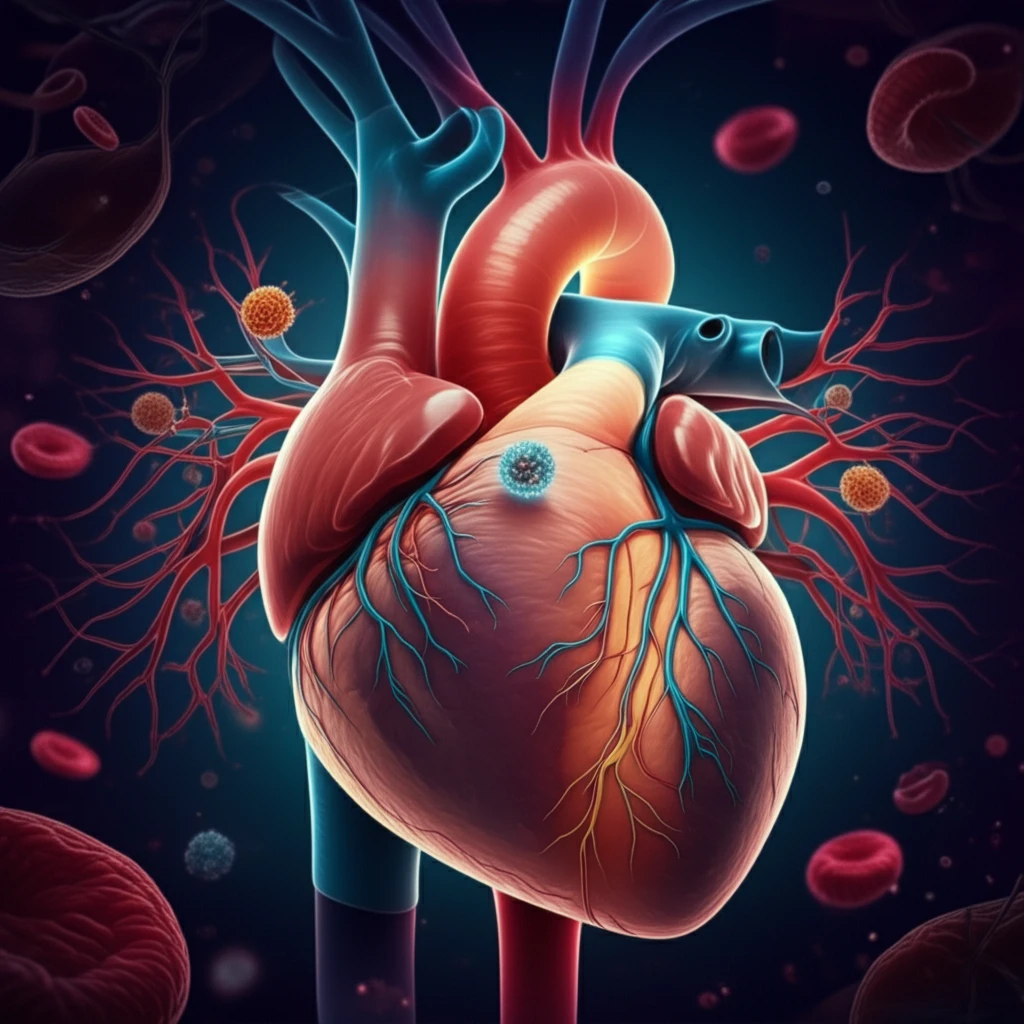
Digital illustration of a heart with blood vessels and APOL3 molecules.

Unlocking Your Body's Secrets: How a Tiny Protein Could Revolutionize Heart Health

"New research reveals how a small protein could be a key player in preventing and treating heart disease."


Heart disease remains a leading global health concern, affecting millions and impacting the lives of countless others. From the food we eat to the lifestyle choices we make, our hearts constantly face challenges. But what if a tiny protein, almost like a microscopic guardian, held the key to protecting and even repairing our most vital organ? Recent research is uncovering just that, revealing the surprising role of a protein called Apolipoprotein L3, or APOL3, in the intricate world of cardiovascular health.

The science of heart health is constantly evolving, with new discoveries emerging that provide hope and direction for both prevention and treatment. This article explores the latest findings, offering a clear and engaging look at how APOL3 functions and its implications for the future of heart disease management. We'll break down the complex research in an accessible way, focusing on what this means for you and your loved ones.

This isn't just about understanding complex biological processes; it's about empowering you with knowledge. By understanding the role of APOL3, you can better appreciate the steps you can take to support your heart health. This information may influence your health decisions in the future.

Meet APOL3: The Tiny Protein with a Big Job

Digital illustration of a heart with blood vessels and APOL3 molecules.

APOL3 is a protein that has recently emerged as a key player in the intricate dance of cardiovascular health. It belongs to a family of apolipoproteins, which are involved in transporting fats and cholesterol in the bloodstream. But APOL3 has a unique role, particularly in the health of the endothelial cells that line our blood vessels.

Endothelial cells are crucial for maintaining healthy blood vessels. They regulate blood flow, prevent blood clots, and play a role in inflammation. Recent research has revealed that APOL3 can influence the function of these cells, and it's even involved in angiogenesis, which is the formation of new blood vessels. This process is critical in both healthy conditions and in disease, such as the growth of tumors or the repair of damaged tissues.

  • Heart Disease Risk: APOL3's role in endothelial cell health suggests it may influence the risk of developing heart disease.
  • Angiogenesis: APOL3's influence on angiogenesis means it could impact how blood vessels form and function, both in healthy and disease states.
  • Inflammation: Inflammation is a major factor in heart disease, and APOL3's involvement suggests it may be involved in inflammatory processes within blood vessels.
The study highlights the importance of APOL3 in several crucial aspects of cardiovascular health, making it a focal point for further research and potential therapeutic interventions.

The Future of Heart Health: What Does This Mean for You?

The discovery of APOL3's role in heart health is a significant step forward. Further research into the protein and its functions will undoubtedly lead to better ways to prevent and treat cardiovascular diseases. This research highlights the incredible complexity and adaptability of our bodies. It underscores the importance of staying informed about the latest advances in medical science. By embracing this knowledge, you can proactively manage your heart health and work towards a healthier future. We will update this article as new research and treatments emerge, so be sure to check back.

About this Article -

This article was crafted using a human-AI hybrid and collaborative approach. AI assisted our team with initial drafting, research insights, identifying key questions, and image generation. Our human editors guided topic selection, defined the angle, structured the content, ensured factual accuracy and relevance, refined the tone, and conducted thorough editing to deliver helpful, high-quality information.See our About page for more information.

Everything You Need To Know

1

What is APOL3 and why is it important for heart health?

APOL3, or Apolipoprotein L3, is a protein that plays a significant role in cardiovascular health. It belongs to the apolipoprotein family, which transports fats and cholesterol. APOL3 is vital for the health of endothelial cells lining blood vessels, influencing blood flow regulation, clot prevention, inflammation, and angiogenesis. It's involvement in angiogenesis impacts how blood vessels form and function in both healthy and disease states.

2

How does APOL3 affect the risk of developing heart disease?

APOL3 influences the risk of heart disease through its impact on endothelial cell health. Healthy endothelial cells are crucial for maintaining proper blood vessel function. Because APOL3 affects endothelial cell function it can alter inflammatory processes. This makes APOL3 a focal point for understanding and potentially treating cardiovascular issues.

3

What is angiogenesis, and how does APOL3 influence this process?

Angiogenesis is the formation of new blood vessels. APOL3's influence on angiogenesis is significant because this process is crucial in both healthy conditions, like tissue repair, and disease states, such as tumor growth. Understanding how APOL3 affects angiogenesis could lead to therapies that promote healthy blood vessel formation or inhibit abnormal growth.

4

How does APOL3's role in inflammation relate to heart disease, and what are the broader implications?

Inflammation is a major factor in heart disease, and APOL3's involvement suggests it is involved in inflammatory processes within blood vessels. Further research on APOL3 may uncover ways to modulate inflammation, potentially preventing or treating heart disease. The broader implications include developing targeted therapies that address the root causes of cardiovascular issues related to inflammation.

5

Given the discovery of APOL3's role, what future research directions are likely, and how might these impact preventative heart health measures?

Future research will likely focus on developing therapies that target APOL3 to prevent and treat cardiovascular diseases. This includes investigating how APOL3 can be manipulated to improve endothelial cell function, regulate angiogenesis, and control inflammation. Understanding APOL3 could lead to personalized preventative measures, where treatments are tailored to an individual's specific cardiovascular risk profile, optimizing heart health outcomes.

Newsletter Subscribe

Subscribe to get the latest articles and insights directly in your inbox.