
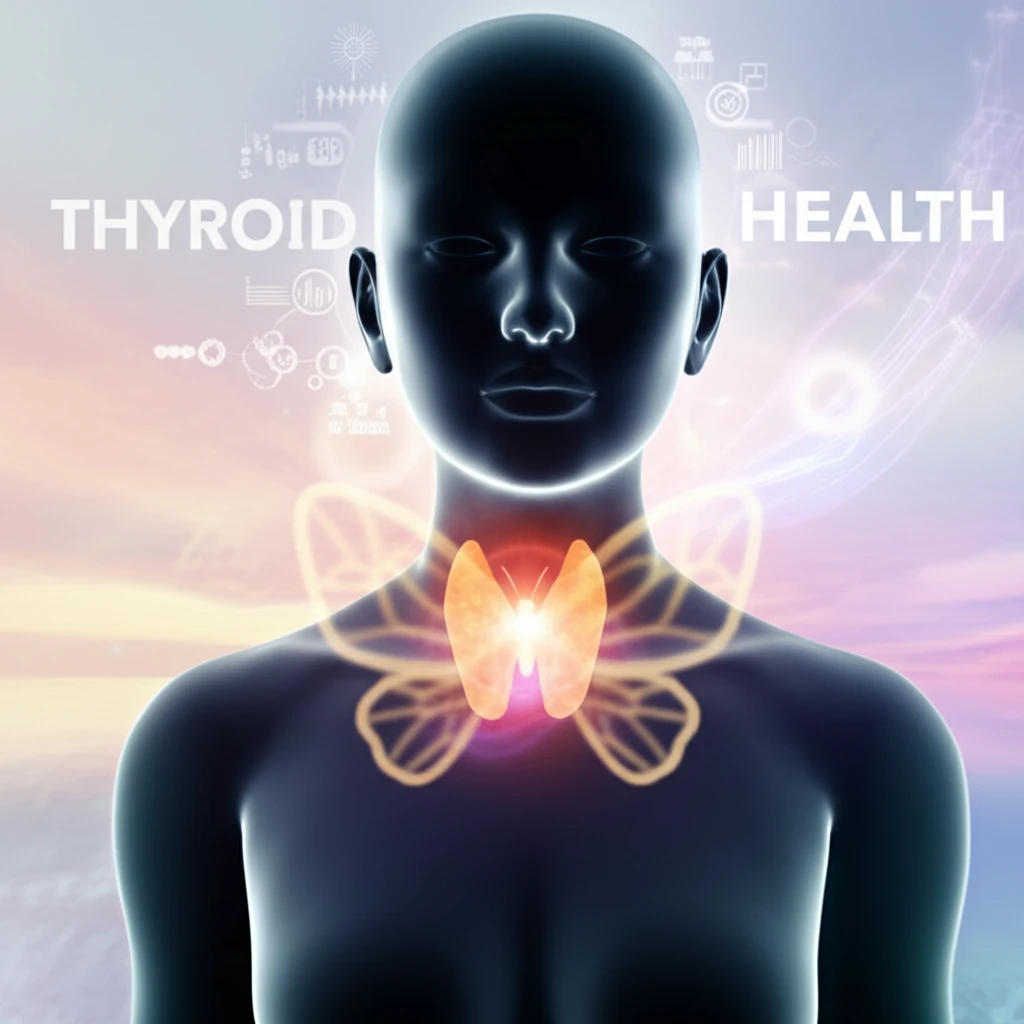
Unlocking Thyroid Health: How a Tiny Gland Impacts Your Energy, Mood, and Metabolism

"Beyond the Butterfly: Discover the crucial role of your thyroid and the surprising factors that influence its function, from iodine to your overall well-being."
Have you ever felt like your body is running on low battery, despite getting enough sleep? Or perhaps you've noticed shifts in your weight, mood swings, or persistent fatigue? These could be subtle whispers from a tiny, butterfly-shaped gland in your neck: your thyroid. Though small, this gland plays a monumental role in your overall health and well-being.
The thyroid is the master regulator of your metabolism, the engine that converts food into energy. It produces hormones that influence nearly every system in your body, from your heart rate and brain function to your weight and skin health. When this gland is out of balance, it can create a cascade of issues that affect your daily life.
This article will explore the intricacies of thyroid function, diving into how this tiny gland works, the common problems that can arise, and the ways you can support your thyroid health through lifestyle choices, dietary adjustments, and informed healthcare decisions.
Prevalence and Public Health Impact
Thyroid disorders include hypothyroidism, hyperthyroidism, Hashimoto's thyroiditis, thyroid nodules, and thyroid cancer. Their prevalence varies across countries, influenced by iodine intake, genetic predisposition, healthcare access, and diagnostic practices. The Endocrine Society describes thyroid disease as involving structural or functional abnormalities within the hypothalamic-pituitary-thyroid axis. U.S. estimates have historically drawn on NHANES, a broad dataset combining participant interviews and physical examinations, although NHANES stopped collecting thyroid profiles after 2012.
Testing and Measurement Limits
Modern thyroid evaluation can measure total and free T4 and T3, TSH, thyroid autoantibodies such as TRAb, TPOAb, and TgAb, and thyroglobulin. Available methods include radioimmunoassay and immunometric assay, each with documented methodological strengths and limitations. The CDC uses a reference method for free T4 and provides serum materials to laboratories and manufacturers to improve measurement accuracy and reduce variation. Even after immunoassays are recalibrated against a mass-spectrometry reference method, some limitations of thyroid hormone measurement remain.
From Goiter Remedies to Endocrinology
The recorded history of thyroid treatment reaches back to 2697 BCE, when the Yellow Emperor Hung Ti was described as using seaweed to treat goiter. Thomas Wharton coined the English name “thyroid” in 1656, and Bernard Courtois discovered iodine in 1811 while observing residue from burned seaweed. Studies of the thyroid helped establish major endocrine concepts, including feedback mechanisms, replacement therapy, and the use of isotopes. Before routine treatment, severe hypothyroidism could progress to myxedema, with swelling, depressed breathing, mental slowness, and seizures.
The Thyroid's Symphony: Understanding the Hormones That Orchestrate Your Body
At the heart of thyroid function are two primary hormones: thyroxine (T4) and triiodothyronine (T3). These hormones regulate metabolism, affecting how quickly your body uses energy, produces heat, and consumes oxygen. T4 is the primary hormone produced by the thyroid, but T3 is the more active form. The body converts T4 to T3 to be utilized.
- Metabolism: Regulates the speed at which your body burns calories and uses energy.
- Heart Rate: Influences heart rate and blood pressure.
- Brain Function: Supports cognitive function, mood, and mental clarity.
- Body Temperature: Helps maintain a stable internal body temperature.
- Growth and Development: Crucial for growth, especially in children and adolescents.
- Muscle Strength: Supports the strength and function of your muscles.
A Rapidly Moving Research Field
Recent thyroid research is being tracked through major review platforms including Nature Reviews Endocrinology and Springer Nature. A 2024–2025 year-in-review presented at the 34th meeting of the American Association of Clinical Endocrinology in Orlando summarized fourteen peer-reviewed articles published between May 2024 and March 2025. The 2025–2026 review, presented at the AACE 2026 annual meeting, identifies precision medicine and appropriate de-escalation as two overarching themes in clinical thyroidology. These reviews are intended to highlight research with practical relevance for endocrinologists.
Why Results May Not Be Straightforward
Thyroid evaluation and treatment do not always produce a simple explanation for persistent symptoms. Test results can be affected by limitations in measurement methods, while treatment decisions may need to account for the broader clinical context. A cautious approach recognizes that individual experiences may not align neatly with a single laboratory result or standard intervention. Further assessment may be needed when symptoms, testing, and treatment response do not agree.
Comparing Treatment Options
Levothyroxine remains the standard treatment for hypothyroidism, but several sources describe alternatives for people who do not feel better on T4-only therapy. These options include combination T4/T3 therapy, other levothyroxine brands, T3-only medicines such as Cytomel, and desiccated thyroid products. Comparative guides emphasize considering the appropriate levothyroxine dose or alternative thyroid hormone replacement therapy rather than assuming one option suits everyone. Diet, supplements, and lifestyle changes may support thyroid health, but they are presented as adjuncts rather than direct substitutes for prescribed treatment.
Taking Charge of Your Thyroid Health: A Path to Balance and Vitality
Supporting your thyroid health is a proactive step towards improving your overall well-being. By understanding the intricacies of this essential gland and making informed choices, you can take charge of your energy levels, mood, and metabolism. The information in this article is not a substitute for professional medical advice. If you have concerns about your thyroid health, consult a healthcare professional for proper diagnosis and treatment.
A Context-Dependent Condition
Thyroid health is best understood as a clinical issue that may involve symptoms, laboratory measurements, and treatment response together. Standard testing can provide useful information, but test-method limitations mean results should be interpreted carefully. Persistent concerns may warrant discussion with a qualified clinician rather than self-directed changes to medication, diet, or supplements.
Toward More Precise Care
Future thyroid care may place greater emphasis on individualized assessment and precision medicine. Research may also explore when treatment can be safely reduced or de-escalated. These directions remain developing areas, so their eventual effect on routine care is not yet certain.
Variation Across Populations
Thyroid disease does not affect every population in the same way. Differences in iodine intake, genetic predisposition, healthcare accessibility, and diagnostic practices can influence reported prevalence and the likelihood of detection. These factors make international comparisons and broad conclusions more difficult.
Living With Uncertainty
People with thyroid symptoms may face uncertainty when their experiences do not match a straightforward test result or treatment response. Finding an appropriate approach can involve weighing standard therapy against alternatives and considering the limitations of available measurements. Clinical decisions are therefore personal and should be guided by a qualified healthcare professional.