
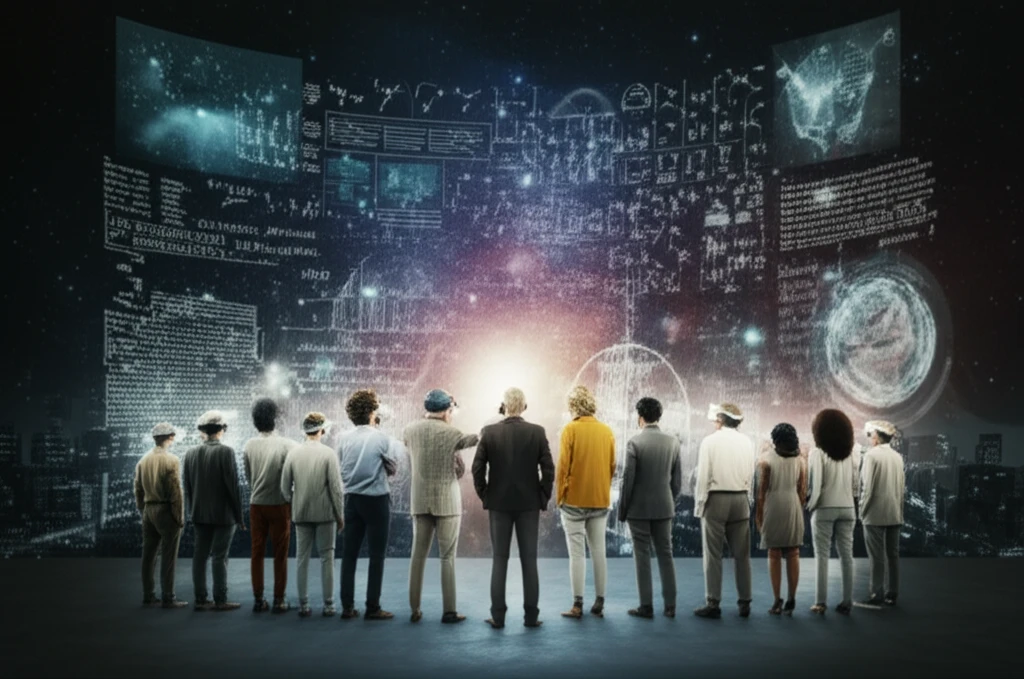
Diverse people engaging with science communication tools in a futuristic setting.

Unlocking the Universe: How Science Communication is Shaping Our World

"From Ancient Discoveries to Modern Marvels: The Rise and Impact of Science Communication in Brazil and Beyond."


Science, once confined to the hallowed halls of academia, has broken free, transforming into a vibrant, dynamic force that touches every aspect of our lives. But how does this knowledge, often dense and complex, reach the wider world? The answer lies in science communication, a field dedicated to making the wonders of science accessible, engaging, and relevant to everyone.

This article dives deep into the evolution of science communication, exploring its historical roots, particularly in Brazil, and tracing its growth into a global phenomenon. We'll uncover the key players, the challenges faced, and the innovative strategies used to bring science to the masses. From museums and media to public policies and the internet, science communication is reshaping how we understand and interact with the world.

Whether you're a seasoned scientist, a curious student, or simply someone eager to learn more about the world around you, this exploration of science communication will enlighten and inspire. Join us as we celebrate the power of knowledge and the people who make science a shared human experience.

A Historical Glimpse: Science Communication Takes Root

Diverse people engaging with science communication tools in a futuristic setting.

The journey of science communication has been a long and fascinating one, with its roots extending deep into the past. In Brazil, the seeds of this practice were sown in the 19th century, a time when scientific inquiry was just beginning to blossom. The establishment of scientific societies and the emergence of early publications laid the groundwork for what was to come.

Early efforts focused on disseminating scientific knowledge among a select few, often the elite. However, as the country evolved, so did the methods of communication. Newspapers began to feature scientific articles, and magazines dedicated to science emerged. The driving force behind this movement was a growing awareness of the importance of science for national development and progress.

  • The 19th Century: Early scientific societies and publications laid the groundwork for science communication.
  • Early 20th Century: The rise of the Brazilian Academy of Sciences and the increasing value placed on 'pure' science.
  • Mid-20th Century: The emergence of science communication in radio and the creation of science museums.
  • Later 20th Century: The formation of the Brazilian Society for the Advancement of Science (SBPC) which was vital to promote science communication and to promote scientific events and publications.
As the 20th century dawned, science communication gained further momentum. The Brazilian Academy of Sciences became a central figure, and the burgeoning field of radio played a significant role. Visionaries like Roquette-Pinto recognized the power of this new medium to reach a wider audience, paving the way for science to become a shared experience.

The Future of Science Communication: A World of Possibilities

Science communication is not just a historical narrative; it's a dynamic, evolving field with a bright future. By embracing new technologies, fostering diverse voices, and prioritizing inclusivity, science communication can continue to bridge the gap between scientific knowledge and society. As we move forward, the collaborative spirit of scientists, communicators, and the public will be essential to unlock the full potential of science for the benefit of all. The journey continues, and the destination is a world where science is not just understood, but celebrated, by everyone.

About this Article -

This article was crafted using a human-AI hybrid and collaborative approach. AI assisted our team with initial drafting, research insights, identifying key questions, and image generation. Our human editors guided topic selection, defined the angle, structured the content, ensured factual accuracy and relevance, refined the tone, and conducted thorough editing to deliver helpful, high-quality information.See our About page for more information.

Everything You Need To Know

1

What is science communication and why is it important?

Science communication is the practice of making scientific knowledge accessible, engaging, and relevant to a broad audience. It involves bridging the gap between complex scientific concepts and the public, fostering curiosity, understanding, and engagement. It's important because it helps everyone understand the world around them, promotes informed decision-making, and encourages a shared human experience of scientific discovery.

2

How did science communication start, and what were its early methods in Brazil?

Science communication's roots trace back to 19th-century Brazil, with early scientific societies and publications laying the groundwork. Initially, knowledge dissemination was limited to a select elite. However, as Brazil evolved, newspapers and magazines began featuring scientific articles. The establishment of the Brazilian Academy of Sciences also played a significant role. Early methods included scientific publications and the emergence of scientific societies. As the 20th century progressed, radio became a vital medium for reaching a wider audience.

3

What role did institutions like the Brazilian Academy of Sciences and the SBPC play in the advancement of science communication?

The Brazilian Academy of Sciences was a central figure in the early 20th century, promoting scientific inquiry and communication. Later, the Brazilian Society for the Advancement of Science (SBPC) became vital for promoting science communication. The SBPC organized scientific events and publications to make science more accessible. These institutions helped to legitimize and expand the reach of science communication efforts, ensuring scientific knowledge was disseminated more widely and fostering public engagement with science.

4

How did radio and the internet contribute to science communication?

Radio was pivotal in the mid-20th century, enabling visionaries like Roquette-Pinto to reach a wider audience, making science a shared experience. The internet, although not mentioned in the article, is an emerging medium and can be assumed to be part of 'new technologies' as science communication continues to evolve, it can be said that it provides new avenues for scientists to share their work, fostering global collaboration and public engagement through multimedia content, interactive platforms, and social media.

5

What are the key takeaways about the future of science communication?

The future of science communication lies in embracing new technologies, fostering diverse voices, and prioritizing inclusivity. This field is a dynamic, evolving area and, by embracing these approaches, science communication can continue to bridge the gap between scientific knowledge and society, making science accessible to everyone. Collaborative spirit between scientists, communicators, and the public will be essential to unlock science's full potential.

Newsletter Subscribe

Subscribe to get the latest articles and insights directly in your inbox.