
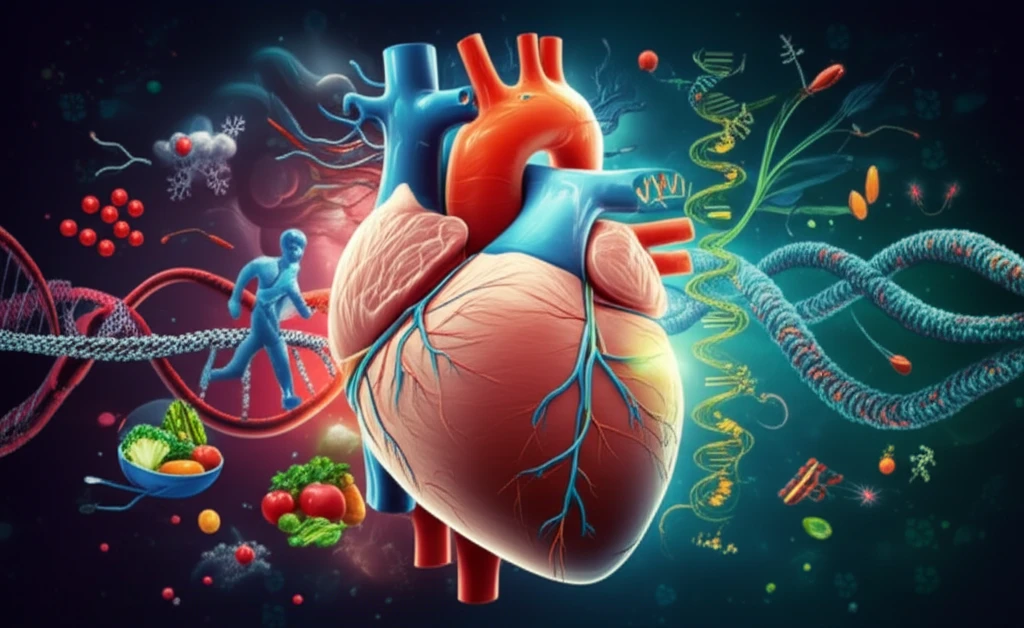
Unlocking the Secrets Within: How Epigenetics is Changing the Fight Against Heart Disease

"From DNA to Disease: A Deep Dive into Epigenetics, the Lifestyle Factor, and the Future of Heart Health"
Heart disease, the silent killer, continues to be a leading cause of death globally, affecting millions of lives each year. While genetics has long been recognized as a key factor, it's not the whole story. A new frontier in medical science, known as epigenetics, is revealing how our lifestyle and environment can fundamentally alter our genetic destiny, particularly concerning our heart health.
Epigenetics, in simple terms, is the study of how our behaviors and environment can cause changes that affect the way your genes work. Unlike our DNA sequence, which is fixed at birth, epigenetic changes can be dynamic, responding to signals from our diet, stress levels, exposure to toxins, and even our social interactions. These changes can turn genes 'on' or 'off,' influencing everything from our metabolism to our risk for chronic diseases like heart disease.
This article will delve into the fascinating world of epigenetics, exploring how it impacts heart disease. We'll examine how factors like DNA methylation, histone modifications, and the role of non-coding RNAs contribute to the development and progression of atherosclerosis, the buildup of plaque in the arteries. We will also look at the implications for the future of prevention and treatment.
Deciphering the Epigenetic Code: Key Players in Heart Disease
At the heart of epigenetics are three main mechanisms: DNA methylation, histone modifications, and non-coding RNAs. DNA methylation involves adding a methyl group to DNA, which can silence a gene. Histone modifications, on the other hand, affect how tightly DNA is wound around proteins called histones, thus influencing gene expression. Lastly, non-coding RNAs, such as microRNAs (miRNAs) and long non-coding RNAs (lncRNAs), regulate gene activity.
- DNA Methylation: Modifies DNA by adding methyl groups to certain DNA base pairs, affecting gene activity.
- Histone Modifications: Alter the structure of chromatin, impacting how easily genes can be accessed and expressed.
- Non-coding RNAs: Regulate gene expression through various mechanisms, including targeting messenger RNA (mRNA) molecules for degradation or blocking their translation into proteins.
The Future of Heart Health: Embracing Epigenetics
Epigenetics offers a new and exciting perspective on heart disease. It emphasizes the power of lifestyle choices and environmental management, and highlights that change is not only possible but is also within our reach. As research continues to uncover the complexities of epigenetic mechanisms and heart disease, we are gaining a more profound understanding of these interactions. The future of heart health is not just about managing symptoms or treating the disease after the fact. It is also about preventing the disease. The research, however, is leading to a new and promising world of personalized medicine that will offer advanced methods for treatment and improve human health. This understanding offers exciting possibilities to prevent, manage, and potentially reverse heart disease, improving cardiovascular health and longevity.