
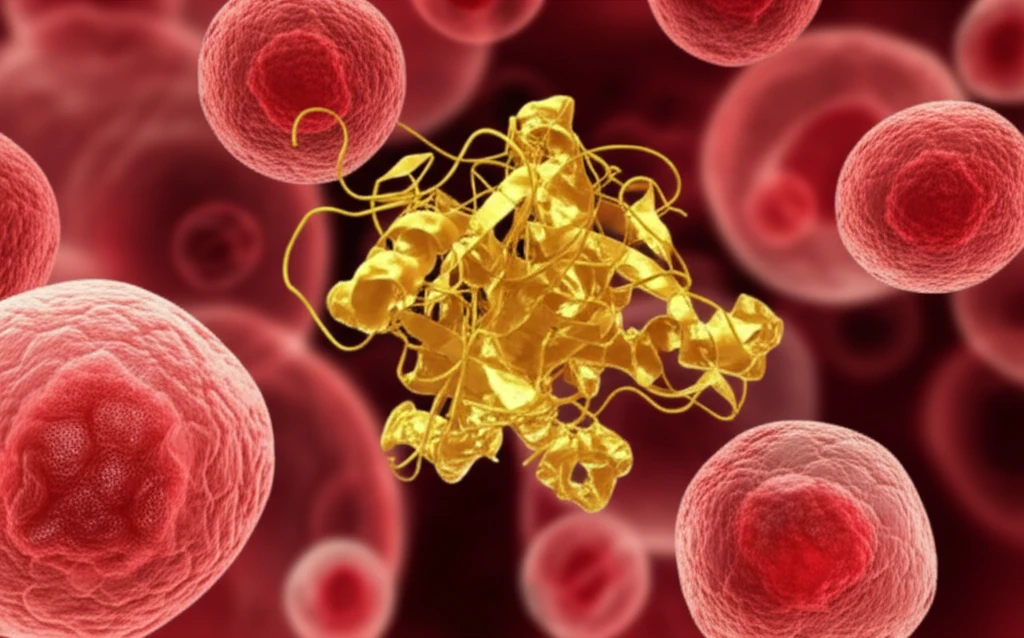
Unlocking the Secrets Within: How a Tiny Enzyme Could Revolutionize Cancer Treatment

"Groundbreaking research reveals the potential of USP1, an enzyme that could be a key to unlocking new cancer therapies."
Cancer, a disease that touches the lives of millions worldwide, continues to challenge medical science. The relentless search for effective treatments has led researchers down countless paths, each promising a glimmer of hope. Now, a new study has brought the focus to a tiny enzyme called USP1, opening up exciting possibilities in the fight against cancer.
This groundbreaking research, published in the journal Autophagy, reveals the intricate role of USP1 in the cellular processes that drive cancer growth. By understanding how USP1 functions, scientists are hopeful they can design more effective and targeted therapies, potentially revolutionizing cancer treatment. This discovery offers a fresh perspective on tackling this complex disease.
This article delves into the core findings of the study, exploring the link between USP1 and cancer. We'll uncover how this enzyme influences cellular behavior, its connection to existing cancer treatments, and what this means for the future of cancer care. This article provides an accessible overview of the study and its implications, offering a beacon of hope for those affected by cancer.
USP1: The Cellular Maestro and Its Role in Cancer
At the heart of this research lies USP1 (ubiquitin-specific peptidase 1), an enzyme that acts like a cellular maestro. USP1 plays a crucial role in regulating cellular processes by controlling the levels of certain proteins. Think of it as a gatekeeper that manages the flow of activity within a cell, ensuring everything runs smoothly. In cancer cells, this control can go awry, contributing to uncontrolled growth and spread.
- USP1 regulates key cellular processes, including autophagy, a self-cleaning mechanism.
- In cancer cells, USP1's dysregulation can contribute to uncontrolled growth and spread.
- USP1 may influence the effectiveness of existing cancer treatments, like pimozide.
A New Era of Hope in Cancer Treatment
The study's findings on USP1's role in cancer offer a promising path forward. By targeting this enzyme, researchers are hopeful that they can develop more effective treatments that are less harmful to patients. As research continues, it is crucial to foster hope and optimism. While the journey to a cure is long, each discovery like this brings us one step closer to a world where cancer is no longer a life-threatening disease.