
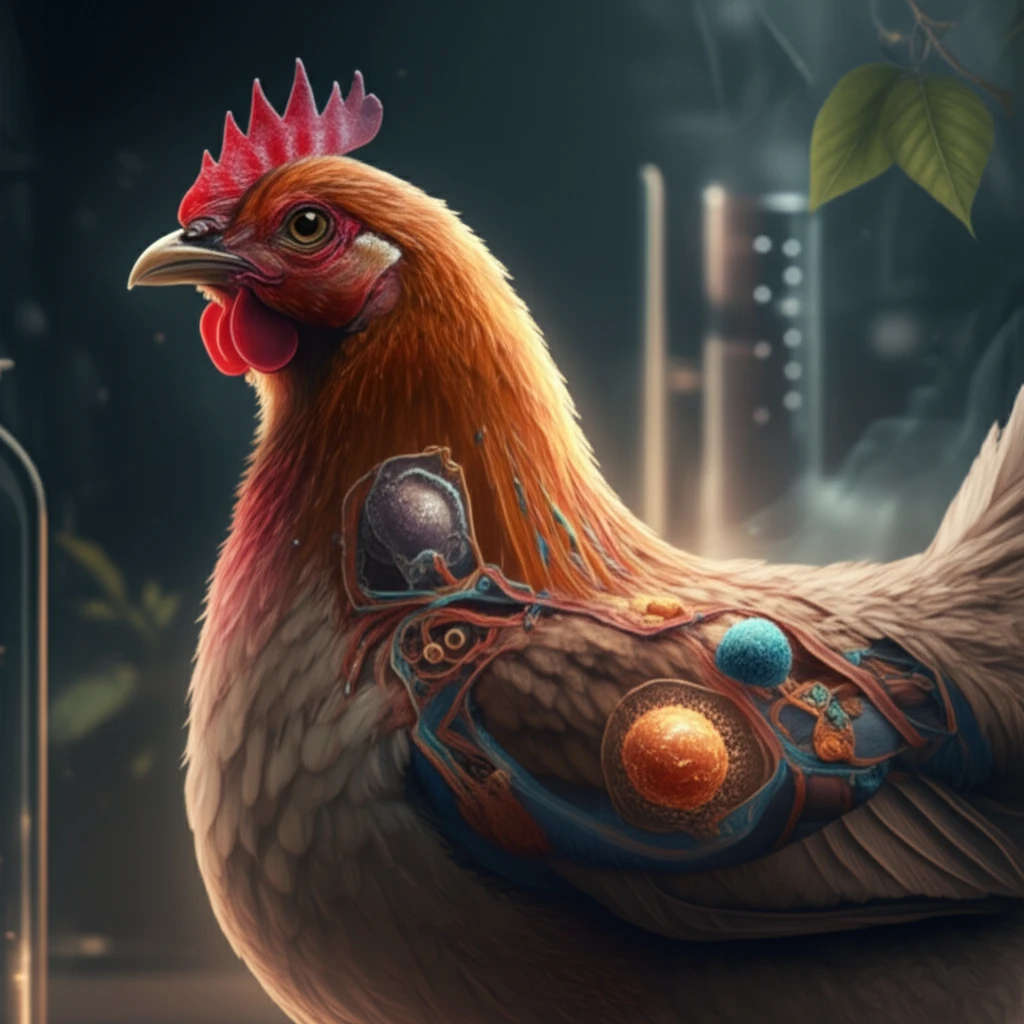
Unlocking the Secrets Within: How a Chicken's Immune System Holds Clues to Fighting Cancer

"Groundbreaking research reveals how a chicken's immune response could revolutionize cancer treatments, offering new hope and possibilities."
Imagine a world where the secrets to fighting cancer are hidden within the most unexpected places. It might sound like science fiction, but groundbreaking research is turning this into a reality, focusing on the immune systems of chickens. These feathered creatures, often overlooked, hold a wealth of biological information that could reshape how we understand and treat cancer.
This innovative research, led by teams of dedicated scientists, dives deep into the intricacies of the chicken's immune response. Their focus is on understanding how these natural defenses can be harnessed to combat cancer cells. The study explores the role of specific pathways within the chicken's cells, pathways that could be mirrored in humans to develop new and effective treatments.
This article explores the study's key findings, illuminating the complex mechanisms at play and their potential impact on cancer research. We'll look at the unexpected role of certain immune system components, the ways in which cancer cells are targeted, and how these discoveries open the door to a new era of cancer treatment.
The Chicken's Immune System: A Powerful Ally Against Cancer
The study's core revolves around the Toll-like receptor 3 (TLR3), a key player in the chicken's immune system. TLR3 is responsible for recognizing and responding to double-stranded RNA, a sign of viral infection. The researchers found that activating TLR3 in chicken T-cell lymphoma cells, specifically those derived from Marek's disease, triggered a cascade of events leading to cell death. This discovery is significant, as it highlights the potential of TLR3 as a target for cancer therapy.
- dsRNA: Double-stranded RNA, a molecule often found in viruses, is the primary trigger for activating TLR3.
- Apoptosis: The process by which the lymphoma cells self-destruct is called apoptosis, a key mechanism in cancer treatment.
- TRIF Pathway: This pathway acts as an early warning system, alerting the immune system to the presence of cancerous cells.
- NF-κB Pathway: This pathway plays a crucial role in controlling cell survival and death, acting as both a facilitator and an inhibitor in this process.
A Brighter Future for Cancer Treatment
This research represents a significant step forward in our understanding of cancer and the potential for innovative treatments. By studying the immune systems of chickens, scientists are uncovering new ways to target and eliminate cancer cells. This knowledge opens up exciting possibilities for developing new drugs that could save lives and improve the quality of life for people affected by this devastating disease. This research is a testament to the power of scientific curiosity and the hope it brings to those who need it most.