
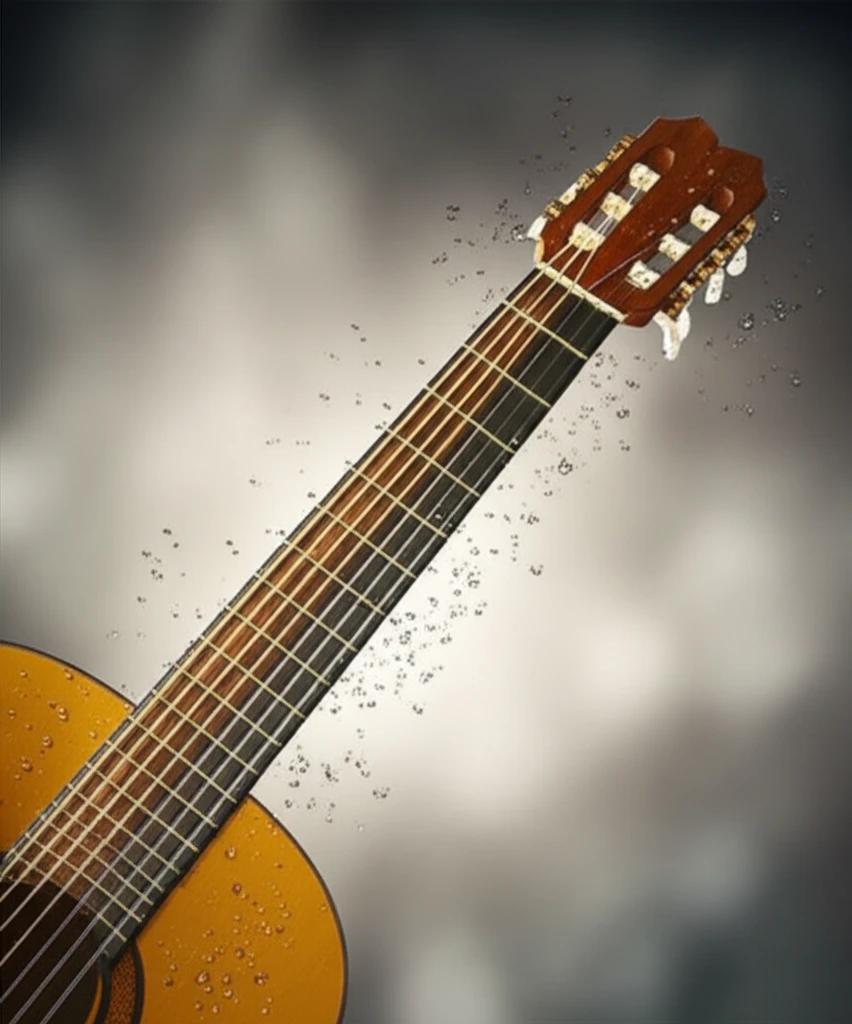
Unlocking the Secrets of Your Guitar: How Moisture Shapes Sound and Stability

"Delving into the Science Behind Your Instrument's Well-being"
The classical guitar, a beloved instrument for its rich tones and delicate craftsmanship, is more than just a collection of wood, strings, and hardware. It's a complex system where every element interacts to produce the music you love. But have you ever considered how the environment, specifically moisture, plays a crucial role in its performance and longevity? This article dives deep into the fascinating world of how humidity impacts the very essence of your guitar, from its tonal qualities to its structural integrity.
This isn't just about keeping your guitar in a case. It's about understanding the science of wood, the way it absorbs and releases moisture, and how these processes influence the sound and stability of your instrument. We'll explore the impact of different wood types, the role of reinforcement, and the importance of maintaining a balanced environment for your classical guitar. Whether you're a seasoned musician or a budding enthusiast, this knowledge will empower you to care for your instrument like never before.
Based on scientific research, we'll uncover the hidden forces at play within your guitar's neck, revealing how moisture can lead to subtle, yet significant, changes. This will not only help you protect your investment but also deepen your appreciation for the art and science behind this cherished musical companion. Get ready to tune into the secrets of your guitar's well-being!
The Science of Sound and Wood: Why Moisture Matters
The acoustic quality of a guitar isn't just about the player's skill; it's also deeply rooted in the physical properties of the instrument itself. The body and neck, the two main sub-assemblies, must maintain dimensional stability to produce the intended sounds. The wood's interaction with its environment, particularly moisture, plays a significant role in this stability. Wood, being a hygroscopic material, readily absorbs or releases moisture depending on the surrounding humidity levels. This exchange can lead to dimensional changes, which directly affect the guitar's sound and structural integrity.
- Hygroscopic Nature: Wood's tendency to absorb and release moisture.
- Dimensional Changes: Swelling and shrinking of wood due to moisture changes.
- Impact on Sound: Deformations affecting tonal quality and playability.
- Species and Reinforcements: Variations in wood types and reinforcement effects.
Preserving the Harmony: Protecting Your Guitar
By understanding the relationship between moisture and your guitar, you can take proactive steps to protect your instrument. Regular monitoring of humidity levels, proper storage in a controlled environment, and using humidifiers or dehumidifiers when necessary will ensure that your guitar remains stable and sounds its best for years to come. Treat your guitar with care and respect, and it will continue to be a source of joy and inspiration.