
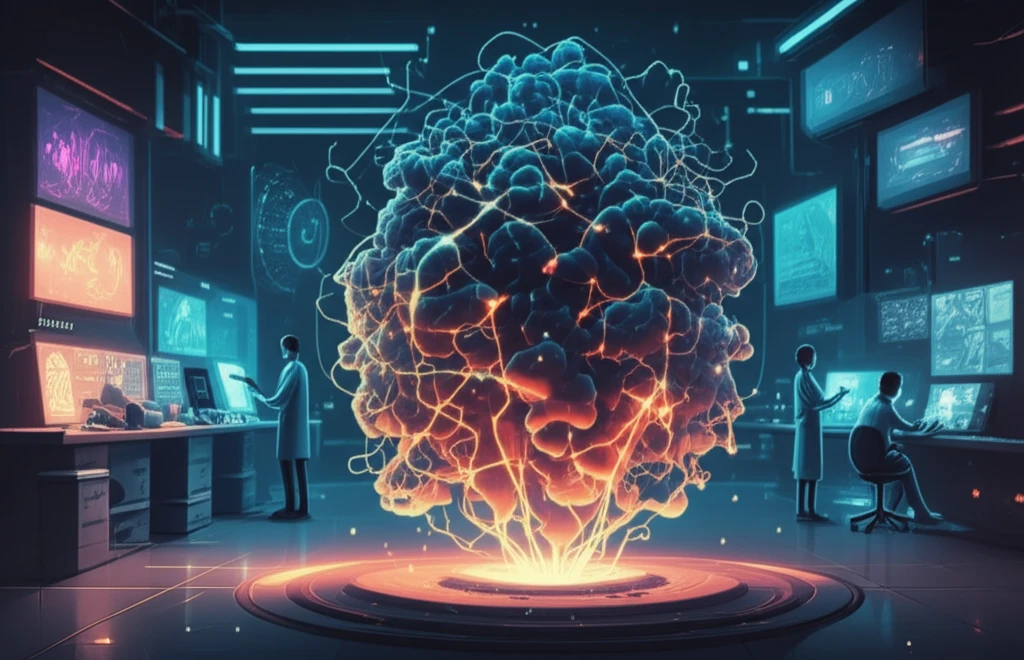
A futuristic lab scene with a glowing molecular model.

Unlocking the Secrets of Your Body: How Cutting-Edge Science Is Rewriting the Rules of Health

"From fighting disease to understanding our very essence, the latest research offers a thrilling glimpse into the future of well-being."


In a world obsessed with wellness, it's easy to get lost in the noise. Trendy diets, miracle cures, and conflicting advice bombard us daily. But beneath the surface of this health-conscious culture, a revolution is quietly unfolding. This revolution is rooted in science—specifically, the intricate and often surprising world of biochemistry.

Biochemistry, the study of the chemical processes within and relating to living organisms, is no longer confined to dusty labs and complex textbooks. Instead, it's becoming a dynamic field that's rewriting the rules of health, revealing the secrets of our bodies at a molecular level. From understanding the root causes of diseases to unlocking the potential for longevity, the breakthroughs in biochemistry are nothing short of transformative.

This isn't just about memorizing scientific jargon; it's about understanding how your body truly works. By exploring recent research, we'll unpack complex concepts into accessible insights, offering you a clear view of the latest advancements and what they mean for your health and future.

Decoding the Building Blocks: The Power of Proteins and Enzymes

A futuristic lab scene with a glowing molecular model.

At the heart of biochemistry lies a fundamental truth: our bodies are made of molecules. Among these, proteins and enzymes play starring roles. Proteins are the workhorses of the cell, carrying out a vast array of functions, from transporting oxygen to building muscle. Enzymes, which are also proteins, are biological catalysts that speed up chemical reactions.

One fascinating area of research focuses on how enzymes interact with specific molecules (substrates) to produce a desired outcome. Recent studies have explored how these interactions can be manipulated to design new drugs or understand disease processes. For example, scientists are investigating how to alter the activity of enzymes involved in cancer growth or inflammation.

  • Proteins: The workhorses of the cell, performing diverse functions.
  • Enzymes: Biological catalysts that accelerate chemical reactions.
  • Substrates: The specific molecules that enzymes act upon.
  • Drug Design: Targeting enzymes to develop new treatments for diseases.
Understanding these fundamental processes is key. Researchers are now using advanced techniques to observe these interactions in real-time. This provides a deeper understanding of disease mechanisms and potential therapeutic targets.

Embracing the Future of Health

The future of health is being written in the language of molecules. As biochemistry continues to unlock the secrets of our bodies, we can expect even more breakthroughs. These advancements will lead to new treatments, personalized prevention strategies, and a deeper appreciation of the intricate beauty of life. So, embrace the science, empower yourself with knowledge, and step confidently into a healthier tomorrow.

About this Article -

This article was crafted using a human-AI hybrid and collaborative approach. AI assisted our team with initial drafting, research insights, identifying key questions, and image generation. Our human editors guided topic selection, defined the angle, structured the content, ensured factual accuracy and relevance, refined the tone, and conducted thorough editing to deliver helpful, high-quality information.See our About page for more information.

Everything You Need To Know

1

What are the fundamental roles of proteins and enzymes within the context of biochemistry?

In biochemistry, proteins are essential, serving as the cell's workhorses by performing a variety of tasks like oxygen transportation and muscle construction. Enzymes, which are also proteins, act as biological catalysts, speeding up chemical reactions. Understanding these functions is critical to understanding how the body functions and responds to different conditions. Other important molecules include lipids, carbohydrates and nucleic acids. These molecules also contribute to various functions within living organisms.

2

How do enzymes interact with substrates, and why is this interaction significant in drug design and disease understanding?

Enzymes interact with specific molecules called substrates to produce a desired outcome. This interaction is crucial because modifying these interactions may lead to designing novel medicines or deciphering the mechanisms of diseases. Scientists are exploring ways to modify the activity of enzymes involved in cancer development or inflammation, which illustrates this significance. Understanding enzyme kinetics, enzyme inhibition and enzyme regulation are important factors in understanding this interaction.

3

What are some of the recent advances in biochemistry that are changing our approach to healthcare and well-being?

Recent advances in biochemistry enable scientists to understand the molecular mechanisms of illnesses, leading to the development of novel treatments and personalized prevention strategies. This includes investigating how enzymes interact with particular molecules in cancer and inflammation. Other advances may also include studying gene expression and signaling pathways. These developments are paving the way for a more educated and proactive approach to health. Personalized medicine is a huge part of future advances in biochemistry.

4

How does biochemistry help us understand the underlying causes of diseases at a molecular level, and what are the implications for developing new treatments?

Biochemistry helps in understanding the molecular basis of diseases by investigating the chemical processes occurring within the body. This involves studying the roles of proteins and enzymes, which are important in disease pathways. By targeting particular enzymes or proteins involved in the disease, new medications can be created. For instance, targeting enzymes involved in cancer growth or inflammation is being studied. This knowledge contributes to the creation of more focused and effective therapeutic interventions. Genetics, transcriptomics, proteomics, and metabolomics play a huge role.

5

In what ways are researchers using cutting-edge techniques to observe the real-time interactions between enzymes and other molecules, and what impact does this have on identifying potential therapeutic targets?

Researchers are employing advanced methods to observe real-time interactions between enzymes and other molecules, which provides a more thorough knowledge of disease mechanisms and prospective therapeutic targets. This involves sophisticated imaging and analytical approaches that allow scientists to examine molecular interactions dynamically. Researchers can discover specific molecules or pathways that can be targeted with novel treatments by seeing these interactions in real time. Techniques such as X-ray crystallography, NMR spectroscopy and cryo-electron microscopy contribute hugely to the understanding of such interaction.

Newsletter Subscribe

Subscribe to get the latest articles and insights directly in your inbox.