
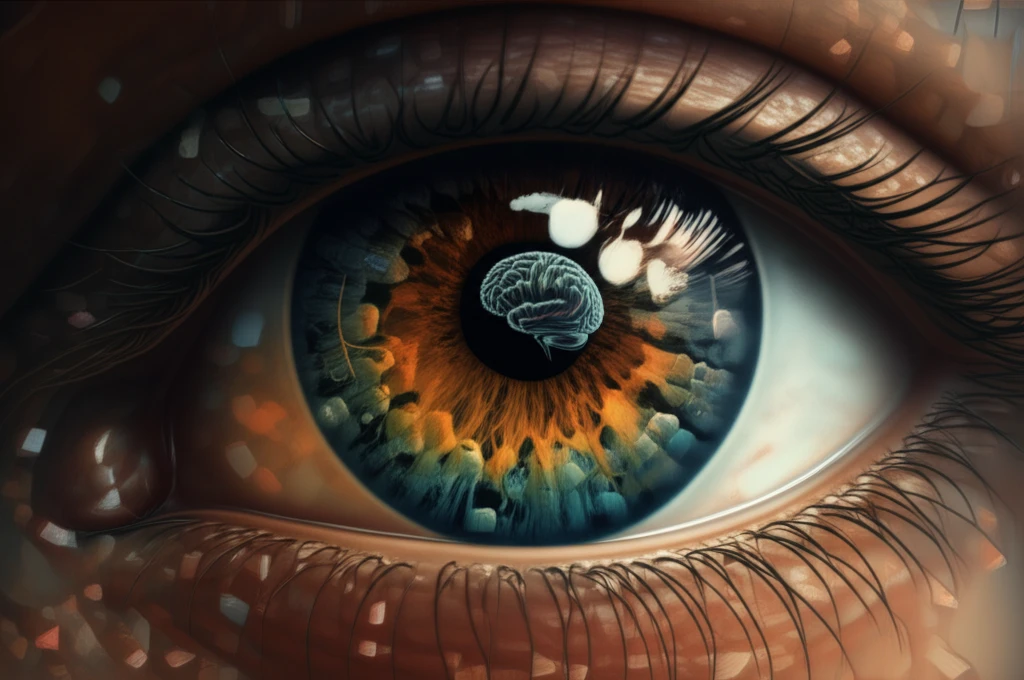
Unlocking the Secrets of Vision: How Scientists are Rewriting the Rules for Eye Health

"From blurry vision to groundbreaking treatments, discover the latest advancements in understanding and treating eye disorders."
Our eyes, the windows to the world, are marvels of biological engineering. They allow us to perceive the beauty of a sunset, read a captivating book, or simply navigate the world around us. Yet, for millions, the gift of clear vision is marred by conditions that can distort or even rob them of this precious sense. Recent advancements in vision science offer a beacon of hope, with scientists making remarkable progress in understanding and treating a range of eye disorders.
This article delves into the forefront of vision research, exploring how scientists are unraveling the complexities of conditions like amblyopia, often called "lazy eye." We'll examine the innovative techniques being used to diagnose and treat these disorders, offering a glimpse into a future where vision problems are better understood and more effectively managed. We'll also look at how these advances are impacting our understanding of overall visual health and well-being.
Prepare to be amazed by the ingenuity of vision scientists, the power of cutting-edge technology, and the potential for a brighter, clearer future for those struggling with visual impairments. Let's embark on a journey to explore the remarkable discoveries that are reshaping the landscape of eye health.
Deciphering Suppression: How the Brain Handles Conflicting Visual Information
At the heart of many vision problems lies a phenomenon called interocular suppression. This is the brain's way of dealing with conflicting visual information, such as that arising from strabismus (crossed eyes) or amblyopia. In these conditions, the brain might "ignore" the image from one eye to avoid double vision or confusion, a process that can lead to vision loss if left untreated.
- Luminance-Modulated Noise (LM) Stimuli: These stimuli use variations in brightness to assess how the brain processes basic visual information.
- Contrast-Modulated Noise (CM) Stimuli: CM stimuli employ variations in contrast, which allows researchers to understand how the brain handles more complex visual details.
- Dichoptic Presentation: The use of special displays that present different images to each eye.
A Brighter Future for Vision
The ongoing research into vision and eye disorders is a testament to human curiosity and our commitment to improving health. As scientists continue to uncover the secrets of our visual system, we can look forward to more effective treatments and a future where the gift of sight is protected and preserved for all. These advancements offer a sense of reassurance and encouragement to anyone impacted by vision problems.