
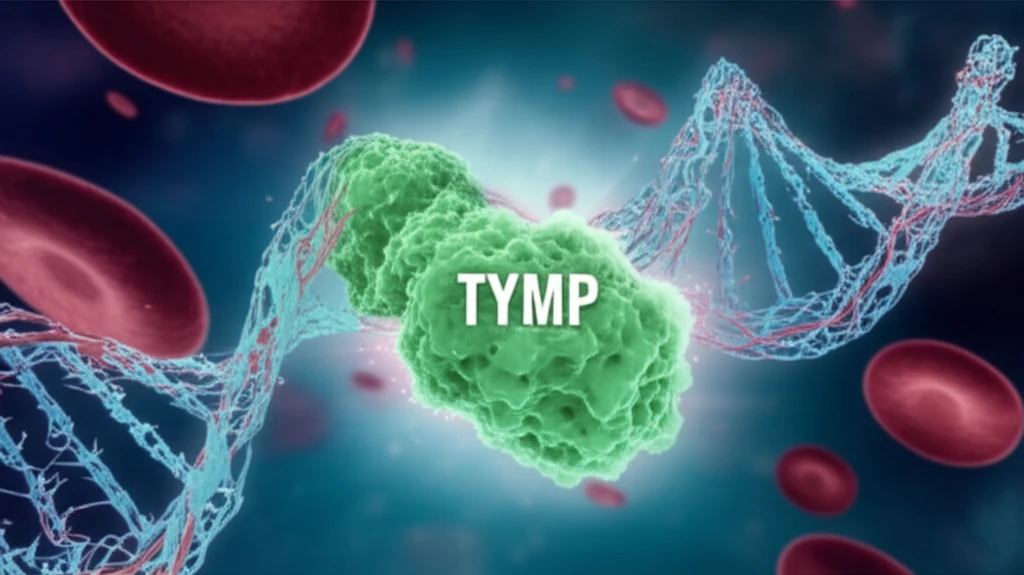
Stylized image of DNA and blood vessels representing the role of thymidine phosphorylase in angiogenesis.

Unlocking the Secrets of TYMP: How Thymidine Phosphorylase Impacts Your Health

"From cancer treatment to rheumatoid arthritis, understanding TYMP could revolutionize personalized medicine."


In the ever-evolving world of medical science, understanding the roles and functions of specific genes and enzymes is paramount. One such key player is thymidine phosphorylase, commonly known as TYMP. Initially recognized for its role in promoting angiogenesis and nucleotide synthesis, TYMP has now been implicated in a wide range of diseases, from cancer to inflammatory disorders. This article delves into the multifaceted nature of TYMP, exploring its functions, implications, and potential therapeutic applications.

TYMP, also known as platelet-derived endothelial cell growth factor (PD-ECGF), is involved in several critical biological processes. Encoded by the TYMP gene, located on chromosome 22q13.33, this enzyme plays a vital role in nucleotide synthesis, thymidine phosphorolysis, and angiogenesis—the formation of new blood vessels. Its ability to promote angiogenesis makes it a significant factor in both normal physiological processes and pathological conditions such as tumor growth and metastasis.

Understanding TYMP’s functions and regulatory mechanisms opens new avenues for targeted therapies. Researchers are actively exploring how TYMP's activity can be modulated to either enhance treatment efficacy or mitigate disease progression. As we unravel the complexities of TYMP, we move closer to innovative therapeutic strategies that promise improved patient outcomes and personalized medical interventions.

What Does TYMP Do? Decoding the Multifaceted Functions of Thymidine Phosphorylase

Stylized image of DNA and blood vessels representing the role of thymidine phosphorylase in angiogenesis.

TYMP's primary function is to catalyze the phosphorolysis of thymidine into thymine and 2-deoxy-alpha-D-ribose 1-phosphate (dR-1-P). This enzymatic activity is crucial for nucleotide synthesis and the degradation of thymidine. Beyond its role in nucleotide metabolism, TYMP is also recognized for its deoxyribosyl transferase activity, which involves transferring deoxyribosyl moieties between pyrimidine nucleosides. This activity has far-reaching implications, particularly in cancer biology and treatment.

Here's a closer look at TYMP’s key functions:

  • Nucleotide Synthesis and Degradation: TYMP regulates the balance of thymidine by catalyzing its breakdown into thymine and dR-1-P.
  • Angiogenesis: As PD-ECGF, TYMP promotes the formation of new blood vessels, essential for tissue repair and growth but also implicated in tumor progression.
  • Deoxyribosyl Transferase Activity: TYMP facilitates the transfer of deoxyribosyl groups, influencing the synthesis of various pyrimidine nucleosides.
The sugars formed during thymidine degradation play a crucial role in angiogenesis. Deoxyribose-1-P can be converted to deoxyribose-5-phosphate or further degraded to deoxyribose, which can then be secreted. Secreted deoxyribose attracts endothelial cells, stimulating the formation of new blood vessels. This process is vital in wound healing and tissue regeneration, but it also contributes to tumor vascularization, allowing cancer cells to grow and spread.

The Future of TYMP Research: Personalized Medicine and Targeted Therapies

As research into TYMP continues to unfold, the potential for personalized medicine and targeted therapies becomes increasingly apparent. Understanding the specific role of TYMP in different diseases and individual patients could lead to more effective treatment strategies and improved outcomes. By modulating TYMP activity, clinicians may be able to fine-tune therapeutic interventions, enhancing efficacy while minimizing adverse effects. The journey to fully harness the power of TYMP is ongoing, but the possibilities are vast and promising.

About this Article -

This article was crafted using a human-AI hybrid and collaborative approach. AI assisted our team with initial drafting, research insights, identifying key questions, and image generation. Our human editors guided topic selection, defined the angle, structured the content, ensured factual accuracy and relevance, refined the tone, and conducted thorough editing to deliver helpful, high-quality information.See our About page for more information.

This article is based on research published under:

DOI-LINK: 10.4267/2042/44924, Alternate LINK

Title: Tymp (Thymidine Phosphorylase)

Subject: Cancer Research

Journal: Atlas of Genetics and Cytogenetics in Oncology and Haematology

Publisher: INIST-CNRS

Authors: Iv Bijnsdorp, Gj Peters

Published: 2011-11-01

Everything You Need To Know

1

What exactly is TYMP?

TYMP, or thymidine phosphorylase, is an enzyme encoded by the TYMP gene located on chromosome 22q13.33. Its primary function involves the breakdown of thymidine into thymine and 2-deoxy-alpha-D-ribose 1-phosphate (dR-1-P). This activity is crucial for nucleotide synthesis and the degradation of thymidine, playing a significant role in cellular processes.

2

How does TYMP impact the growth of tumors?

TYMP is essential for angiogenesis, the formation of new blood vessels, and it is also known as platelet-derived endothelial cell growth factor (PD-ECGF). While necessary for tissue repair and growth, this process is also exploited by tumors for their growth and metastasis. The sugars produced during thymidine degradation attract endothelial cells, stimulating new blood vessel formation and supporting tumor vascularization, which allows cancer cells to grow and spread.

3

How does TYMP impact the synthesis of pyrimidine nucleosides?

TYMP facilitates the transfer of deoxyribosyl groups, affecting the synthesis of pyrimidine nucleosides. This deoxyribosyl transferase activity has significant implications, particularly in cancer biology and treatment. Understanding this function provides new avenues for targeted therapies that aim to modulate TYMP activity, potentially enhancing treatment efficacy or mitigating disease progression.

4

What diseases are associated with TYMP?

Research into TYMP has revealed its involvement in diseases like cancer, MNGIE, and inflammatory conditions. In cancer, its role in promoting angiogenesis makes it a target for therapeutic intervention. Understanding how TYMP functions in different diseases and individual patients may lead to more effective treatment strategies. Modulating TYMP activity could fine-tune therapeutic interventions and improve patient outcomes.

5

What is the significance of TYMP research for the future of medicine?

The future of TYMP research is focused on personalized medicine and targeted therapies. Because TYMP's functions are critical, it's an attractive target for modulation. This approach promises to enhance treatment efficacy while minimizing adverse effects. The ultimate goal is to tailor therapies to specific patient needs, improving outcomes, and refining the treatment of diseases where TYMP plays a critical role.

Newsletter Subscribe

Subscribe to get the latest articles and insights directly in your inbox.