
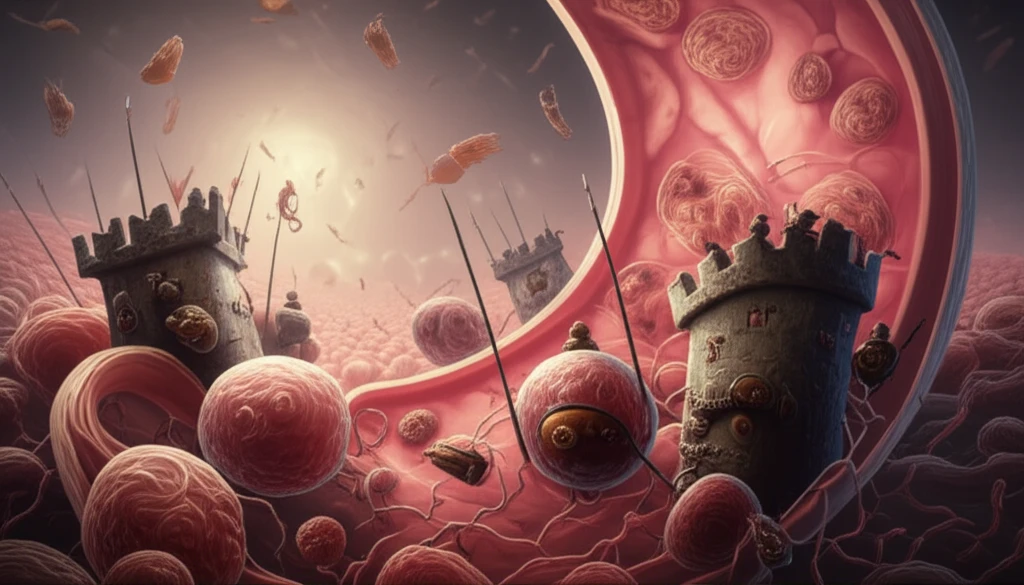
Surreal illustration of stomach lining with iron fortresses and Helicobacter pylori.

Unlocking the Secrets of Stomach Cancer: How Iron Metabolism Could Hold the Key

"New research reveals the surprising role of L-ferritin and transferrin receptors in Helicobacter pylori-related gastric cancer, offering potential new targets for diagnosis and treatment."


Stomach cancer, a significant global health challenge, is often linked to long-term damage to gastric cells. New research aims to understand how iron levels affect genes involved in maintaining balance within the stomach, potentially influencing cancer development.

The study examined the presence of specific genes (glmM, cagA, vacA) and the behavior of key proteins (IRP2, TFRC, FTL) in various stomach tissue samples. These samples ranged from normal to those affected by gastritis, intestinal metaplasia, and adenocarcinoma.

By analyzing these factors, scientists hope to uncover new ways to diagnose and treat stomach cancer, focusing on the critical role of iron regulation in the disease's progression.

Iron's Hidden Influence: How H. pylori Disrupts Stomach Health

Surreal illustration of stomach lining with iron fortresses and Helicobacter pylori.

The study's findings highlight a crucial connection between Helicobacter pylori (H. pylori) infection and changes in iron metabolism within the stomach. Specifically, researchers observed:

Increased TFRC expression: In H. pylori-positive tissues, especially in specific cells lining the stomach, transferrin receptor (TFRC) levels were elevated. This suggests that the infected cells were actively trying to capture more iron.

  • Elevated FTL expression: Regardless of H. pylori presence, ferritin light chain (FTL) was overexpressed in metaplastic glandular cells, indicating a possible link between iron storage and cellular changes.
  • IRP2 association: Overexpression of iron regulatory protein 2 (IRP2) was linked to H. pylori-positive chronic gastritis and intestinal metaplasia, further emphasizing the disrupted iron balance.
These observations suggest that H. pylori manipulates iron homeostasis in gastric cells, potentially contributing to the development of intestinal metaplasia, a precursor to stomach cancer. The overexpression of FTL in metaplastic cells could serve as a valuable marker for future research.

The Future of Gastric Cancer Research: Targeting Iron

This research underscores the importance of iron regulation in the context of H. pylori infection and gastric cancer development. By identifying key proteins like L-ferritin and transferrin receptors as potential markers, scientists are paving the way for earlier and more accurate diagnoses.

Further studies are needed to fully understand the role of FTL in the differentiation of gastric cells into intestinal metaplasia. This knowledge could lead to the development of targeted therapies that prevent or reverse this process.

Ultimately, a deeper understanding of iron metabolism in the stomach could revolutionize our approach to preventing and treating gastric cancer, leading to more personalized and effective strategies.

About this Article -

This article was crafted using a human-AI hybrid and collaborative approach. AI assisted our team with initial drafting, research insights, identifying key questions, and image generation. Our human editors guided topic selection, defined the angle, structured the content, ensured factual accuracy and relevance, refined the tone, and conducted thorough editing to deliver helpful, high-quality information.See our About page for more information.

This article is based on research published under:

DOI-LINK: 10.1016/j.micpath.2018.10.039, Alternate LINK

Title: The Role Of Transferrin Receptor In The Helicobacter Pylori Pathogenesis; L-Ferritin As A Novel Marker For Intestinal Metaplasia

Subject: Infectious Diseases

Journal: Microbial Pathogenesis

Publisher: Elsevier BV

Authors: Dariush Hamedi Asl, Taghi Naserpour Farivar, Babak Rahmani, Fatemeh Hajmanoochehri, Amir Nader Emami Razavi, Behnaz Jahanbin, Mahmood Soleimani Dodaran, Amir Peymani

Published: 2019-01-01

Everything You Need To Know

1

How does Helicobacter pylori affect iron metabolism in the stomach?

Helicobacter pylori influences iron metabolism by increasing transferrin receptor (TFRC) expression in infected tissues, especially in cells lining the stomach. This suggests that infected cells actively seek more iron. Additionally, iron regulatory protein 2 (IRP2) overexpression is linked to H. pylori-positive chronic gastritis and intestinal metaplasia, further disrupting iron balance. The presence of specific genes (glmM, cagA, vacA) can also influence this process.

2

What is the significance of ferritin light chain (FTL) overexpression in metaplastic cells?

Ferritin light chain (FTL) is overexpressed in metaplastic glandular cells, irrespective of Helicobacter pylori presence. This overexpression suggests a potential connection between iron storage and cellular changes. Scientists are exploring whether FTL can serve as a marker for intestinal metaplasia, a precursor to stomach cancer, potentially aiding in early detection and personalized treatments.

3

Why are L-ferritin and transferrin receptors being explored as potential markers for stomach cancer?

L-ferritin, also known as ferritin light chain (FTL) and transferrin receptor (TFRC) are potential markers because their expression levels change in precancerous conditions. Specifically, elevated FTL in metaplastic cells and increased TFRC expression in H. pylori-positive tissues could signal the development of intestinal metaplasia and, subsequently, stomach cancer. These proteins reflect alterations in iron metabolism that are linked to cancer progression.

4

What specific genes and proteins were examined in the stomach tissue samples, and why?

The study examined genes like glmM, cagA, and vacA alongside proteins such as IRP2, TFRC, and FTL in stomach tissue samples. These samples ranged from normal tissue to tissue affected by gastritis, intestinal metaplasia, and adenocarcinoma. Analyzing these factors helps scientists understand how iron regulation impacts the progression of stomach cancer related to Helicobacter pylori infections.

5

If imbalances in iron metabolism contribute to stomach cancer, how might future treatments address this, and could diet play a role?

If iron metabolism is indeed a key factor, future treatments might involve therapies that target iron regulation in gastric cells. This could include interventions to normalize the expression of proteins like transferrin receptor (TFRC), ferritin light chain (FTL), and iron regulatory protein 2 (IRP2). Personalized treatments could also be developed based on an individual's iron metabolism profile and the presence of Helicobacter pylori, potentially improving the effectiveness of gastric cancer therapies. However, this research focused on iron metabolism and did not study the impact of diet directly. Therefore, dietary recommendations would require more specialized studies.

Newsletter Subscribe

Subscribe to get the latest articles and insights directly in your inbox.