
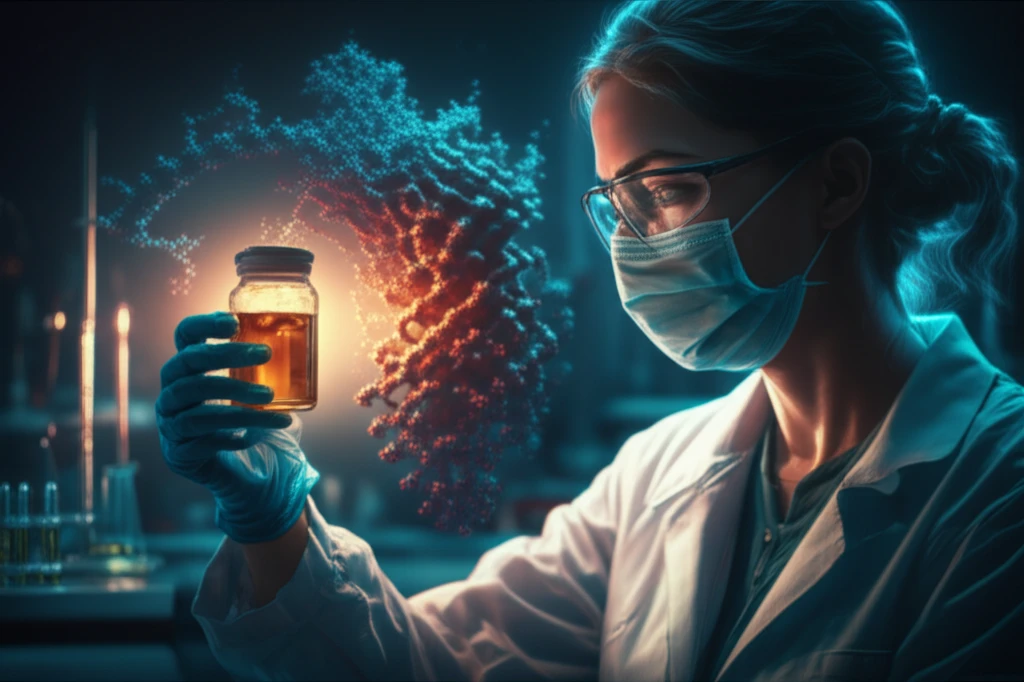
Digital illustration of a scientist examining a vial of scorpion venom, with a Kv1.2 channel model in the background.

Unlocking the Secrets of Scorpion Venom: How a Tiny Molecule Could Revolutionize Medicine

"New research reveals a specific molecule in scorpion venom could lead to breakthrough treatments for neurological disorders and other diseases."


Imagine a world where treatments for neurological disorders are more effective, with fewer side effects. Now, envision that the key to unlocking this potential lies within the venom of a scorpion. This may sound like science fiction, but recent research into the venom of the Mesobuthus eupeus scorpion is showing promising results.

Scorpion venoms, long a subject of scientific intrigue, are complex mixtures of compounds. They contain many bioactive molecules with the potential to interact with biological systems. Amongst these, toxins that selectively target potassium channels have drawn substantial attention. These channels play a critical role in nerve function, making them an attractive target for various therapeutic interventions.

This article delves into a new study, which has identified a particular molecule from the Mesobuthus eupeus scorpion venom called MeKTx11-1. This molecule is a channel-specific blocker that targets Kv1.2 channels, a type of potassium channel. The study reveals the potential of this molecule to transform the treatment of several diseases. Let's dive in and explore this exciting research.

What Makes MeKTx11-1 Special? Exploring the Role of Kv1.2 Channels

Digital illustration of a scientist examining a vial of scorpion venom, with a Kv1.2 channel model in the background.

The research, published in Neuropharmacology, highlights the exceptional selectivity of MeKTx11-1 for Kv1.2 channels. These channels are essential in the human body, particularly in the nervous system, where they help regulate the flow of potassium ions across cell membranes. This regulation is critical for nerve cell function. The malfunctioning of these channels can contribute to several neurological disorders.

The study showed that MeKTx11-1 can block Kv1.2 channels with remarkable precision. While it also interacts with other similar channels, its affinity for Kv1.2 is significantly higher. This high degree of selectivity is a crucial factor, making MeKTx11-1 a valuable tool for both research and potential therapeutic applications.

  • Exceptional Selectivity: MeKTx11-1 has a high affinity for Kv1.2 channels, offering a targeted approach.
  • Potential Therapeutic Applications: The molecule's ability to block Kv1.2 channels makes it suitable for treating neurological disorders.
  • Research Tool: MeKTx11-1 provides a way to study Kv1.2 channels and their role in various diseases.
The researchers found that MeKTx11-1 could be used as a selective tool in neurobiology. They also looked at the molecule's structure. They found certain parts that help MeKTx11-1 find and stick to the Kv1.2 channel. This discovery helps understand how it works, and can potentially help in making better medicines.

The Future of Scorpion Venom Research

The discovery of MeKTx11-1 is a testament to the potential of nature's pharmacy. This research opens new doors in medicine, offering hope for more effective treatments for neurological disorders. As scientists continue to study and understand the complexities of scorpion venom, we can anticipate more groundbreaking discoveries. The possibility of transforming how we approach disease treatment is an exciting prospect.

About this Article -

This article was crafted using a human-AI hybrid and collaborative approach. AI assisted our team with initial drafting, research insights, identifying key questions, and image generation. Our human editors guided topic selection, defined the angle, structured the content, ensured factual accuracy and relevance, refined the tone, and conducted thorough editing to deliver helpful, high-quality information.See our About page for more information.

Everything You Need To Know

1

What is the significance of the molecule MeKTx11-1 found in scorpion venom?

MeKTx11-1, a molecule derived from the venom of the *Mesobuthus eupeus* scorpion, exhibits exceptional selectivity for Kv1.2 channels. These channels are critical in nerve function. This selectivity makes MeKTx11-1 a valuable tool for studying the function of Kv1.2 channels and developing treatments for neurological disorders that arise from their malfunction. Further research could explore the potential of MeKTx11-1 in treating autoimmune disorders, as potassium channels are also implicated in immune cell function.

2

How does MeKTx11-1 specifically target Kv1.2 channels, and why is this important?

MeKTx11-1 targets Kv1.2 channels with remarkable precision due to specific structural components that allow it to bind effectively to these channels. This is significant because Kv1.2 channels regulate potassium ion flow in nerve cells, impacting nerve cell function. By selectively blocking Kv1.2 channels, MeKTx11-1 can modulate nerve activity, which is crucial for treating neurological disorders. The study of the structural interactions between MeKTx11-1 and Kv1.2 channels could also lead to the design of new drugs with improved specificity and efficacy.

3

What are Kv1.2 channels, and what role do they play in the human body?

Kv1.2 channels are a type of potassium channel essential in the human body, particularly in the nervous system. They regulate the flow of potassium ions across cell membranes, which is critical for maintaining proper nerve cell function. Malfunctioning Kv1.2 channels have been implicated in several neurological disorders. Future research may uncover additional roles for Kv1.2 channels in other physiological processes beyond the nervous system.

4

Beyond neurological disorders, what other potential therapeutic areas could benefit from research on scorpion venom molecules like MeKTx11-1?

While the current focus is on neurological disorders due to the role of Kv1.2 channels in nerve function, the selectivity of MeKTx11-1 suggests potential applications in other areas where Kv1.2 channels or similar potassium channels are involved. This could include autoimmune diseases, as potassium channels are also expressed in immune cells and play a role in their activation. Further research may also reveal applications in cardiovascular diseases, where potassium channels regulate heart function, and even in cancer, as ion channels influence cell proliferation and migration.

5

How might the discovery of MeKTx11-1 change the way we approach the development of new medicines?

The discovery of MeKTx11-1 highlights the potential of natural sources, specifically scorpion venom, as a source of novel therapeutic molecules. It suggests that complex biological systems like venoms contain a wealth of compounds with unique properties that can be harnessed for medicinal purposes. This could lead to a shift in drug discovery, with increased emphasis on exploring natural sources and using advanced techniques to isolate and characterize bioactive molecules like MeKTx11-1. The specificity of MeKTx11-1 also underscores the importance of targeted therapies and the potential for minimizing side effects by selectively modulating specific biological pathways.

Newsletter Subscribe

Subscribe to get the latest articles and insights directly in your inbox.