
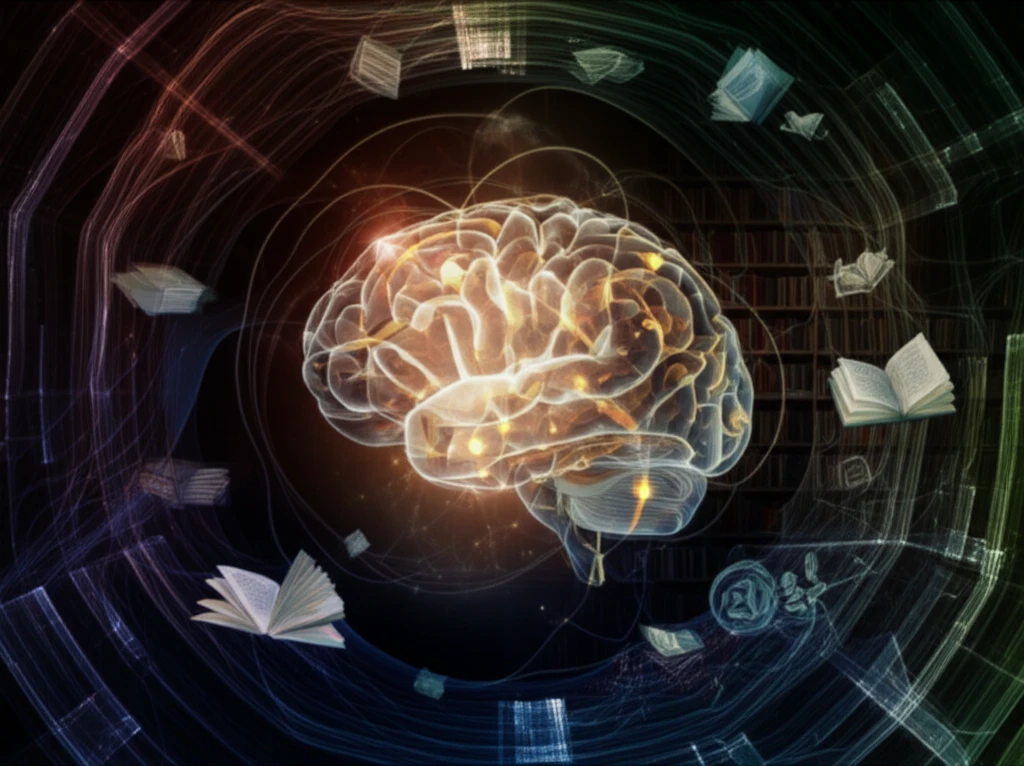
Unlocking the Secrets of Memory: How Brain Science Is Revealing the Mysteries of Our Minds

"Groundbreaking research delves into the intricate mechanisms of memory, offering new hope for understanding and treating memory-related conditions."
Imagine your brain as a vast library, filled with countless books representing your memories. Each book, a moment in time, a learned skill, or an emotional experience, is carefully stored and accessible. But what if the library's organization was a mystery, and the librarians (your neurons) worked in ways we didn't fully understand? For centuries, the intricacies of memory have captivated scientists, philosophers, and everyday people alike.
Today, thanks to advancements in neuroscience and technology, we're beginning to understand the astonishing complexity of how memories are formed, stored, and retrieved. From the smallest molecular interactions within our brain cells to the large-scale networks that govern our thoughts and actions, the study of memory is a rapidly evolving field, promising new insights into how we learn, adapt, and experience the world.
This article will explore the latest research on memory, focusing on recent findings that shed light on the brain regions and cellular processes involved in learning and recall. We'll look at how scientists are using innovative techniques to map the brain's memory circuits, uncover the roles of key molecules, and unravel the mysteries of memory consolidation and retrieval. Join us on a journey to explore the fascinating world within your mind.
The Brain's Memory Centers: Where Memories Are Made and Stored
The brain is not a homogenous organ; different regions play specialized roles in various cognitive functions, including memory. The hippocampus, a seahorse-shaped structure deep within the brain, is widely recognized as a central hub for memory formation. Think of it as the 'gateway' where new memories are initially encoded and processed.
- Hippocampus: Primarily involved in forming new memories and spatial navigation.
- Amygdala: Processes emotional memories, such as those associated with fear or joy.
- Prefrontal Cortex: Critical for working memory, decision-making, and retrieving memories.
- Cerebellum: Essential for procedural memories, like learning to ride a bike.
The Future of Memory Research: Implications for Health and Well-being
The ongoing quest to understand the intricacies of memory holds immense promise for our health and well-being. As scientists map the brain's memory circuits and decode the molecular mechanisms of learning, new avenues for treating memory-related conditions like Alzheimer's disease, PTSD, and other neurological disorders will emerge. Furthermore, this research can unlock strategies for enhancing cognitive function, promoting lifelong learning, and improving our ability to adapt and thrive in a rapidly changing world.