
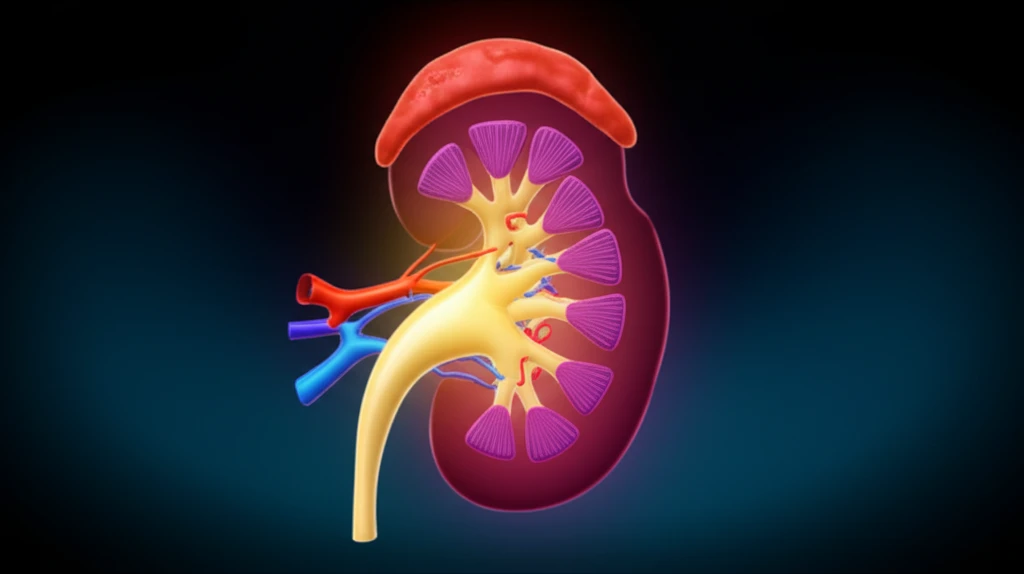
Glowing kidney with vibrant colors, surrounded by shadowy background.

Unlocking the Secrets of Kidney Health: How BOLD MRI is Revolutionizing Renal Care

"Explore how Blood Oxygenation Level-Dependent MRI (BOLD MRI) is reshaping our understanding and treatment of kidney diseases, offering new hope for non-invasive diagnostics and improved patient outcomes."


In the realm of medical imaging, advancements continually offer new perspectives on the human body's intricate functions. Among these innovations, Blood Oxygenation Level-Dependent Magnetic Resonance Imaging, or BOLD MRI, stands out as a promising tool for evaluating kidney health. This non-invasive technique has garnered attention for its ability to provide insights into renal physiology and disease processes without the need for invasive procedures.

Originally designed to map brain activity by detecting changes in blood oxygenation, BOLD MRI has found applications in various organs, including the kidneys. Its utility lies in its capacity to reflect the balance between oxygen supply and demand within the renal tissues, making it a valuable asset in the diagnosis and management of kidney-related conditions.

The technique measures the signal intensity changes resulting from the differing magnetic properties of oxygenated and deoxygenated hemoglobin. Areas with higher oxygen levels exhibit stronger signals, offering a visual representation of tissue oxygenation. This information can be crucial in identifying areas of ischemia or hypoxia, which are common features of kidney diseases.

Decoding BOLD MRI: What Can It Tell Us About Kidney Health?

Glowing kidney with vibrant colors, surrounded by shadowy background.

BOLD MRI's ability to non-invasively assess renal tissue oxygenation has significant implications for understanding and managing various kidney diseases. The technique can detect subtle changes in oxygen levels that may precede structural damage, offering a window for early intervention and preventive strategies.

Several factors can influence the BOLD signal, including vascular volume, tubular function, and hematocrit levels. Therefore, interpreting BOLD MRI data requires a comprehensive understanding of these variables and their potential impact on renal oxygenation.

  • Early Detection of Kidney Disease: BOLD MRI can identify early signs of kidney dysfunction by detecting subtle changes in oxygenation levels, even before structural damage is evident.
  • Monitoring Treatment Effectiveness: BOLD MRI can track the impact of therapeutic interventions on renal oxygenation, helping clinicians optimize treatment strategies and improve patient outcomes.
  • Assessing Renal Ischemia: BOLD MRI can pinpoint areas of reduced oxygen supply (ischemia) within the kidneys, aiding in the diagnosis and management of conditions like renal artery stenosis.
  • Evaluating Diabetic Nephropathy: BOLD MRI can assess the impact of diabetes on renal oxygenation, offering insights into the progression of diabetic kidney disease and potential therapeutic targets.
  • Research Applications: BOLD MRI serves as a valuable tool in renal research, allowing scientists to investigate the underlying mechanisms of kidney diseases and test new therapies in a non-invasive manner.
Moreover, researchers are exploring the correlation between BOLD MRI findings and hypoxia-inducible factors (HIFs), which are proteins that regulate cellular responses to low oxygen levels. Studies have shown a positive correlation between renal AR2 (a BOLD MRI parameter) and HIF-1α expression, suggesting that BOLD MRI can serve as an indicator of tissue hypoxia.

The Future of Renal Care: BOLD MRI as a Guiding Light

While BOLD MRI holds immense promise for advancing renal care, further research is needed to refine its application and interpretation. Standardizing protocols and establishing normative values are crucial steps in ensuring the reliability and reproducibility of this technique. As technology advances and our understanding deepens, BOLD MRI is poised to become an indispensable tool in the fight against kidney disease, offering new hope for improved diagnostics, personalized treatments, and better patient outcomes.

About this Article -

This article was crafted using a human-AI hybrid and collaborative approach. AI assisted our team with initial drafting, research insights, identifying key questions, and image generation. Our human editors guided topic selection, defined the angle, structured the content, ensured factual accuracy and relevance, refined the tone, and conducted thorough editing to deliver helpful, high-quality information.See our About page for more information.

This article is based on research published under:

DOI-LINK: 10.1002/jmri.25828, Alternate LINK

Title: Response To “Interpretation Of Functional Renal Mri Findings: Where Physiology And Imaging Sciences Need To Talk Across Domains”

Subject: Radiology, Nuclear Medicine and imaging

Journal: Journal of Magnetic Resonance Imaging

Publisher: Wiley

Authors: Ke Ren, Yi Wang

Published: 2017-07-31

Everything You Need To Know

1

What is Blood Oxygenation Level-Dependent MRI (BOLD MRI) and how is it used in kidney health?

Blood Oxygenation Level-Dependent MRI, or BOLD MRI, is a non-invasive imaging technique that assesses kidney health by measuring blood oxygenation levels. It works by detecting changes in the magnetic properties of oxygenated and deoxygenated hemoglobin, providing insights into the balance between oxygen supply and demand within renal tissues. This helps in diagnosing and managing kidney-related conditions without invasive procedures.

2

How does BOLD MRI help in the early detection and monitoring of kidney diseases?

BOLD MRI can detect subtle changes in oxygenation levels in the kidneys, often before structural damage is evident, enabling early detection of kidney dysfunction. It also tracks the impact of therapeutic interventions on renal oxygenation, helping clinicians optimize treatment strategies and improve patient outcomes. By pinpointing areas of reduced oxygen supply, BOLD MRI aids in managing conditions like renal artery stenosis and evaluating the impact of diabetes on renal oxygenation in cases of diabetic nephropathy.

3

What factors can influence BOLD MRI signal intensity, and why is it important to consider them when interpreting results?

Several factors can influence the BOLD signal, including vascular volume, tubular function, and hematocrit levels. A comprehensive understanding of these variables is crucial for interpreting BOLD MRI data accurately. Variations in these factors can affect renal oxygenation and, consequently, the BOLD signal, potentially leading to misinterpretations if not properly accounted for.

4

How is BOLD MRI being used in research to understand kidney diseases better, and what is the significance of its correlation with hypoxia-inducible factors (HIFs)?

BOLD MRI serves as a valuable tool in renal research, allowing scientists to investigate the underlying mechanisms of kidney diseases and test new therapies non-invasively. Studies have shown a positive correlation between renal AR2* (a BOLD MRI parameter) and HIF-1α expression, indicating that BOLD MRI can serve as an indicator of tissue hypoxia. This correlation helps researchers understand how cells respond to low oxygen levels in the kidneys and develop targeted treatments.

5

What are the future prospects and challenges for BOLD MRI in renal care, and what steps are needed to ensure its reliability and widespread adoption?

While BOLD MRI shows promise for advancing renal care, further research is needed to refine its application and interpretation. The future of BOLD MRI depends on standardizing protocols and establishing normative values to ensure the reliability and reproducibility of this technique. As technology advances and our understanding deepens, BOLD MRI is poised to become an indispensable tool in the fight against kidney disease. Addressing these challenges will pave the way for improved diagnostics, personalized treatments, and better patient outcomes.

Newsletter Subscribe

Subscribe to get the latest articles and insights directly in your inbox.