
Unlocking the Secrets of Kastanozems: A Deep Dive into Turkey's Hidden Soils

"Explore the unique characteristics, distribution, and sustainable management of Kastanozems, the vital soils of Turkey's grasslands and agricultural landscapes."
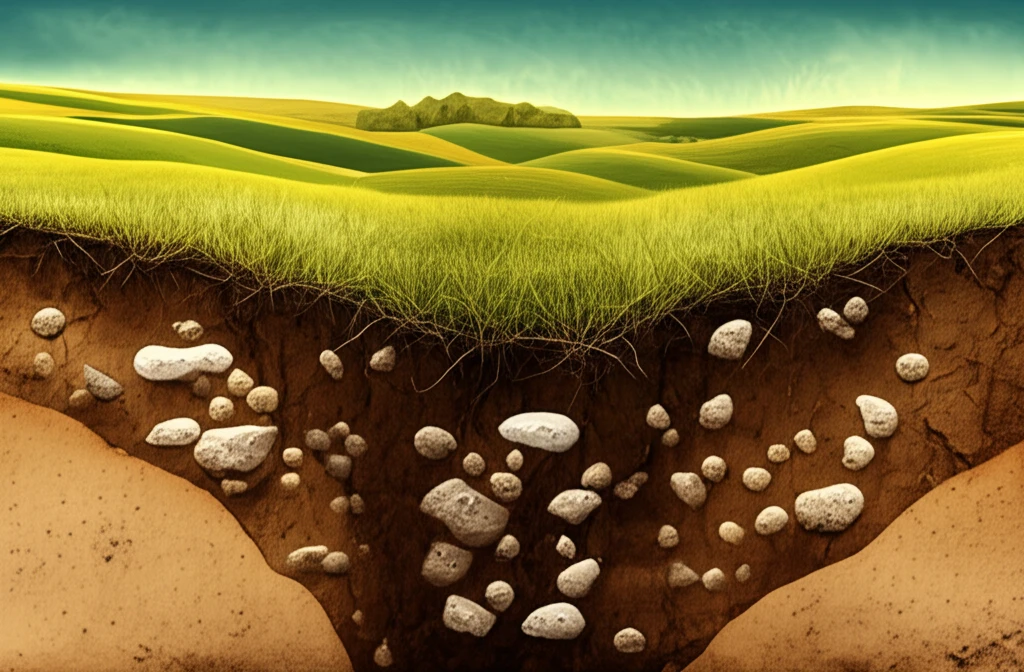
Imagine a landscape painted in hues of chestnut brown, where short grasses sway gently in the breeze. This is the domain of Kastanozems, soils that thrive in steppe-like environments, often playing second fiddle to their more famous cousins, the Chernozems. But don't let their understated presence fool you—Kastanozems are vital players in the ecological and agricultural tapestry of regions like Turkey.
These soils, characterized by a humus-rich surface and a prominent accumulation of carbonates beneath, cover a modest but significant portion of the European Union and a more substantial area of Turkey. Understanding Kastanozems is crucial, especially given their sensitivity to land management practices and the ever-present need for sustainable agriculture.
This article delves into the intriguing world of Kastanozems, exploring their formation, distribution, characteristics, and management in Turkey. We'll uncover the secrets held within these soils, revealing how a deeper understanding can lead to better land stewardship and a more sustainable future.
A Widespread Steppe Soil Group
Kastanozems, also known as "chestnut soils," are one of the 32 Reference Soil Groups of the World Reference Base for Soil Resources (WRB), and they are related to the Mollisols of the USDA soil taxonomy. They carry a brownish, humus-rich surface horizon that is less deep and less black than that of the Chernozems, and their chestnut-brown surface color is the source of the group's name. Secondary carbonates accumulate prominently in the subsurface soil of Kastanozems. These soils occur mainly in the dry parts of the world's steppe regions, with vast areas found in central Asia and central USA and smaller occurrences reported from the Mediterranean region.
Studying Semi-Arid Constraints
Kastanozems have an intermittent water regime: the soils dry out to a great depth in the dry seasons and are incompletely moistened during the moist seasons in some years, which constrains management. In studies of these soils, standard methods for measuring soil geophysical properties, such as those according to Klute, are commonly applied. The semi-arid nature of Kastanozems creates inherent fertility constraints, and phosphorus fixation in calcareous horizons means that targeted amendments are needed in fertilization strategies. Together, hydrological stress and nutrient dynamics are among the key limitations practitioners must address.
A Gap in the Historical Record
The source material provided for this subsection does not contain soil-science content: one reference concerns the history of the Spanish-American War, and another is a messaging-channel post unrelated to Kastanozems. As a result, no documented milestones or foundational discoveries for Kastanozems can be grounded in these sources. Readers seeking the historical development of Kastanozem classification should consult dedicated pedological literature instead.
What Makes Kastanozems Special?
Kastanozems don't just pop up anywhere. Their formation is influenced by a combination of factors, starting with the parent material they develop from. In Turkey, you'll often find them arising from calcareous materials like Neogene-aged marls and clay-stones, rich in calcium carbonate. These soils can also form from sandy, clayey, and calcareous deposits, showcasing their adaptability.
- Humus-rich surface: A chestnut-brown to brownish top layer, though thinner than that of Chernozems.
- Carbonate accumulation: A notable build-up of secondary carbonates in the sub-surface.
- A-B-C Horizon Sequence: The typical soil profile progression.
- Cambic or Argic B horizons: These layers range from 20-35 cm in depth.
New Insights on Morphology and Pedogenesis
Recent reviews describe Kastanozems as having a brownish humus-rich surface horizon that is less deep and less black than that of the Chernozems, with prominent accumulation of secondary carbonates in the subsurface soil and a chestnut-brown color that gives the group its name. Field research in the Otjiwarongo region of Namibia has examined Kastanozem formation alongside associated dark soils such as Vertisols and Calcisols, which have thick humic epipedons, and has documented actual erosional processes in the area. There, Kastanozem soil associations occur as patches covering several hundreds of hectares. These studies illustrate both the defining morphological traits of Kastanozems and their behavior under real-world landscape conditions.
Anthropogenic Transformation Under Urbanization
Most of the source material listed for this subsection is unrelated to soil science, but one study does address the degradation of these soils. Research on Volgograd in Russia's dry-steppe natural zone comprehensively examined the anthropogenic transformation of natural chestnut (Kastanozem) soils and the genesis of urban soils under urban conditions. The study frames urbanization as a driver of change in these ecosystems, raising concerns about the fate of Kastanozems in expanding cities. This work illustrates how human activity can push naturally productive steppe soils into altered, urbanized states.
Limited Comparative Material
The only source provided for this subsection is Versus, a general-purpose comparison platform covering over 100 categories that allows side-by-side comparison of products with specifications and data visualizations. It does not appear to provide soil-science or Kastanozem-specific comparisons. Consequently, no comparative data on Kastanozems relative to other soil groups can be grounded in the listed source material. A meaningful comparative analysis of Kastanozems would require dedicated pedological sources rather than a general comparison website.
Managing Kastanozems for a Sustainable Future
Kastanozems are naturally fertile, rich in humus, and relatively rich in plant nutrients. This, coupled with suitable topography, often leads to the clearing of natural vegetation for cultivation. However, periodic moisture deficits and shallow soil depths can limit yields. The high clay and CaCO3 content can also pose challenges for certain crops and tilling practices. Ultimately, understanding these soils is the first step toward sustainability.
No Sourced Expert Commentary Available
The source material provided for this subsection contains no soil-science content; the sole reference is a video of commentary on battle-rap culture, which offers nothing on Kastanozems. Because no expert commentary on Kastanozems is available among the listed sources, this section cannot synthesize scholarly expert opinions on these soils. Any synthesis of Kastanozem research would need to draw on peer-reviewed pedological literature rather than the material supplied here.
Mapping and Monitoring the Steppe Belts
The FAO's lecture notes on the world's major soils report that Chernozems cover an estimated 230 million hectares worldwide, mainly in the middle-latitude steppes of Eurasia and North America, and that they occur north of a zone with Kastanozems. Mapping work likewise shows Kastanozems and Phaeozems appearing around the edges of chernozem areas, underscoring the close geographic relationship between these black-soil groups. Between 1986 and 1992, expeditions in Northern Kazakhstan examined kastanozems and chernozems, visually collecting material on the state of vegetation in those territories. Such monitoring and mapping efforts point toward continued attention to the steppe belts where Kastanozems and their neighbors are found.
Dryland Soil Pressures in Context
Kastanozems sit within a broader family of steppe and grassland soils whose health is tied to climate, land use, and water availability. Without dedicated source material, systemic challenges such as overgrazing, erosion, or contamination can only be noted in general terms rather than documented for this soil group specifically. Readers should treat this section as an acknowledgement of the wider environmental pressures facing dryland soils rather than as a sourced assessment.
Grazing and Pollution on the Ground
Human pressures on Kastanozems take multiple forms, from grazing to industrial pollution. A case study in eastern Hovsgol Lake, Mongolia, investigated the impacts of overgrazing on soil properties, noting that the dark Kastanozem horizons there are not clearly differentiated, with very gradual transitions between horizons and low gravel content. Elsewhere, agriculturally used Kastanozems on experimental fields in the Mashavera Valley of southeast Georgia show various degrees of trace metal contamination with cadmium, copper, and zinc, and research has examined how this contamination affects microbial diversity and respiratory activity. In one part of that effort, contaminated soils were remediated with iron grit. Together these cases show how livelihoods, land management, and pollution directly shape the condition of Kastanozem ecosystems.