
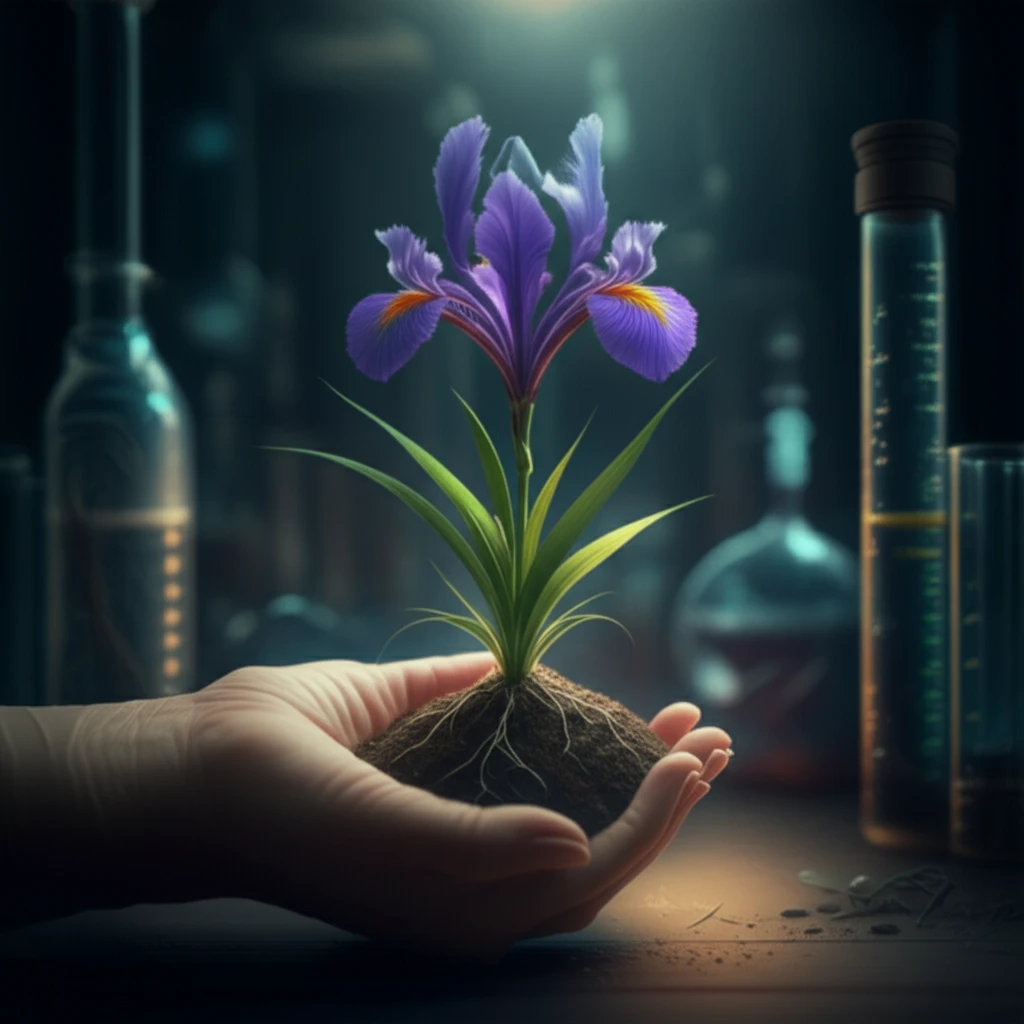
Unlocking the Secrets of Iris Propagation: A Step-by-Step Guide

"Discover how to efficiently propagate Iris sanguinea using innovative in vitro techniques, ensuring a vibrant garden every season."
Irises, with their striking colors and unique forms, are a favorite among gardeners and nature enthusiasts alike. While traditionally propagated through seeds or bulbs, these methods often present limitations. The conventional method challenges are due to seed dormancy and low germination rates and slow growth of bulb divisions. The propagation of irises is key to ensuring the sustainability and availability of these beautiful plants, especially in the face of environmental challenges and habitat loss.
A recent study published in Scientific Reports details an innovative approach to Iris sanguinea propagation, focusing on overcoming seed dormancy and optimizing in vitro regeneration. This research opens new possibilities for large-scale iris cultivation and conservation, providing a practical and efficient alternative to traditional methods.
This guide breaks down the study's findings, offering a step-by-step approach to propagating Iris sanguinea from seeds using in vitro techniques. Whether you're an experienced gardener or just starting, you'll discover how to unlock the secrets of iris propagation and cultivate these stunning flowers with greater success.
Growing Demand for Iris Propagation
In vitro propagation has become increasingly important for iris species due to challenges with traditional propagation methods. Dutch iris is a commercially important bulbous ornamental crop with high demand in the global floriculture market, necessitating production of high-quality planting material. Additionally, seeds of certain iris species like Iris pallida demonstrate low germination ability, making traditional seed-based propagation difficult to perform. In vitro micropropagation offers an effective method for rapid generation of iris seedlings, though constraints related to efficiency, availability, and sterility of explants remain considerations.
Traditional Propagation Methods
Traditional iris propagation typically relies on division of rhizomes or seed-based methods. While these approaches have been used for centuries, they face inherent limitations including slow multiplication rates, seasonal dependencies, and variable success depending on species. Seed propagation in particular suffers from low or inconsistent germination rates across many iris varieties, while division methods cannot meet large-scale commercial demand efficiently.
Early In Vitro Breakthroughs
Early work on iris propagation demonstrated that callus cultures from Iris pallida could regenerate plantlets, with the leaf base attached to the rhizome proving particularly effective for initiating cultures. Subsequent research expanded approaches to other species, establishing successful regeneration systems for I. sanguinea using seed-based methods. Studies on I. laevigata further refined explant selection, identifying roots and hypocotyls as viable starting materials for micropropagation protocols. These foundational discoveries laid the groundwork for modern in vitro iris propagation techniques.
Seed Sterilization and Germination: Laying the Foundation
The first and most critical step in in vitro propagation is ensuring that the seeds are free from contamination. The Scientific Reports study emphasized the importance of optimized sterilization, stratification, and scarification methods to address the physiological dormancy inherent in iris seeds. Here’s how to get started:
- Hot Water Treatment: Soak seeds in water initially heated to 80°C (176°F) overnight. This helps to break down the seed's natural defenses against germination.
- Surface Sterilization: After the hot water soak, sterilize the seeds using a two-step process. First, use 75% ethanol for 30 seconds, followed by a 20-minute soak in a 4% sodium hypochlorite (NaOCl) solution. This ensures any surface contaminants are eliminated, providing a clean start for germination.
- Seed Coat Removal: Carefully remove the seed coat using a sterile scalpel to encourage germination.
Recent Advances in Iris Micropropagation
Recent investigations have focused on improving regeneration efficiency through somatic embryogenesis in Iris pallida varieties, targeting German iris ecotypes for enhanced in vitro plant regeneration. Parallel work has explored the effects of nano silicon supplementation on growth and structural development during in vitro propagation of Neomarica longifolia (Yellow Iris). These studies represent the current frontier of iris propagation research, combining tissue culture optimization with novel growth-enhancing compounds.
Challenges in Iris Propagation
Despite advances in in vitro techniques, significant challenges persist in iris propagation. Efficiency, availability, and sterility of explants remain persistent constraints that can limit success rates. Many protocols are species-specific, limiting their broader application across the diverse Iris genus. These practical limitations continue to drive research into more robust and universally applicable methods.
Evaluating Propagation Approaches
Different iris species respond variably to in vitro propagation techniques, with some proving more amenable than others. Seed-based regeneration works well for certain species while others require rhizome or leaf-based explants. The choice of growth regulators, culture conditions, and explant type significantly influences success rates, making direct comparisons between protocols challenging.
Transplanting and Acclimatization: Setting the Stage for Success
Successfully propagating Iris sanguinea using in vitro techniques requires attention to detail and a commitment to creating the optimal conditions for each stage of development. By following the methods outlined in this guide, inspired by the Scientific Reports study, you can unlock the secrets of iris propagation and cultivate these stunning flowers with confidence.
Consolidating Current Knowledge
The body of research on iris propagation demonstrates clear progress from early callus culture work to sophisticated modern protocols. The field continues to evolve as researchers optimize media compositions, growth regulator combinations, and culture conditions for specific species and applications.
Emerging Technologies in Iris Propagation
Emerging approaches like synthetic seed production and slow growth storage techniques demonstrate potential for improving in vitro propagation systems for irises. These methods may address challenges in scaling up production while maintaining plant viability during storage. Such innovations point toward more practical commercial applications of tissue culture technology for iris cultivation.
Species-Specific Considerations
In vitro cultivation of iris species presents unique challenges that vary across different taxa, requiring species-specific optimization of protocols. Systemic challenges persist in developing universally applicable propagation methods that account for the biological diversity within the genus Iris. These peculiarities underscore the importance of continued research tailored to individual species' requirements.
Practical Applications and Conservation
Practical implementation of in vitro propagation systems for iris species requires consideration of both biological constraints and resource needs for laboratory maintenance. Establishing efficient protocols that can be reliably executed is essential for translating research findings into commercial applications and conservation efforts. These results provide basic information for optimizing complete in vitro propagation protocols and germplasm conservation methods.