
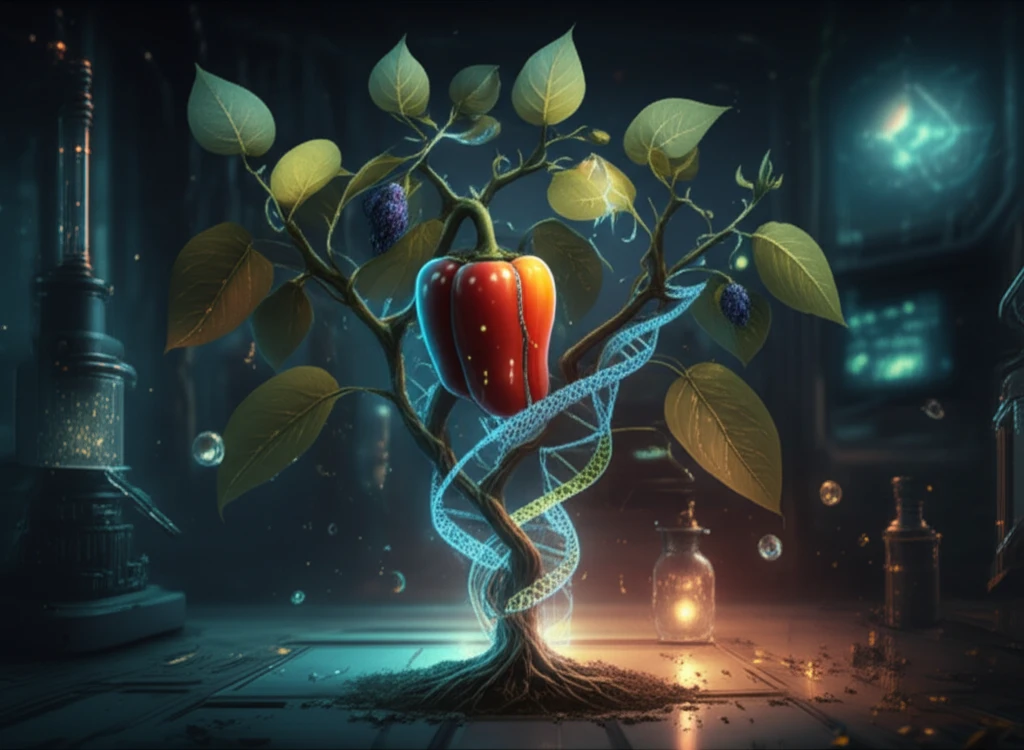
Chili Revolution: How Scientists are Engineering the Perfect Pepper

"Unlocking genetic secrets to create hardier, more flavorful peppers through innovative breeding techniques"
For centuries, the humble pepper has captivated taste buds and cultures worldwide. From the fiery kick of a chili to the sweet crunch of a bell pepper, this versatile fruit finds its way into countless cuisines. But behind the scenes, scientists are working tirelessly to enhance the pepper, pushing the boundaries of flavor, resilience, and yield.
Traditional pepper breeding has long relied on cross-pollination and careful selection. However, modern science is now offering a powerful toolkit to accelerate and refine this process. By understanding the pepper's genetic code, researchers can identify genes responsible for desirable traits like disease resistance, fruit size, and capsaicin content (the compound that gives peppers their heat).
This article explores the cutting-edge research transforming pepper breeding, delving into techniques like distant hybridization, induced mutation, and cyto-anatomy. Join us as we uncover how these innovations are paving the way for the perfect pepper, tailored to meet the demands of both farmers and foodies alike.
The Global Pepper Landscape
Pepper (Capsicum spp.) is one of the world's most widely cultivated and consumed spice crops, with production spanning every inhabited continent. Economic and food security impacts are significant, particularly in tropical and subtropical regions where peppers serve as both a dietary staple and a cash crop. Precise global production figures vary by year and reporting source, but peppers consistently rank among the top horticultural commodities by both area harvested and trade value.
Conventional Breeding Meets Modern Biotechnology
Conventional breeding coupled with molecular marker approaches has been well explored in pepper crop improvement programs, yet traditional methods have struggled to achieve the complex breeding goals of multi-objective and mostly quantitative traits. Integration of genetic and biotechnological methods has offered new perspectives for improving pepper crops for yield, disease resistance, and quality traits. Genetic engineering has added new momentum in breeding for resistance and improved quality, though poor or low regeneration potential remains a major hindrance to exploring genetic engineering in peppers. Researchers are now reviewing the genetic regulation mechanisms of pepper quality and stress resistance to identify better breeding strategies.
From Ancient Domestication to Modern Genetics
Capsicum or chili peppers were predominantly domesticated first in America and were introduced from there to the rest of the world by Columbus. The genus Capsicum contains broad diversity resulting from different centers of diversity, domestication, and selection processes—both artificial and natural—over thousands of years. Genetic and breeding studies of pepper have been carried out for a long time, with the Mendelian genetic mechanisms governing pungency and fruit color elucidated in early years and molecular substances of some genes clarified in recent decades. The conservation of genetic diversity through natural accessions counterbalances the loss occurring due to genetic erosion.
Decoding the Pepper's Genetic Blueprint: A Path to Superior Varieties
The journey to a better pepper begins with understanding its genes. Scientists are meticulously mapping the pepper genome, pinpointing the specific DNA sequences that control key characteristics. This knowledge allows breeders to make more informed decisions, selecting parent plants with the highest potential for desired traits.
- Disease Resistance: Identifying and incorporating genes that confer resistance to common pepper diseases, such as bacterial spot and powdery mildew.
- Enhanced Flavor: Manipulating genes responsible for capsaicin production to fine-tune the heat level, or enhancing the production of other flavor compounds to create unique taste profiles.
- Increased Yield: Selecting for genes that promote larger fruit size, increased fruit number, and improved plant architecture.
- Environmental Adaptability: Breeding peppers that are better suited to specific growing conditions, such as drought resistance or tolerance to extreme temperatures.
Current Advances and Emerging Trends
Pepper breeding research continues to evolve rapidly, with ongoing efforts focused on improving yield, disease resistance, and quality characteristics. While comprehensive reviews of the latest breakthroughs would require access to the most current literature, the field is generally moving toward integrating genomic tools with traditional breeding approaches. Scientists are actively investigating the genetic basis of key traits and developing new methods to accelerate cultivar development. The pace of innovation suggests that future breeding outcomes may surpass current expectations, though specific recent breakthroughs are beyond the scope of this summary.
Challenges and Criticisms in Pepper Engineering
Despite significant advances, pepper genetic engineering faces persistent technical barriers, most notably the poor or low regeneration potential that hampers transformation efficiency. Some critics argue that biotechnological approaches may introduce unintended consequences or fail to deliver on promised yield improvements in field conditions. There is also debate about whether genetic modification can adequately address the polygenic nature of complex traits like stress tolerance. Practical failures in translating laboratory successes to commercial cultivars remain a concern among breeders and growers alike.
CRISPR vs. Traditional GMO: Diverging Paths
CRISPR-edited crops and traditional GMO crops share a genetic engineering foundation but have distinguishing characteristics that affect regulatory and public reception. The relatively subdued controversy surrounding CRISPR/Cas techniques compared to earlier GMO methods stems in part from the precision of edits and absence of foreign DNA in some applications. Recent advances have focused on modifying pepper fruit traits through genetic and biotechnological means, with candidate genes identified from pepper research and relevant findings in tomato serving as potential targets for future breeding. These gene-editing manipulations represent a shift toward more targeted and potentially more publicly acceptable approaches.
The Future of Peppers: A World of Flavor and Resilience
As scientists continue to unravel the genetic complexities of the pepper, we can expect even more exciting innovations in the years to come. Gene editing technologies like CRISPR offer the potential for precise and targeted modifications, accelerating the breeding process and opening up new possibilities for pepper improvement. From disease-resistant varieties that thrive in challenging environments to peppers with unique flavor profiles that tantalize the taste buds, the future of this beloved fruit is bright.
Convergence of Methods and Future Vision
The trajectory of pepper improvement is increasingly defined by the convergence of classical breeding wisdom with cutting-edge molecular tools. Experts recognize that no single approach—whether conventional selection, marker-assisted breeding, or genetic engineering—offers a complete solution to the multifaceted challenges facing pepper production. The most promising strategies appear to be those that integrate multiple technologies while maintaining attention to farmer needs and consumer preferences. Continued collaboration between academic researchers, breeders, and industry will be essential to translate scientific potential into practical impact.
Strategic Pathways for Next-Generation Pepper Breeding
A systematic review of global pepper breeding identifies innovative pathways through technological integration and proposes future breeding objectives along with strategic recommendations to accelerate cultivar development. Scientists and industry representatives have discussed major scientific, institutional, and market challenges facing global pepper breeding programs, identifying key priorities for future progress. Combining cutting-edge genetic breeding technologies with tried-and-true processes like traditional selections and crosses will be important in capsicum breeding going forward. Five strategic recommendations have been proposed to ensure sustainable industry advancement in the coming decades.
Beyond the Laboratory: Systemic Barriers
Pepper breeding operates within a broader agricultural system facing challenges that extend beyond genetics alone, including climate variability, market demands, and resource constraints. Access to diverse germplasm collections remains critical but is threatened by genetic erosion and habitat loss in centers of origin. Institutional capacity and funding for long-term breeding programs vary widely across producing regions, creating disparities in cultivar availability. Addressing these systemic issues will require coordinated international effort and sustained investment in both research infrastructure and human capital.
Accelerating Progress: Speed Breeding and Practical Application
Speed breeding protocols have been developed that can shorten the breeding cycle and accelerate genetic research in pepper through reduced generation time, marking a significant practical advance. Breeding programs aim to enhance valuable traits such as improved productivity and resistance to biotic and environmental stresses, as well as consumer characteristics like taste and colour. Many traits of interest in current Capsicum breeding programmes include complex characteristics that require sustained effort across multiple generations. The first studies verifying gene expression patterns associated with flowering responses in pepper speed breeding systems demonstrate the potential for translating laboratory innovations into tangible field outcomes.