
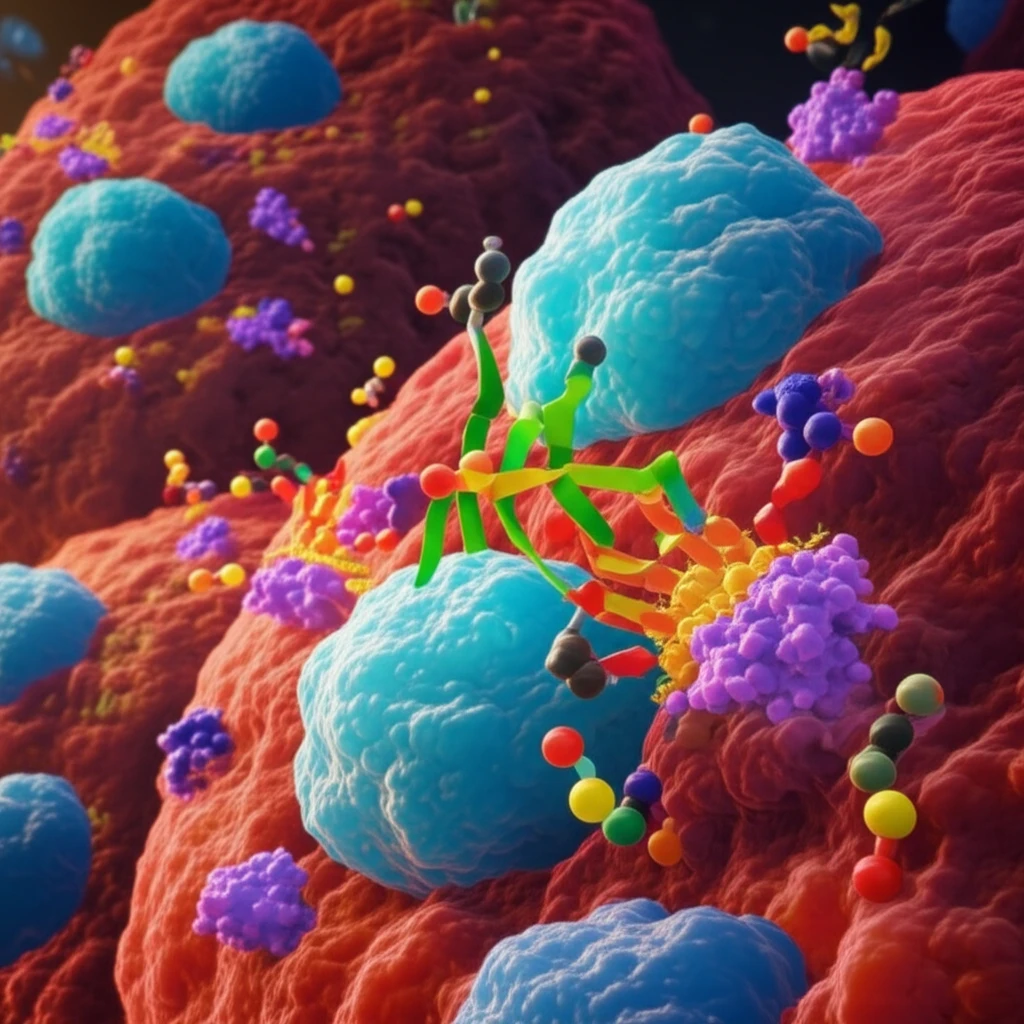
Digital illustration of insulin interacting with eIF5A protein in a cell.

Unlocking the Secrets of Insulin: How It Impacts Your Body's Protein Powerhouse

"Dive into the fascinating world of cellular biology and discover the profound connection between insulin, protein synthesis, and the vital role of a unique amino acid."


Insulin, often recognized for its role in managing blood sugar, is a complex hormone with far-reaching effects on your body. Beyond its impact on glucose, insulin plays a crucial role in the metabolism of proteins. It's a key player in the intricate dance of protein synthesis, a process essential for building and repairing tissues, creating enzymes, and fueling countless other bodily functions.

Recent research has illuminated the connection between insulin and eukaryotic translation initiation factor 5A (eIF5A), a protein with a unique amino acid called hypusine. eIF5A plays a pivotal role in cellular processes, including protein synthesis. This study investigates how insulin influences the expression and activity of eIF5A, and, in turn, protein production. Think of it as a behind-the-scenes look at how your cells build and maintain themselves.

This exploration goes beyond basic biology, shedding light on the ways insulin influences cellular processes. You will get to explore how insulin's role extends into the protein-building machinery of your cells. This will add more to our general knowledge of how our bodies operate. So, let's uncover the science behind insulin's influence on your body's protein powerhouse!

Decoding the Connection: Insulin, eIF5A, and Protein Synthesis

Digital illustration of insulin interacting with eIF5A protein in a cell.

The study's findings highlight insulin's impact on eIF5A, revealing it as a potential regulator of protein synthesis. This is because insulin affects the amount of eIF5A your cells produce. The experiments revealed that insulin treatment could increase the eIF5A transcript content, suggesting that insulin might indirectly influence protein synthesis. To understand the role of insulin, we need to understand the role of eIF5A first.

eIF5A, a protein essential for cell viability, contains the unique amino acid hypusine, which is crucial for its activity. The study found that eIF5A hypusination decreased when cells were deprived of nutrients and increased when treated with insulin, implying that insulin can control the protein-making machinery. This may show that insulin is indirectly involved in the process. In general protein synthesis, this finding emphasizes how intricately related the mechanisms within our cells are.

  • Insulin's Impact: Insulin appears to boost the levels of eIF5A, potentially enhancing protein production.
  • Hypusination's Role: The modification of eIF5A with hypusine is essential for its function.
  • Cellular Machinery: The findings underscore insulin's ability to influence the protein synthesis process.
The impact of insulin on protein synthesis doesn't stop there. The study also observed that insulin impacts other factors involved in translation, suggesting a widespread influence on the cellular protein-building machinery. This suggests a more complex relationship, with insulin affecting multiple steps of protein synthesis. These discoveries expand on the knowledge that insulin is essential for our overall health.

The Road Ahead: Unraveling the Mysteries of Insulin and Cellular Health

This study takes us closer to understanding the processes that make our cells function. Researchers may conduct additional research to reveal insulin's complex function in cellular protein production. By examining insulin's role in cellular processes, we gain deeper insight into how to promote health and treat diseases at a cellular level. The interplay between insulin and eIF5A offers fresh perspectives, indicating exciting directions for future scientific studies.

About this Article -

This article was crafted using a human-AI hybrid and collaborative approach. AI assisted our team with initial drafting, research insights, identifying key questions, and image generation. Our human editors guided topic selection, defined the angle, structured the content, ensured factual accuracy and relevance, refined the tone, and conducted thorough editing to deliver helpful, high-quality information.See our About page for more information.

This article is based on research published under:

DOI-LINK: 10.1007/s11033-018-4512-1, Alternate LINK

Title: Insulin Action On Protein Synthesis And Its Association With Eif5A Expression And Hypusination

Subject: Genetics

Journal: Molecular Biology Reports

Publisher: Springer Science and Business Media LLC

Authors: André Ricardo Gomes De Proença, Karina Danielle Pereira, Leticia Meneguello, Leticia Tamborlin, Augusto Ducati Luchessi

Published: 2018-12-05

Everything You Need To Know

1

What is the primary role of insulin beyond regulating blood sugar levels?

Beyond its role in regulating blood sugar, insulin plays a crucial role in protein metabolism. It is a key player in protein synthesis, which is essential for building and repairing tissues, creating enzymes, and fueling numerous other bodily functions. Insulin influences the expression and activity of eukaryotic translation initiation factor 5A (eIF5A), a protein with a unique amino acid called hypusine, which is involved in protein production.

2

How does insulin affect the function of eIF5A?

Insulin influences eukaryotic translation initiation factor 5A (eIF5A) by affecting its hypusination. The study found that eIF5A hypusination decreased when cells were deprived of nutrients and increased when treated with insulin, showing that insulin can control the protein-making machinery. The hypusination of eIF5A is essential for its activity.

3

What is hypusine, and why is it important for protein synthesis?

Hypusine is a unique amino acid found in eukaryotic translation initiation factor 5A (eIF5A). It is crucial for the activity of eIF5A, which plays a pivotal role in cellular processes, including protein synthesis. Without hypusination, eIF5A cannot function properly, which would impair the protein synthesis process.

4

How does insulin's impact on eIF5A relate to overall cellular health and disease treatment?

Insulin's impact on eukaryotic translation initiation factor 5A (eIF5A) can influence overall cellular health and potential disease treatments. By understanding how insulin affects eIF5A and, in turn, protein synthesis, researchers can gain deeper insights into promoting health and treating diseases at a cellular level. The interplay between insulin and eIF5A offers new directions for future scientific studies, potentially leading to novel therapeutic strategies.

5

Does insulin only affect eIF5A in the protein synthesis process, or does it influence other factors as well?

Insulin's impact on protein synthesis extends beyond just eukaryotic translation initiation factor 5A (eIF5A). Research suggests that insulin also affects other factors involved in translation, indicating a broader influence on the cellular protein-building machinery. This suggests a more complex relationship, with insulin affecting multiple steps of protein synthesis. However, other factors or steps were not mentioned.

Newsletter Subscribe

Subscribe to get the latest articles and insights directly in your inbox.