
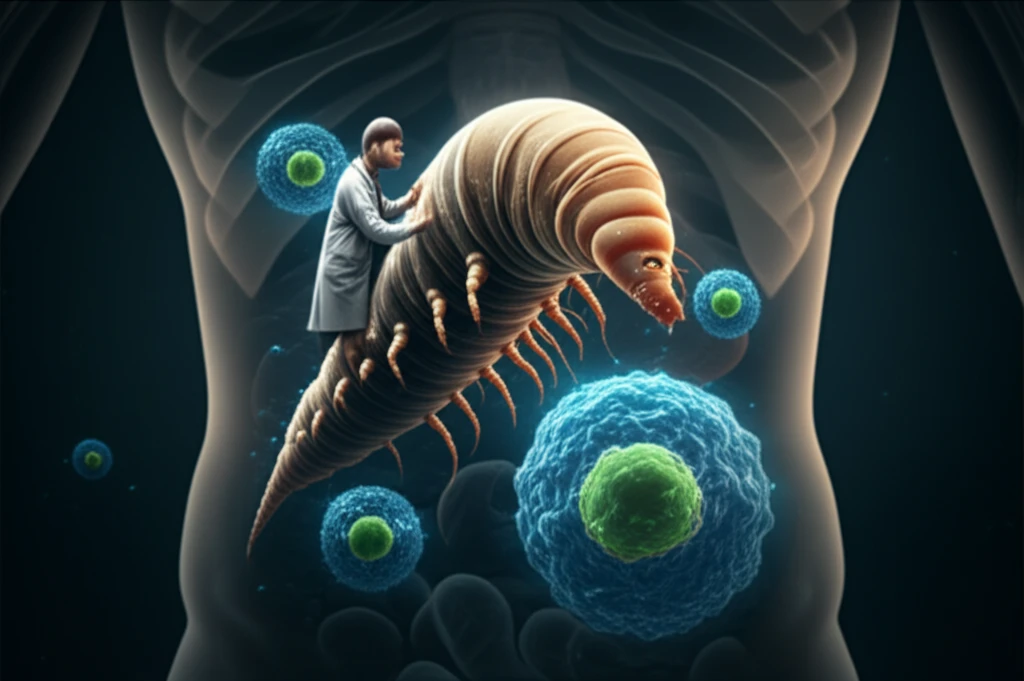
Unlocking the Secrets of Helminths: How Parasitic Worms Could Revolutionize Immune Health

"Could understanding these tiny invaders pave the way for innovative treatments for allergies, autoimmune disorders, and more?"
Parasitic worms, also known as helminths, are often associated with negative health outcomes. However, these complex organisms have a surprising ability: they can modulate the immune system of their hosts. While helminth infections affect over 1.5 billion people worldwide, primarily in lower-income countries, scientists are increasingly interested in their potential therapeutic applications.
Helminths are diverse, with each species displaying unique life cycles and tissue preferences within the body. These differences lead to a variety of clinical outcomes, depending on the intensity and chronicity of the infection. What unites them is their capacity to induce parasite-specific immunoregulation, essentially taming the immune response against themselves.
This article explores the cutting-edge research into how helminths influence the immune system. We'll delve into their strategies and molecules and some of the mechanisms that modulate the immune responses of their hosts, potentially leading to new treatments for allergies, autoimmune conditions, and metabolic disorders.
How Helminths Wield Immune Control: From Acute Infection to Chronic Modulation
The impact of a helminth infection on the immune system isn't static; it changes over time, transitioning from an acute response to chronic modulation. The initial, acute phase involves the activation of various immune cells and the release of cytokines, signaling molecules that orchestrate the body's defense. This phase often resembles an allergic reaction, characterized by:
- Increased production of Th2-associated cytokines like IL-4, IL-5, IL-9, and IL-13
- Elevated levels of antigen-specific IgG4 and IgE antibodies
- Peripheral and tissue eosinophilia (an increase in eosinophils, a type of white blood cell)
- Expansion of alternatively activated macrophages (AAMs)
The Future of Helminth-Based Therapies: Taming Immunity for Health
Helminths have the ability to dampen type 1 immune responses and modulate the overall inflammatory response. This opens the door for novel therapeutic strategies targeting a variety of conditions.
Current research focuses on understanding the mechanisms behind helminth-induced immune regulation and identifying the specific molecules involved. This knowledge could lead to the development of:
Ultimately, harnessing the power of helminths could revolutionize how we treat immune-related disorders, offering new hope for those suffering from allergies, autoimmune diseases, and metabolic conditions. Continued research and clinical trials are crucial to translate these findings into safe and effective therapies.