
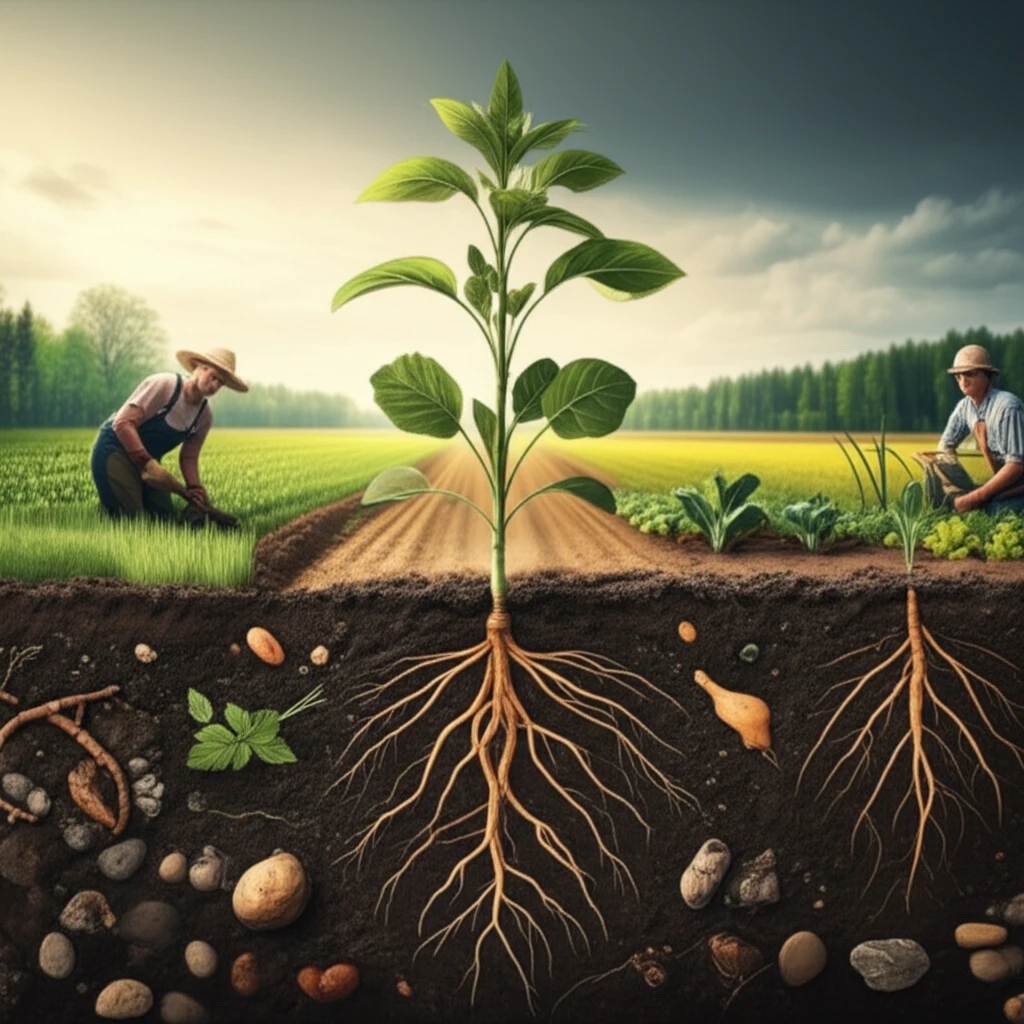
Unlocking the Secrets of Healthy Soil: How Farming Practices Impact Our Planet

"Discovering the crucial link between soil health, sustainable farming, and the well-being of our environment."
Our planet's health is intrinsically linked to the health of its soil. Soil isn't just dirt; it's a complex ecosystem teeming with life, playing a vital role in everything from food production to carbon sequestration. However, intensive agricultural practices often degrade this precious resource. This article explores the impact of various farming methods on soil properties, revealing the importance of sustainable practices for a healthier environment.
The research, conducted in the Triângulo Mineiro region of Brazil, examined how different land use and management systems influence the physical and chemical characteristics of soil. The study focused on an Eutrophic Yellow Oxysol, a common soil type in the region, and compared the effects of various practices, including traditional farming, eucalyptus plantations, and no-tillage systems. The findings provide valuable insights into how we can better manage our soil for long-term sustainability.
Understanding the interplay between farming practices and soil health is crucial for addressing global challenges like soil erosion, degradation, and climate change. By adopting sustainable methods, we can not only improve agricultural productivity but also contribute to the preservation of our planet's valuable resources. This article provides a clear, accessible overview of the key findings and implications of this important research.
Unveiling the Impact: How Farming Practices Shape Soil Properties
The study compared several land use systems: native Cerrado vegetation, eucalyptus plantations, corn grown with no-tillage and pasture, and corn with no-tillage intercropped with Brachiaria sp. and managed with cattle. Key soil properties like bulk density, porosity, water infiltration, and organic carbon content were assessed. The results reveal significant differences in soil health depending on the management approach. For example, the study found that systems with no-tillage and pasture or corn, can recover the soil organic carbon contents as compared to the preserved Cerrado area, which was more significant in the surface layer.
- Bulk Density: This refers to the mass of dry soil per unit volume. Higher bulk density can restrict root growth and water movement.
- Total Porosity: This indicates the amount of space available for air and water in the soil. Adequate porosity is essential for healthy plant growth.
- Organic Carbon: This is a measure of the organic matter in the soil, which is crucial for soil fertility, water retention, and carbon storage.
- Water Infiltration: The rate at which water enters the soil, affecting water availability for plants and the risk of soil erosion.
The Path Forward: Embracing Sustainable Practices for a Healthier Planet
The research underscores the importance of adopting sustainable farming practices to protect and enhance our soil resources. By choosing methods like no-tillage, cover cropping, and crop rotation, we can boost soil health, increase agricultural productivity, and reduce the negative impacts of farming on the environment. This will help reduce climate change and promote a more sustainable future for all. As we continue to learn from research like this, we can create more resilient and eco-friendly farming practices that will help to build a more sustainable planet.