
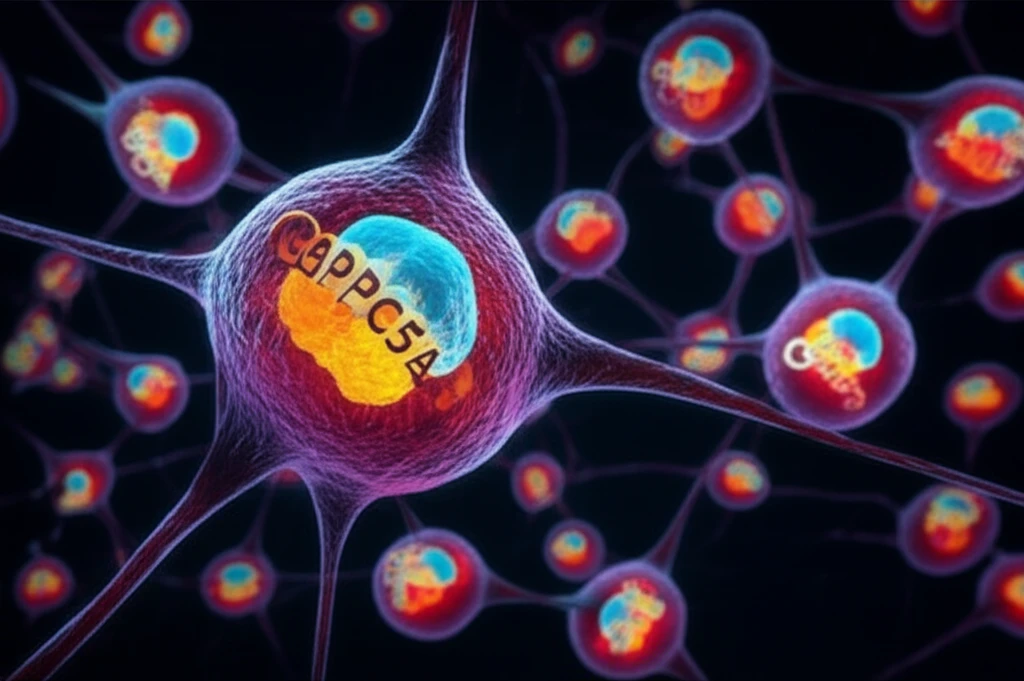
Microscopic view of cells with GPRC5A receptors, symbolizing cellular communication and cancer research.

Unlocking the Secrets of GPRC5A: Can This Gene Help Us Conquer Cancer?

"Exploring the role of GPRC5A in cell growth, differentiation, and its potential as a therapeutic target in cancer treatment."


In the complex world of genetics, certain genes hold the key to understanding and potentially combating diseases like cancer. One such gene is GPRC5A, which stands for G protein-coupled receptor, family C, group 5, member A. This gene encodes a receptor protein involved in various crucial cellular processes, making it a subject of intense research and interest. This article delves into the intricacies of GPRC5A, exploring its functions, its role in cancer development, and its potential as a therapeutic target.

GPRC5A belongs to the type 3 G protein-coupling receptor family, characterized by its signature seven-transmembrane domain motif. These receptors are essential for cell communication, influencing a wide range of physiological functions. Through signaling with retinoic acid—a form of vitamin A—GPRC5A plays a vital role in development, cellular growth, and differentiation. Understanding how GPRC5A functions under normal circumstances is crucial before exploring its implications in pathological conditions like cancer.

While the GPRC5A gene itself isn't typically amplified or lost in cancer, research indicates that its expression levels are significantly altered in various types of tumors. Interestingly, studies on mice have shown that those lacking this gene are prone to developing spontaneous lung tumors, hinting at its tumor-suppressive properties. This observation has sparked significant interest in further investigating the role of GPRC5A in cancer development and progression.

How Does GPRC5A Function in the Body?

Microscopic view of cells with GPRC5A receptors, symbolizing cellular communication and cancer research.

The GPRC5A protein is typified by its seven-pass transmembrane character, a structural feature common among G protein-coupled receptors. Predominantly expressed in fetal and adult normal lung tissue, as well as kidney tissues, GPRC5A is thought to be highly important in the embryonic development and maturation of these organs. This suggests that GPRC5A is not just a structural component but also an active participant in the functional development of key organs.

Unlike some proteins with numerous variants, GPRC5A has relatively few. Three variants have been described based on single nucleotide polymorphisms (SNPs), but the functional consequences of these variants are currently unknown. This relative stability in its structure could make GPRC5A a more straightforward target for therapeutic interventions, as fewer variants mean less complexity in drug design and application.

  • Seven-Transmembrane Domains: These domains allow the receptor to interact with molecules outside the cell and transmit signals inside.
  • Extracellular and Cytoplasmic Domains: These regions facilitate interactions with other proteins and signaling molecules.
  • Glycosylation: GPRC5A is glycosylated at residue 157, a modification that can affect protein folding, stability, and interactions.
  • Phosphorylation: The protein can be phosphorylated at several tyrosine residues, influencing its signaling pathways.
While GPRC5A is highly expressed in lung and kidney tissues, its expression varies in other organs. Low to moderate levels are found in the placenta, prostate, testis, ovary, small intestine, colon, stomach, and spinal cord. Conversely, it is undetectable in fetal heart, brain, and liver, as well as adult heart, brain, liver, skeletal muscle, pancreas, spleen, thymus, and peripheral leukocytes. This differential expression pattern underscores the specialized roles of GPRC5A in different tissues.

The Future of GPRC5A Research

The journey to fully understanding GPRC5A is ongoing, with many questions still unanswered. However, the existing research provides a strong foundation for future studies aimed at harnessing its potential in cancer therapy. By continuing to explore the intricacies of GPRC5A, scientists may unlock new strategies for preventing and treating cancer, ultimately improving patient outcomes and quality of life.

About this Article -

This article was crafted using a human-AI hybrid and collaborative approach. AI assisted our team with initial drafting, research insights, identifying key questions, and image generation. Our human editors guided topic selection, defined the angle, structured the content, ensured factual accuracy and relevance, refined the tone, and conducted thorough editing to deliver helpful, high-quality information.See our About page for more information.

This article is based on research published under:

DOI-LINK: 10.4267/2042/51138, Alternate LINK

Title: Gprc5A (G Protein-Coupled Receptor, Family C, Group 5, Member A)

Subject: Cancer Research

Journal: Atlas of Genetics and Cytogenetics in Oncology and Haematology

Publisher: INIST-CNRS

Authors: Y Maki, H Kadara

Published: 2013-07-01

Everything You Need To Know

1

What is GPRC5A and why is it important in the context of this discussion?

GPRC5A, which stands for G protein-coupled receptor, family C, group 5, member A, is a gene that encodes a receptor protein. This protein is involved in crucial cellular processes and is of significant interest in cancer research. Its role in these processes, including cell growth and differentiation, makes it a potential target for cancer therapies. The article emphasizes the importance of understanding GPRC5A's functions to develop strategies to combat cancer effectively.

2

What is the main function of the GPRC5A protein, and what does this imply?

The primary function of the GPRC5A protein is to act as a G protein-coupled receptor. It has a characteristic seven-transmembrane domain, which allows it to interact with molecules outside the cell and transmit signals inside. GPRC5A interacts with retinoic acid, a form of vitamin A, influencing cellular processes such as development, growth, and differentiation. Its role in these processes makes it an important subject in cancer research.

3

Where in the body is GPRC5A expressed, and why is this significant?

GPRC5A is expressed in various tissues, with high levels in fetal and adult lung and kidney tissues. Low to moderate levels are found in the placenta, prostate, testis, ovary, small intestine, colon, stomach, and spinal cord. It is undetectable in fetal heart, brain, and liver, and in adult heart, brain, liver, skeletal muscle, pancreas, spleen, thymus, and peripheral leukocytes. This differential expression pattern indicates its specialized roles in different tissues. Understanding its expression is crucial for targeting it in cancer therapy.

4

What is the role of GPRC5A in cancer development?

Research suggests that GPRC5A might have tumor-suppressive properties. Studies show that mice lacking this gene are prone to developing spontaneous lung tumors. While the gene itself isn't typically amplified or lost in cancer, its expression levels are altered in various tumors. This suggests that the alteration in its expression is an important factor in cancer development and progression, making it a potential therapeutic target. Further research on GPRC5A could provide new insights into cancer treatment.

5

What are the key structural features of the GPRC5A protein, and why are they significant?

GPRC5A's structure includes seven-transmembrane domains, extracellular and cytoplasmic domains, glycosylation sites, and phosphorylation sites. The seven-transmembrane domains allow the receptor to interact with molecules outside the cell and transmit signals inside. Glycosylation and phosphorylation can affect the protein's folding, stability, and interactions. This structure makes it a potential target for therapeutic interventions. Understanding these elements is critical for the development of effective cancer treatments.

Newsletter Subscribe

Subscribe to get the latest articles and insights directly in your inbox.