
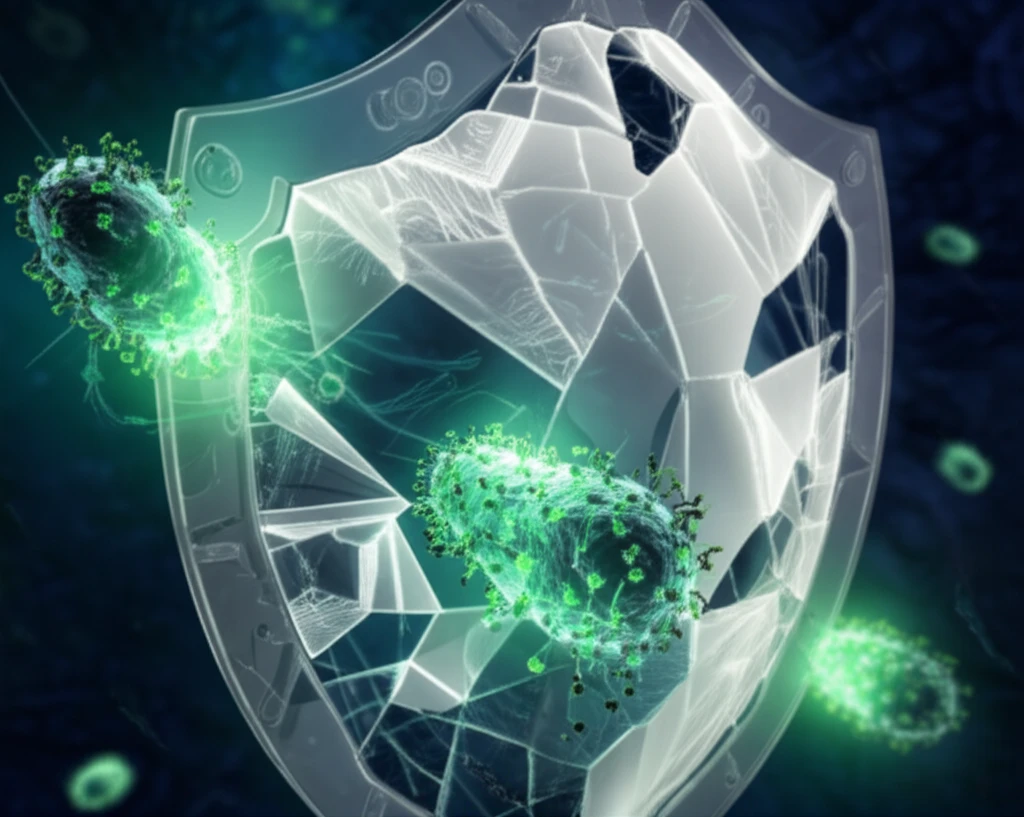
Microscopic view of Gonorrhea bacteria evading immune system

Unlocking the Secrets of Gonorrhea: How NspA Holds the Key to Future Treatments

"Researchers uncover the crucial role of Neisserial surface protein A (NspA) in gonorrhea's resistance to treatment, paving the way for innovative vaccines and therapies."


Gonorrhea, a sexually transmitted infection (STI) caused by the bacterium Neisseria gonorrhoeae (Ng), affects millions worldwide each year. With an estimated 80 million new cases annually, gonorrhea poses a significant global health challenge. In the United States alone, cases have surged in recent years, highlighting the urgent need for effective prevention and treatment strategies.

The rise of antibiotic-resistant strains of Ng is particularly alarming. As traditional treatments become less effective, scientists are racing to understand the mechanisms that allow the bacteria to evade the human immune system. This knowledge is crucial for developing new vaccines and therapies to combat this evolving threat.

A recent study sheds light on the critical role of Neisserial surface protein A (NspA) in gonorrhea's ability to resist the body's natural defenses. By examining how NspA interacts with the complement system, researchers have uncovered potential new targets for intervention.

What is NspA and How Does It Help Gonorrhea?

Microscopic view of Gonorrhea bacteria evading immune system

NspA, or Neisserial surface protein A, is a protein found on the surface of Neisseria bacteria, including both N. gonorrhoeae and N. meningitidis. It plays a key role in the bacteria's survival and ability to cause infection. The study reveals that NspA helps Ng evade the complement system, a part of the immune system that normally destroys invading pathogens.

The researchers found that NspA binds to factor H (FH) and factor H-like protein 1 (FHL-1), complement regulatory proteins that prevent the complement system from attacking the body's own cells. By hijacking these proteins, Ng essentially puts on a disguise, making it harder for the immune system to recognize and eliminate the infection.

Here's a breakdown of how NspA contributes to gonorrhea's resistance:
  • Binding to Factor H and FHL-1: NspA directly interacts with these complement inhibitors, preventing the activation of the complement system on the bacterial surface.
  • Interference with Complement Activation: By recruiting FH and FHL-1, NspA disrupts the normal cascade of events that leads to bacterial destruction.
  • Serum Resistance: NspA significantly increases the ability of Ng to survive in serum, the fluid portion of blood containing immune factors.
Interestingly, the study also found differences in how NspA functions in N. gonorrhoeae compared to N. meningitidis. These differences could explain why vaccines that target NspA have been successful against meningitis but not gonorrhea. The subtle variations in the protein's structure and interactions highlight the complexity of developing effective treatments.

Hope for the Future: New Strategies to Combat Gonorrhea

The discovery of NspA's role in gonorrhea's immune evasion offers a promising new avenue for developing effective treatments. By understanding the precise mechanisms by which NspA interacts with factor H and FHL-1, scientists can design targeted interventions to disrupt these interactions and restore the immune system's ability to fight the infection. This knowledge could lead to novel vaccines or immunotherapies that provide long-lasting protection against gonorrhea.

About this Article -

This article was crafted using a human-AI hybrid and collaborative approach. AI assisted our team with initial drafting, research insights, identifying key questions, and image generation. Our human editors guided topic selection, defined the angle, structured the content, ensured factual accuracy and relevance, refined the tone, and conducted thorough editing to deliver helpful, high-quality information.See our About page for more information.

Everything You Need To Know

1

What is NspA, and why is it important in the context of gonorrhea?

NspA, or Neisserial surface protein A, is a protein present on the surface of *Neisseria gonorrhoeae* (*Ng*) bacteria. It is crucial because it enables the bacteria to evade the human immune system, specifically by interfering with the complement system. NspA binds to factor H (FH) and factor H-like protein 1 (FHL-1), which are regulatory proteins that prevent the complement system from attacking the body's own cells. By binding to these, *Ng* disguises itself from immune detection, increasing its survival and ability to cause infection. Understanding this mechanism is important for developing new treatments.

2

What are factor H (FH) and factor H-like protein 1 (FHL-1), and how are they related to gonorrhea?

Factor H (FH) and factor H-like protein 1 (FHL-1) are complement regulatory proteins that are part of the human immune system. Their primary role is to prevent the complement system from attacking the body's own cells, thus preventing autoimmune reactions. In the context of gonorrhea, *Neisseria gonorrhoeae* hijacks these proteins using its Neisserial surface protein A (NspA). By binding to FH and FHL-1, *Ng* effectively puts on a disguise, making it harder for the immune system to recognize and eliminate the infection. This interaction is significant because it allows the bacteria to evade immune detection and survive in the host.

3

What is the complement system, and how does gonorrhea avoid it?

The complement system is a part of the immune system that enhances the ability of antibodies and phagocytic cells to clear microbes and damaged cells from an organism, promotes inflammation, and attacks the pathogen's cell membrane. In the context of gonorrhea, the complement system should ideally destroy the *Neisseria gonorrhoeae* (*Ng*) bacteria. However, *Ng* uses Neisserial surface protein A (NspA) to interfere with the complement system. NspA binds to factor H (FH) and factor H-like protein 1 (FHL-1), which disrupts the normal activation of the complement cascade on the bacterial surface. This disruption prevents the complement system from effectively targeting and destroying the *Ng* bacteria.

4

Why is the discovery of NspA's role in helping gonorrhea evade the immune system important?

The discovery that Neisserial surface protein A (NspA) helps *Neisseria gonorrhoeae* evade the immune system is significant because it opens new possibilities for developing treatments for gonorrhea. By understanding how NspA interacts with factor H (FH) and factor H-like protein 1 (FHL-1) to suppress the complement system, scientists can design targeted interventions. These interventions might include novel vaccines or immunotherapies that disrupt these interactions, allowing the immune system to effectively target and eliminate the *Ng* bacteria. This could lead to more effective and long-lasting protection against gonorrhea, especially against antibiotic-resistant strains.

5

Why have vaccines that target NspA been successful against meningitis but not gonorrhea?

The research highlights a key difference in how Neisserial surface protein A (NspA) functions in *Neisseria gonorrhoeae* compared to *Neisseria meningitidis*. This is important because vaccines targeting NspA have been successful against meningitis, caused by *N. meningitidis*, but not against gonorrhea, caused by *N. gonorrhoeae*. The study suggests that subtle variations in the structure and interactions of NspA in these two bacteria explain this difference. Understanding these nuances is crucial for developing effective treatments; a vaccine that works for meningitis may not work for gonorrhea due to these specific differences in NspA function. Further research is needed to tailor interventions that account for these variations.

Newsletter Subscribe

Subscribe to get the latest articles and insights directly in your inbox.