
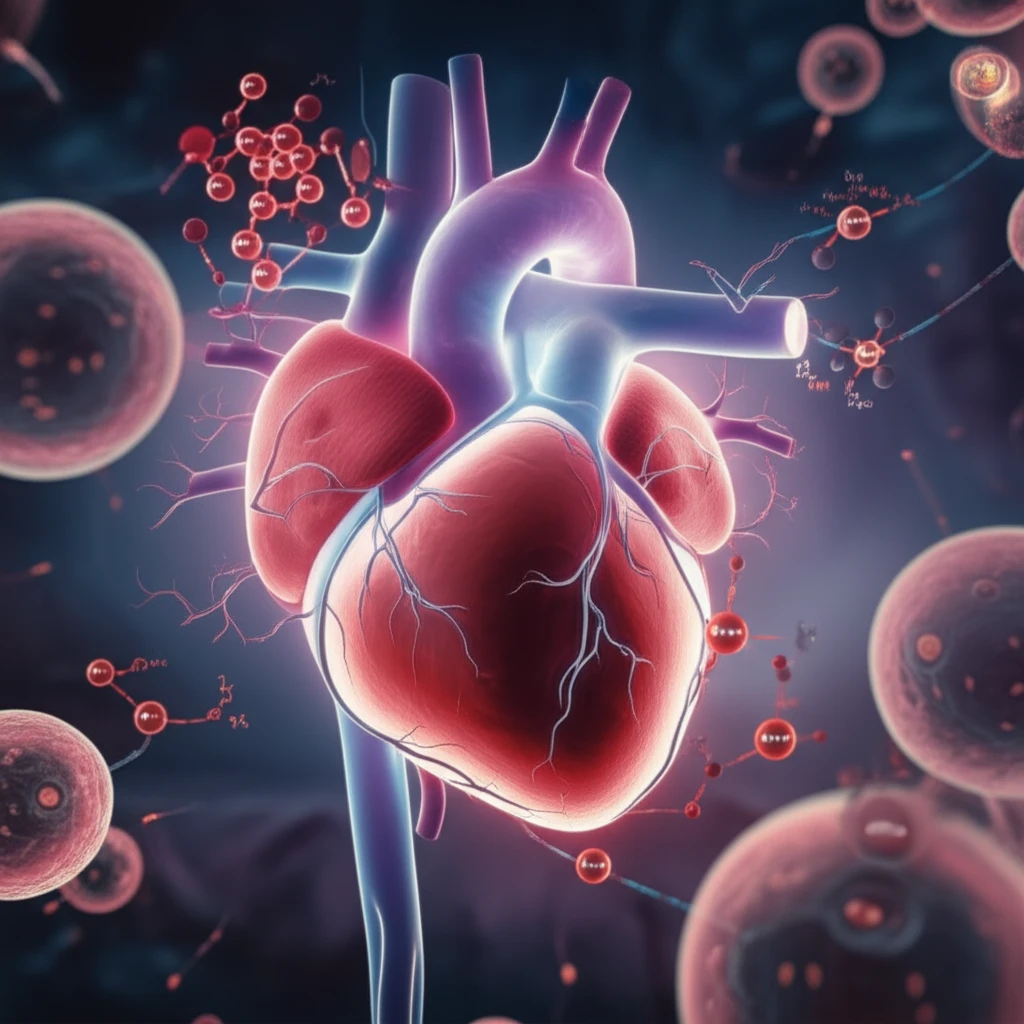
Unlocking the Secrets of FABP4: How This Protein Impacts Your Heart Health

"New research reveals how FABP4 interacts with cells and could lead to groundbreaking treatments for cardiovascular diseases."
In the realm of metabolic research, understanding the intricacies of how our bodies process fats is crucial. Obesity, a growing global concern, often leads to an excess of fatty acids in the bloodstream, setting off a cascade of health issues. Among the key players in this process is a protein called Fatty Acid-Binding Protein 4, or FABP4. This protein, found in fat cells, macrophages, and endothelial cells, plays a significant role in how our bodies manage fatty acids.
FABP4 isn't just any protein; it's a dynamic molecule that binds to fatty acids and transports them within cells. Elevated levels of FABP4 have been linked to insulin resistance, type 2 diabetes, and cardiovascular diseases. This connection has sparked considerable interest in understanding how FABP4 functions and how it might be targeted to improve health outcomes. Recent studies have illuminated FABP4's role in modulating endothelial cell function, which is vital for maintaining healthy blood vessels.
Endothelial cells, which line the interior surface of blood vessels, are critical for vascular health. When these cells become dysfunctional, it can lead to atherosclerosis, a condition where plaque builds up inside the arteries. Researchers have been exploring how FABP4 interacts with endothelial cells, and it turns out that a protein called cytokeratin 1 (CK1) plays a significant role. The interaction between FABP4 and CK1 is now emerging as a key area of focus for potential therapeutic interventions.
The FABP4-CK1 Connection: What Does It Mean for Your Health?
Recent research has uncovered a fascinating interaction between FABP4 and cytokeratin 1 (CK1) in endothelial cells. Scientists have long suspected that FABP4 doesn't act alone but collaborates with other proteins to exert its effects. Cytokeratin 1, primarily known for its structural role within cells, has now been identified as a key partner in mediating FABP4's impact on endothelial function.
- Direct Binding: FABP4 and CK1 physically bind to each other.
- Specific Region: The binding occurs within the H1 subdomain of CK1.
- Functional Impact: This interaction influences how endothelial cells take up FABP4.
Implications for Future Treatments
The discovery of the FABP4-CK1 interaction opens up new avenues for therapeutic interventions. By targeting CK1, it may be possible to control the amount of FABP4 that enters endothelial cells, thereby reducing the harmful effects of excess fatty acids. This approach could be particularly beneficial for individuals with obesity, diabetes, and cardiovascular diseases. Future research will likely focus on developing specific inhibitors that disrupt the FABP4-CK1 interaction, offering a novel strategy for preventing and treating these conditions. Understanding the interplay between FABP4 and CK1 provides a promising foundation for new therapies aimed at protecting endothelial cells and improving overall heart health.