
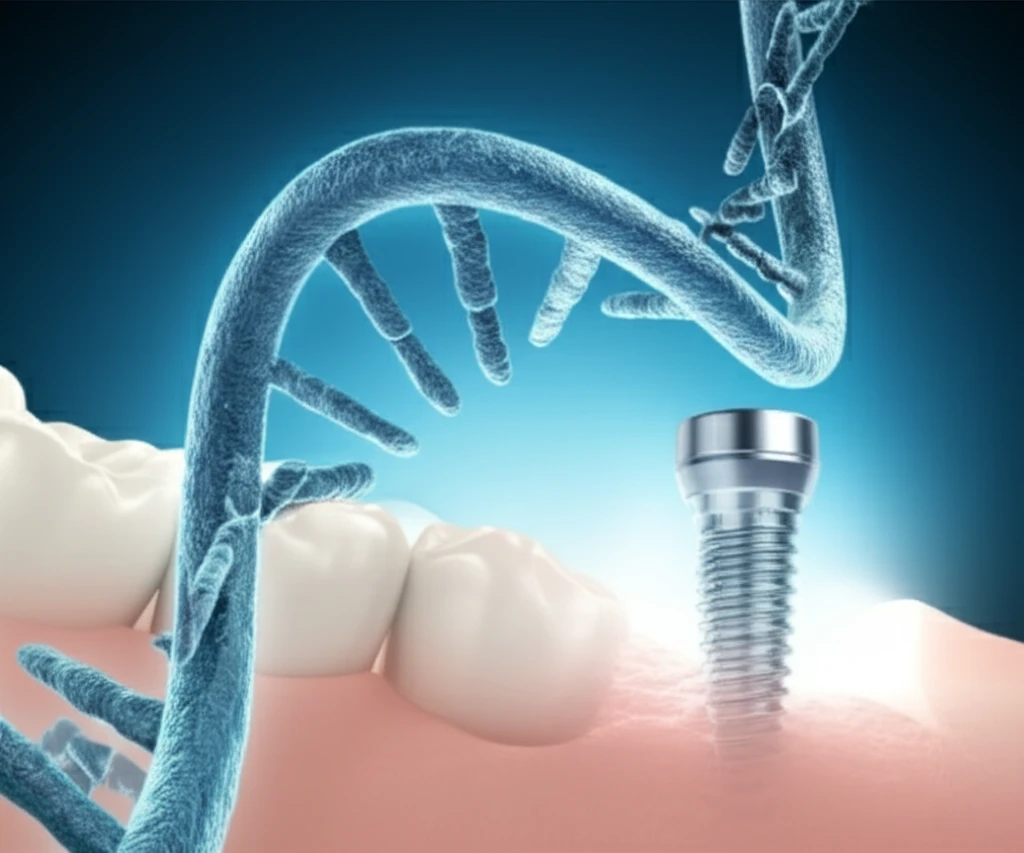
Unlocking the Secrets of Dental Implant Success: The Role of Lactotransferrin Gene Polymorphisms

"A Case-Control Study Reveals the Genetic Factors Influencing Dental Implant Loss"
Dental implants have revolutionized restorative dentistry, offering a durable and aesthetically pleasing solution for missing teeth. However, like all medical procedures, dental implant success is not guaranteed. A variety of factors, ranging from oral hygiene practices to systemic health conditions, can influence the long-term stability and integration of dental implants. Recent research has begun to explore the role of genetics in predicting and preventing dental implant loss, opening up new avenues for personalized dental care.
One area of particular interest is the lactotransferrin gene (LTF), which codes for a protein involved in the immune response and bone metabolism. Lactotransferrin, also known as lactoferrin, possesses antimicrobial, anti-inflammatory, and antioxidant properties, making it a crucial player in maintaining oral health and promoting tissue healing. Genetic variations in the LTF gene, known as polymorphisms, can affect the protein's function and expression, potentially influencing an individual's susceptibility to dental implant complications.
A case-control association study published in Clinical Implant Dentistry and Related Research delved into the relationship between LTF gene polymorphisms and dental implant loss. The original article, titled 'Lactotransferrin Gene (LTF) Polymorphisms and Dental Implant Loss: A Case-Control Association Study,' aimed to determine whether specific genetic variations in the LTF gene are associated with an increased risk of dental implant failure. This article serves as an update to the original research, incorporating an important institutional acknowledgment, and aims to clarify the potential genetic factors influencing dental implant outcomes.
Decoding the Genetic Link: How LTF Polymorphisms Impact Implant Success
The study, conducted by Doetzer et al. (2015), investigated the genetic profiles of individuals who experienced dental implant loss compared to those with successful implant outcomes. The researchers focused on identifying specific polymorphisms within the LTF gene that were more prevalent in the implant loss group. By comparing the genetic makeup of these two groups, the study sought to establish a correlation between LTF gene variations and the risk of dental implant failure.
- Genetic Predisposition: Individuals with certain LTF gene polymorphisms may have a less efficient immune response, making them more susceptible to bacterial infections around the implant site.
- Impaired Bone Metabolism: Variations in the LTF gene can disrupt the bone remodeling process, leading to decreased bone density and compromised osseointegration.
- Increased Inflammation: Certain LTF polymorphisms may exacerbate the inflammatory response, contributing to tissue damage and implant instability.
The Future of Dental Implants: Personalized Care Through Genetic Insights
The study by Doetzer et al. (2015) sheds light on the intricate relationship between genetics and dental implant success, paving the way for a new era of personalized dental care. As our understanding of the human genome expands, we can expect to see more genetic tests and targeted therapies aimed at optimizing dental implant outcomes. By identifying individuals at higher risk of implant failure based on their genetic profiles, dentists can implement preventive strategies, such as enhanced oral hygiene protocols, antimicrobial treatments, and bone-grafting procedures, to improve the long-term success of dental implants.