
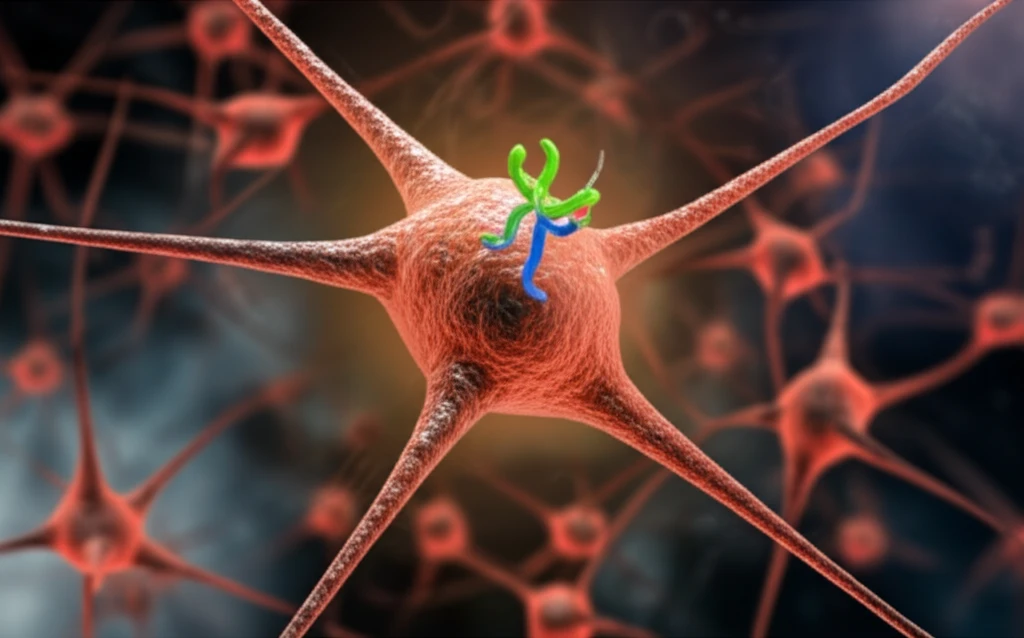
Illustration of cancer cells with E-cadherin and survivin.

Unlocking the Secrets of Cell Survival: How E-Cadherin and Survivin Interactions Could Revolutionize Cancer Treatment

"New research delves into the complex relationship between cell adhesion, survivin expression, and apoptosis, offering potential breakthroughs in cancer therapies."


The fight against cancer continues to evolve, with researchers constantly seeking new ways to understand and combat this complex disease. One area of intense focus is the intricate world of cell behavior, specifically how cells interact with each other and how these interactions influence their survival and death. A recent study has shed light on the crucial roles played by E-cadherin, a cell adhesion molecule, and survivin, a protein that inhibits apoptosis, in regulating cell fate, potentially opening doors to more effective cancer treatments.

This research, published in the journal Laboratory Investigation, dives deep into the interactions between E-cadherin and survivin within various cell culture models. The findings reveal a fascinating interplay that could revolutionize our understanding of cancer development and progression. By examining how these molecules behave in different environments, scientists are gaining critical insights into how to manipulate cell behavior to fight cancer more effectively.

This article will explore the key findings of this research, explaining the roles of E-cadherin and survivin, and highlighting their significance in the context of cancer. We'll also discuss the potential implications for future cancer therapies, offering a glimpse into the exciting possibilities that lie ahead in the ongoing battle against this disease.

Deciphering the Dance: E-Cadherin, Survivin, and Apoptosis in Cancer Cells

Illustration of cancer cells with E-cadherin and survivin.

At the heart of this research lies the fundamental question of how cells decide whether to live or die. Apoptosis, or programmed cell death, is a crucial process for maintaining healthy tissues. However, in cancer, this process often goes awry, allowing cancer cells to proliferate uncontrollably. Understanding the mechanisms that control apoptosis, particularly in relation to cell-cell interactions, is therefore vital for developing effective treatments.

E-cadherin, a protein found on the surface of cells, acts like a molecular Velcro, helping cells stick together and form tissues. Survivin, on the other hand, is a protein that inhibits apoptosis, essentially acting as a survival factor for cells. The study found that the presence or absence of these two molecules and their interactions significantly impacted the behavior of cancer cells.

  • E-cadherin: Primarily responsible for cell adhesion and forming the structural integrity of tissues.
  • Survivin: Key protein that inhibits apoptosis, promoting cell survival and proliferation.
  • Apoptosis: Programmed cell death, essential for removing damaged or unwanted cells.
The researchers utilized cell culture models to mimic different environments, including those that mimicked the conditions found within tumors. They found that in environments where cells were closely connected (like in healthy tissues), E-cadherin was abundant, and survivin was kept in check. However, in environments where cells were less connected (like in a tumor), E-cadherin levels decreased, while survivin levels increased, allowing cancer cells to survive and proliferate.

The Future of Cancer Treatment: Targeted Therapies and Beyond

The research on E-cadherin and survivin provides a foundation for developing targeted cancer therapies. By understanding the intricate dance between these molecules, scientists can design drugs that either promote E-cadherin interactions to reduce survivin levels or directly target survivin to trigger apoptosis in cancer cells. This targeted approach could lead to more effective treatments with fewer side effects, ultimately improving the lives of countless individuals affected by cancer. As research continues to unlock the secrets of cell behavior, we move closer to a future where cancer is not only treatable but potentially curable.

About this Article -

This article was crafted using a human-AI hybrid and collaborative approach. AI assisted our team with initial drafting, research insights, identifying key questions, and image generation. Our human editors guided topic selection, defined the angle, structured the content, ensured factual accuracy and relevance, refined the tone, and conducted thorough editing to deliver helpful, high-quality information.See our About page for more information.

Everything You Need To Know

1

What roles do E-cadherin and survivin play in cancer cell survival?

E-cadherin acts like molecular Velcro, helping cells stick together and form tissues, which typically suppresses cancer cell survival. Survivin, on the other hand, inhibits apoptosis, acting as a survival factor that allows cancer cells to proliferate. The balance between E-cadherin and survivin is crucial; when E-cadherin decreases and survivin increases, cancer cells are more likely to survive and spread. Understanding this dynamic is vital for developing targeted therapies.

2

How does apoptosis relate to cancer treatment strategies involving E-cadherin and survivin?

Apoptosis, or programmed cell death, is a natural process that eliminates damaged or unwanted cells. In cancer, this process is often disrupted, allowing cancer cells to survive uncontrollably. Cancer treatment strategies that focus on E-cadherin and survivin aim to restore apoptosis in cancer cells. By promoting E-cadherin interactions or directly targeting survivin, therapies can trigger apoptosis specifically in cancer cells, reducing tumor growth and spread. The goal is to manipulate these molecules to shift the balance back toward normal cell death, thereby eliminating cancerous cells.

3

How might targeted therapies based on E-cadherin and survivin interactions improve cancer treatment?

Targeted therapies that modulate the interactions of E-cadherin and survivin offer the potential for more effective cancer treatment with fewer side effects. Current research indicates that scientists can design drugs that either promote E-cadherin interactions to reduce survivin levels or directly target survivin to trigger apoptosis in cancer cells. This precision can lead to treatments that specifically attack cancer cells while leaving healthy cells unharmed, minimizing the adverse effects often associated with traditional chemotherapy and radiation. Ultimately, this targeted approach aims to improve the quality of life for cancer patients while increasing treatment efficacy.

4

What is the significance of cell culture models in researching the relationship between E-cadherin, survivin, and cancer?

Cell culture models play a vital role in researching the intricate relationships between E-cadherin, survivin, and cancer because they allow scientists to mimic different environments, including those found within tumors. These models help researchers observe how E-cadherin and survivin behave under various conditions, such as varying levels of cell adhesion. By studying these interactions in controlled environments, scientists can gain insights into how to manipulate cell behavior to fight cancer more effectively. These models are essential for testing potential therapies and understanding the underlying mechanisms before moving to clinical trials.

5

What are the potential future implications of understanding the interplay between E-cadherin and survivin for cancer treatment, and what other factors might also be at play?

A deeper understanding of the interplay between E-cadherin and survivin holds immense potential for revolutionizing cancer treatment. Future therapies could be designed to precisely target the mechanisms that disrupt the balance between these molecules, leading to more effective and less toxic treatments. Furthermore, this research might pave the way for personalized medicine approaches, where treatments are tailored to an individual's specific cancer profile based on their E-cadherin and survivin expression levels. Beyond E-cadherin and survivin, other factors such as genetic mutations, the tumor microenvironment, and immune system interactions also play critical roles in cancer development and response to therapy. Integrating these factors into the overall understanding of cancer biology will be crucial for developing comprehensive and effective treatment strategies.

Newsletter Subscribe

Subscribe to get the latest articles and insights directly in your inbox.