
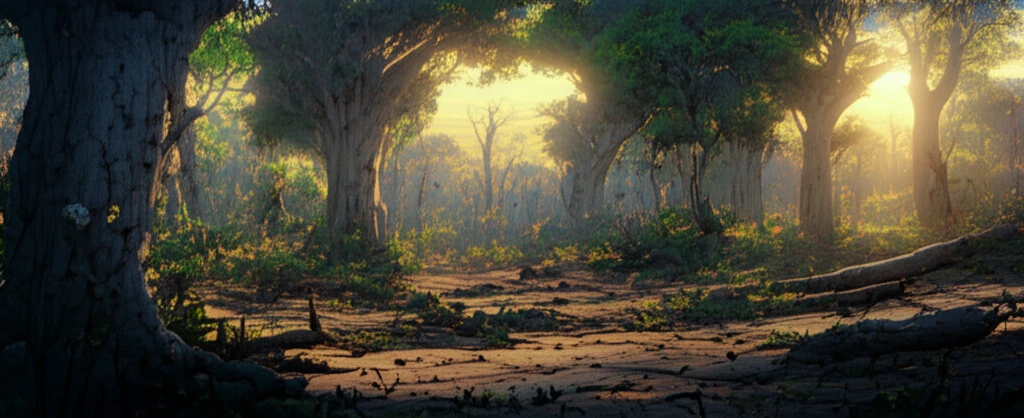
Unlocking the Secrets of Brazil's Dry Forests: Why Conservation Matters

"Dive into the hidden world of Brazil's seasonally dry tropical forests and discover why these unique ecosystems are vital for biodiversity and ecological balance."
Brazil, renowned for its lush Amazon rainforest, also harbors another, less-known treasure: the Seasonally Dry Tropical Forests (SDTFs). These forests, adapted to long periods of drought, are scattered across the country, particularly in the Caatinga domain. Unlike the perpetually wet rainforests, SDTFs experience distinct wet and dry seasons, shaping unique plant and animal communities.
While the Amazon has long captured the world's attention, SDTFs have often been overlooked in research and conservation efforts. However, these forests are incredibly important. They act as biodiversity hotspots, providing habitats for a variety of species found nowhere else. SDTFs also play a crucial role in carbon sequestration, soil conservation, and water regulation.
Understanding the structure and composition of SDTFs is essential for developing effective conservation strategies. A recent study delved into the tree community structure of an SDTF remnant in Brazil, offering insights into the diversity, distribution, and ecological adaptations of its plant life. This research highlights the urgent need to protect these fragile ecosystems.
The Scale of Brazil's Dry Forests and Growing Threats
The Caatinga dry forest encompasses approximately 11% of Brazil's total continental territory, yet remains significantly understudied compared to the Amazon basin. Research on actual evapotranspiration patterns from 2001 to 2020 reveals distinct seasonal dynamics in these biomes, with implications for water cycle regulation. Large tracts of tropical dry forests across the Americas have been previously deforested, and many areas are now undergoing secondary ecological succession at varying rates. In central Brazil's Cerrado biome, the Paranã River Basin—containing the most significant dry forest formations—faces intense land conversion to pastures and agriculture, threatening these critical ecosystems.
Research Methods and Current Gaps
Studying seasonally dry tropical forests presents inherent methodological challenges due to their dramatic seasonal variability and remote locations. Scientists typically rely on remote sensing products like MOD16 for evapotranspiration data, complemented by ground-based precipitation measurements from agencies like INMET. Land cover classification systems such as MapBiomas Brazil help track vegetation changes over time, though these approaches may miss fine-scale ecological processes. A persistent limitation in the field is the relative paucity of long-term monitoring data compared to wetter tropical ecosystems, which constrains our understanding of these dry forest dynamics.
Deep Roots of the Caatinga
The Brazilian Caatinga is recognized as the richest nucleus of Seasonally Dry Tropical Forests (SDTF) in the Neotropics, exhibiting remarkably high levels of endemism among its plant species. The name itself derives from the Old Tupi language, with 'ka'atinga' translating to 'white forest'—a reference to the pale bark and deciduous nature of its vegetation during dry periods. Despite its ecological significance, the precise timing of the Caatinga's origin and the evolutionary drivers behind its plant diversification remain poorly understood by scientists. Research into the historical assembly of these dry forests continues to reveal complex biogeographic patterns that shaped this unique semi-arid ecosystem.
What Makes Brazil's Dry Forests So Special?
The study, conducted in a remnant of SDTF located in Juvenília, Minas Gerais, provides a snapshot of a forest struggling to survive. Researchers identified 79 tree species within the area, highlighting a surprising level of biodiversity in this dry environment. The Shannon diversity index, a measure of species richness and evenness, was notably high, indicating a healthy and diverse ecosystem.
- High Biodiversity: SDTFs support a wide array of plant and animal species, many of which are endemic.
- Unique Adaptations: Plants in SDTFs have developed specialized mechanisms to survive prolonged drought.
- Ecosystem Services: These forests contribute to carbon sequestration, soil conservation, and water regulation.
- Conservation Importance: SDTFs are threatened by deforestation, agriculture, and climate change.
Expanding Knowledge of Understudied Ecosystems
The Caatinga's harsh environmental conditions—including high aridity, water scarcity, and extreme temperatures—have historically led researchers to assume it possesses low biological diversity. This perception has resulted in the biome being relatively understudied compared to other Brazilian ecosystems, though recent research is beginning to challenge these assumptions. A 2025 study on bryophytes in seasonally dry tropical forests represents the growing attention to previously overlooked taxonomic groups in these environments. Meanwhile, a collection of seven research articles published in 2024 assembles studies from across the Americas' dry forests, covering links between functional ecology and community ecology in these vital but neglected ecosystems.
Challenges in Conservation and Research Priorities
Despite growing recognition of their ecological importance, seasonally dry tropical forests continue to receive disproportionately less attention and funding compared to rainforest conservation efforts. Critics argue that the perceived lower biodiversity of these ecosystems has historically justified reduced protection, though this view is increasingly being challenged by new research. Conservation strategies developed for wetter tropical forests may not adequately address the unique challenges faced by dry forest species adapted to extreme seasonal water stress. The tension between agricultural expansion in semi-arid regions and habitat preservation remains a significant unresolved conflict in Brazilian environmental policy.
Dry Forests in Broader Ecological Context
Seasonally Dry Forests are characterized by deciduous vegetation that sheds leaves during the dry season in response to strong soil moisture stress, a trait that distinguishes them from neighboring wetter biomes. As part of the broader Atlantic Forest realm, research on the diversity, genesis, and soil-vegetation interactions in these ecosystems remains surprisingly limited. Studies examining surface radiation and energy balances over contrasting areas of the Caatinga reveal how these dry forests function differently from other tropical ecosystems in terms of energy partitioning. Eutrophic soils and varying weathering levels further influence vegetation patterns, creating complex mosaics of plant communities across the landscape.
Why Should We Care About Brazil's Dry Forests?
The study serves as a critical reminder of the importance of SDTFs and the urgent need for their conservation. By understanding the unique ecological dynamics of these forests, we can develop targeted strategies to protect them from deforestation, agricultural expansion, and climate change. Further research focusing on the structure and function of SDTFs is essential for informing effective conservation efforts and ensuring the long-term survival of these invaluable ecosystems. It's time to shine a spotlight on Brazil's dry forests and recognize their vital role in maintaining biodiversity and ecological balance.
Patterns of Resilience and Change
Research on seasonally dry tropical forest dynamics reveals a pattern of relative stability over time, with gradual increases in tree density observed across study sites. Local temporal changes have generally trended toward decreased tree density but increased overall biomass, suggesting competitive exclusion processes at work. Notably, tree community composition in these dry forests showed little relationship to short-term floristic fluctuations, indicating inherent resilience to environmental variability. The biomass increase appears driven by indicator species gaining competitive advantages rather than wholesale community turnover, pointing to the ecosystem's capacity for self-regulation.
Pathways Forward for Dry Forest Science
Addressing the knowledge gaps in seasonally dry tropical forest ecology will require sustained investment in long-term monitoring programs across multiple sites. Integrating remote sensing technologies with ground-truth observations can help bridge current methodological limitations in tracking seasonal dynamics. Future research should prioritize understanding how climate change projections for semi-arid regions will impact these already water-stressed ecosystems. Collaborative international efforts modeled after successful research collections in other biomes could accelerate discovery and conservation planning for dry forests across the Neotropics.
The Urgent Need for Dry Forest Conservation
Seasonally dry tropical forests represent scientific terrain that remains poorly explored, with an urgent need for increased understanding to inform effective conservation strategies. The Caatinga alone covers approximately 12% of Brazil's total land area and plays a critical role in regulating surface energy balance and water availability across semi-arid regions. These ecosystems are characterized by xerophytes, deciduous, and semi-deciduous species uniquely adapted to extreme seasonal drought conditions. Understanding how these forests influence atmospheric processes through energy partitioning is essential for developing sustainable land management practices in Brazil's vulnerable dry interior.
Communities and Conservation in Practice
Local communities living within and around Brazil's dry forests depend on these ecosystems for livelihoods, yet conservation efforts must balance human needs with habitat protection. The conversion of dry forest land to agriculture and pasture reflects economic pressures that often override environmental concerns in semi-arid regions. Effective conservation strategies will require engaging stakeholders at multiple levels, from smallholder farmers to policymakers, in developing sustainable land-use practices. Building awareness of the unique ecological value of these threatened ecosystems is crucial for garnering public support for protective measures.